







|
|
Blog Feeds
The Saker Indymedia Ireland is a volunteer-run non-commercial open publishing website for local and international news, opinion & analysis, press releases and events. Its main objective is to enable the public to participate in reporting and analysis of the news and other important events and aspects of our daily lives and thereby give a voice to people.
Public InquiryInterested in maladministration. Estd. 2005
Human Rights in IrelandIndymedia Ireland is a volunteer-run non-commercial open publishing website for local and international news, opinion & analysis, press releases and events. Its main objective is to enable the public to participate in reporting and analysis of the news and other important events and aspects of our daily lives and thereby give a voice to people.
Lockdown Skeptics
|
The Irish invented Chess! I kid you not... international |
history and heritage |
opinion/analysis international |
history and heritage |
opinion/analysis
 Sunday December 27, 2009 23:38 Sunday December 27, 2009 23:38 by Brian by Brian
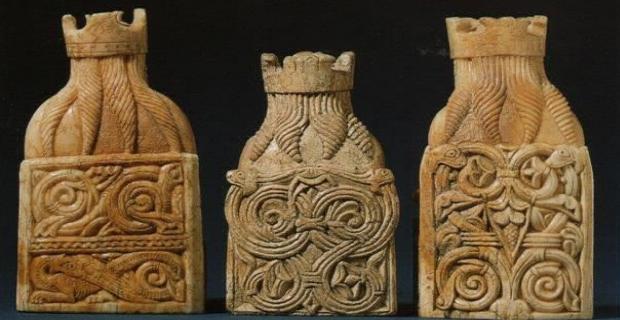
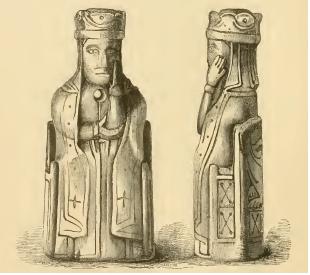
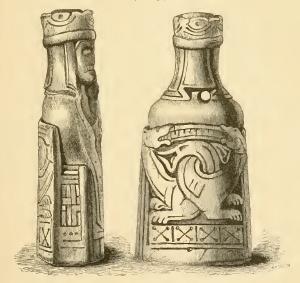
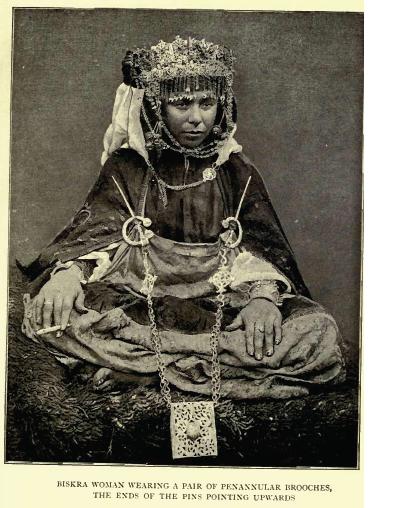
 Every secret of art, every subtlety of knowledge, and every diligence of healing that exists, from the Tuatha De Danann had their origin. And although the Faith came, these arts were not driven out, for they are good.(1) References in the old stories and histories of Ireland "Good," says Guaire, "Let's play fidchell."Another reference, this time from Serlige Con Chulaind: 'Behold his chariots, they climb the valley; behold their courses, (like) men in fidchell'.(3)From Amra Columcille: "Crimthann Nia Nar's fidchell, a small boy could not lift it with one hand. Half of its men were of yellow gold, the other half of tinned bronze." (4)Finally from the poem beginning "Abair riom a Eire ogh," attributed to Maoil Eoin Mac Raith and using the word brannaimh for chess: "The centre of the plain of Fal is Tara's castle, delightful hill; out in the exact centre of the plain, like a mark on a parti-coloured brannumh board. Advance thither, it will be a profitable step: leap up on that square, which is fitting for the branan, the board is fittingly thine. I would draw thy attention, o white of tooth, to the noble squares proper for the branan (Tara, Cashel, Croghan, Naas, Oileach), let them be occupied by thee. A golden branan with his band art thou with thy four provincials; thou, O king of Bregia, on yonder square and a man on each side of thee."(5) If you add those clues up you get a board with equal numbers of men on each side, and set up with different colours for the two sides like modern chess, the king, who is one of the pieces and other pieces are called 'men', could with profit aim for maybe the central squares, but protected by men around him, that sometimes the 'men' - evidently the pawns - can block the advance of their opponents and can be difficult to kill, and that the advance of the 'men' in chess is like the advance of chariots on a battle field. This last reference is arguably the most valuable, those chariots must have advanced in a military line like you'd see in films of Waterloo or whatever, because that way each soldier gets room to engage the enemy by firing spears etc, if they advanced in a column the person in front would get in the way, and in any case clearly the chariot wheels would create rivets in the ground that would impede those coming after them. The point is that this is very like the advance of pawns in chess and not at all like other games such as backgammon or draughts etc. On the other hand there is nothing there to link it to the latter two games, no mention of dice, no mention of multiple kings on the same side, and many other games, such as the fox and geese type, do not start with equal forces. Then there is the most important single reference in old Irish manuscripts, the entry under fidchell in Cormac's Glossary. Cormac, the Bishop of Cashel who died in 908, wrote this dictionary like glossary to explain some of the older Irish words then currently existing but going obsolete. It reads: "Fidchell .i. féthciall. fáthciall .i. ciall & fath ocahimbirt. no fuathcell .i. fuath cille .i. cetharcoir cétamus infhidchell & dirge a títhe. dub & find forri & sainmuintir cach la fecht beos bereas a cluithe. Síc et ecclesia per singula per .IIII. terrae partes .IIII. evangeliis pásta. isdirech ambesaib & hitíthib nascreptra et nigri et albi .i. boni et mali habitant in ecclesia."(6)This mixture of Irish and Latin has been translated as: "Fithchill, i.e. cause-sense. i.e. cause and sense (are used) in playing it. Or sinew and sense. Or fuath-cell, i.e. shape of a church, i.e. the fithchill (board) is four-sided in the first place, and its rows are straight, and (there are) black and white on it, and it is a different person who wins (?) every other time. So also the church in all particulars: fed by four gospels in the four quarters of the earth (i.e. it is thus in the church filling the four respective parts of the world with the Gospels); it is straight [i.e. 'upright'?] in judgements with the rows of scripture; i.e. black and white, i.e. good and bad live in the church." (7)Slightly ambiguous I guess but nonetheless its usually understood to mean "that the chessboard was divided into black and white compartments by straight lines: that it is to say into black and white squares," as P W Joyce points out in that quote. (8) The reference to winning the game in turns could easily be to the practice of playing the white pieces every other game? Apart from a few other stray references that add one or two points (such as the point that the set probably includes men who are sometimes represented with human faces or bodies, because one poetic reference in the old tales seems to suggest this,(9) which is obviously not the case with backgammon or draughts, and secondly that it was represented in the literature as being related to battle tactics, because Brian Ború's son is said to have mocked a person's military skill due to their weakness at fidhchell (10)) that is pretty much where we are at in our understanding of the Irish game of fidhchell or brannaimh.(11) Which brings us to the current impasse. What is effectively happening now is that Irish historians are being told that it is impossible for modern style chess to be played as long ago as the Irish stories claim, because it is said that chess was brought across into Europe from Persia or India at a much later date to the Irish histories, and are kind of being bullied into representing it as draughts or backgammon or just "chess-like" to accommodate this - Indian! - sacred cow of chess history! (12) But in fact there are other Irish words that sometimes represent different games like those, e.g. taipleis, meaning tables, usually understood as draughts and sometimes backgammon (13), or buainbeg (14), or the game described by an Irish scribe in the 10th century and sometimes called 'The Game of the Gospel'. (15) Meanwhile the Irish always claimed that fidhchell and brannaimh meant chess, not these other games, so if it could be proven that the lexicographical history of those two words universally meant chess over the centuries from Medieval times right down to modern Irish, or indeed if the entries link these two words with the international game of chess, then maybe people will take more seriously the idea that the ancient Irish were in fact playing modern style chess. (16) To illustrate this we can go back as far as 1512: Fidhchell and Brannaimh, lexicographical history c.1512 There is this reference in the account of the The Second Battle of Moytura contained in Harleian Ms 5280, a vellum manuscript held in the British Museum: "This he the king said then, that the chessboards of Tara should be fetched to him Samildánach and he won all the stakes, so that then he made the Cró of Lugh."In a way this is just another reference to fithchell but here the scribe, Giolla Ríabhach (Mór) Ó Cléirigh, writing in c.1512, adds this gloss, or footnote: "But if chess was invented at the (epoch) of the Trojan war, it had not reached Ireland then, for the battle of Moytura and the destruction of Troy occurred at the same time." (17)As Eoin Mac White noted in 1945 this shows that O'Cleírigh had associated the word fidhchell with the international game of chess, because the connection of chess with Troy came from a popular book circulated in England a few centuries before, the Troy reference does not come from Irish traditions or sources. (18) c.1631 The great Seathrun Ceitinn, or Dr Geoffrey Keating, the author of the most popular History of Ireland in the Irish language, wrote a book in c.1631 called in English 'The Three Shafts of Death', from which the following extract might be of interest: "Ionnus gurab ionann dál do na daoinibh i gcoitchinne 7 d'fhuirinn an bhrannaimh: óir mar bhíos barr ceana seoch a chéile ar fhearaibh foirne an bhrannaimh ré linn bheith ag imirt orra, ionnus go mbí rí na foirne arna shuidhiugadh san áit is onóraighe don chlár, 7 an bhain-ríoghan san dara háit, 7 mar sin do gach fear oile do réir a gharma ionadtar ar chlár an bhrannaim é; mar an gcéadna dona daoinibh, an tan bhíd ar títhibh na talmhan, 7 bearta brannaimh na beata agá n-imirt leó, bí gach aon aca go cinnte na ionadh féin do réir a onóra 7 a innmhe. Gidh eadh, tuigthear, tar ceann go mbí an t-eidirdhealughadh úd idir fhearaibh foirne an bhrannaimh ré mbeith ag imirt leó, an tan bhíos an cearrbhach agá gcor i mála na foirne, go ndoirteann imeasg a céile iad, gan féachain d'fhior dhíobh seoch ar-oile, ionnus gur cuma leis tús nó deireadh dholta san mhála do bheith ag an rí, seoch an bhfior is lugha san bhfuirinn; 7 fós is cuma leis cia dhíobh bhíos i n-uachtar nó i n-íochtar an mhála. Mar an gcéadna theaghmas dona daoinibh; an tan tig buachaill brannaimh na beatha .i. an bás, 7 teilgeas na daoine i dtiaich na talmhan do chlár tháiplise an tsaoghail, ní bhí onóir ag an mbás i gcomhair aoin seach a chéile dhíobh. Agus dá dtugadaois lucht an díomusa da n-aire an coimhmeasgadh so do-bheir an bás ar na daoinibh, do thréigfidís a n-uaill 7 a n-ainmhiana."A suggested translation is: "So that it is the same for people in general as for a team in brainnaimh: since we are together in the top position [on the board] in the team of brannaimh men, when we are ready to play with them, so that the king of the team is placed in the seat of most honour on the board, and the queen in the second place, and like that for each of the other men according to the position on the brannaimh board; and similiarly for people, the time we are on the chequered [thíthibh] ground, playing the brannaimh of life with them, each one of us is certainly in our own place as regards honour and ability; howbeit, notwithstanding that though, we give that distinction to the different men of the brannaimh team only when we are playing with them, at the time that the gambler is putting the team in the bag, pouring them all in together, he doesn't look at one man of them beyond another, so that it is immaterial to him if the king goes into the bag first or last, and the same for the least man of the team; and as well its the same to him whether they are on the top or the bottom of the bag. The same way it befalls people, the time that the brannaimh boy comes from the world .i.e. dies, the person falls into the bag of the earth from the draughts [táiplisi] board of life, there is no honour in the death above that of any of them. And if the prideful masses would give heed to how comparable this was to the makings of death in people, they might forsake their pride and evil desires." (19)It might be safe enough then to agree with Eoin Mac White when he says that this brannaimh "is clearly modern chess." (20) Although Keating normally uses fidhchell to describe chess in his history, nonetheless he does use the word brannaimh to describe a boardgame played among the old Irish, hence Dr Keating can be scribbled down as a witness that the game the old Irish were playing was indeed our modern chess. (21) 1685 Roderic O'Flaherty is often considered a link between the more modern historians and the old Irish bardic schools that he was acquainted with in the west. He wrote a history of Ireland in Latin in 1685 called Ogygia and therein translated no.5 in the will of a 2nd century Irish king, Cathaoir Mór, thus (22): "duas schacchias cum latrunculis, suis maculis distinctis". In English that is: "two chess-boards with their men, distinguished with their specks". Notice that he uses 'schacchias' for the chess-board, which is very like scacus, -i, the recognised Latin for the word 'chess'. And 'latrunculis' is also a very familiar Latin term for chessmen. Therefore again, as far as he is concerned, the old Irish game was the modern chess. (23) 1694 One of the first great chess historians was Dr Thomas Hyde, from Oxford, who wrote in Latin in the last years of the 17th century. His account includes the following reference to the Irish: "The old Irish were so greatly addicted to chess, that, amongst them, the possession of good estates hath been decided by it; and there are some estates at this very time, the property whereof doth still depend upon the issue of a game of chess. For example, the heirs of two certain noble Irish families, who we could name, (to say nothing of others) hold their lands upon this tenure, viz. that one of them shall encounter the other at chess, in this manner, that which ever of them should conquer, should seize and possess the estate of the other. Therefore, I have been told, they manage the affair prudently among themselves; once a year they meet by appointment to play at chess: one of them makes a move, and the other says, I will consider how to answer you next year. This being done a public notary commits to writing the situation of the game, by which method a game, which neither hath won, hath been, and will be continued for some hundreds of years." (24)So again he is saying that the old Irish game was our game of chess. This is enormously significant because his book is about chess, hence if he knew of any difference between the Irish game and the normal one you would expect him to talk about it, and note that the quote shows that he clearly did do some research into the Irish game. 1732 One of the very early printed dictionaries was Conor Begly and Aodh Buí MacCurtain, The English Irish Dictionary (Paris, 1732): "Chess, brannamh, sórt imeartha [type of game] Draughts, sórt imeartha [notice they do not include brannamh here, unlike under chess]." 1768 This work involves two bishops, the first Fr John O'Brien, the Catholic Bishop of Cloyne who wrote a dictionary published in Paris in 1768, and secondly the Rev Robert Daly, the Church of Ireland Bishop of Cashel who updated and reissued the dictionary (full of compliments towards the previous author) in Dublin in 1832. Both authors went with: "Brannumh, chess, a game played upon a square board divided into sixty-four small chequers: on each side there are eight men and as many pawns, to be moved and shifted according to certain rules; an fitcheall acus an brannamh ban, (Old Parchment,) probably means the men; gon a bhranaibh déad, with his ivory men, because made of elephant's teeth. This was a favourite game with the old Irish. Lat. scacharum ludus. Fithchill and fithchille, tables, or chess-board; ag imirt fithchille, playing at tables, or chess." (25) 1780 Rev William Shaw, A Galic and English Dictionary (London, 1780), vol 1: "Brannamh, Chessmen Fitchill, fitchille, Tables, chess-board." 1782 General Charles Vallancey combined engineering in Ireland with some historical researches, including this very early Irish Grammar and Phrase Book called A Grammar of the Hiberno-Celtic or Irish Language (Dublin, 1782), p.84: "Phill, Fithill, Fitchill, a chess-board, also the game of chess." 1786 Charlotte Bronte was famous as a great collector of poems and stories among the Irish in Co. Cavan in the 18th century, and she translated in 1786 a verse that included fithchioll as: "Or on the chequer'd fields of chess Their mimic troops bestow'd;" (26) 1814 Working in the early days of modern Gaelic scholarship, Thaddaeus Connellan, a pioneer in attempting to translate the Annals of the Four Masters, came out with An English-Irish Dictionary in Dublin in 1814: "Chess, branamh." 1817 Edward O'Reilly, who ran a shop in Dublin but whose ancestors came from Corstown in Co. Meath, wrote a well known dictionary in 1817. He personally owned a huge number of old Irish manuscripts and brought those to bear in this, the first of the well-known dictionaries used in Dublin, called An Irish-English Dictionary (Dublin, 1817): "brannumh, s.m. chessmen fithchioll, chessboard." 1825 R. A. Armstrong, A Gaelic Dictionary (London, 1825): "Fitchil, Tables, a chess board." 1849 Thomas De Vere Coneys, Foclóir gaoidhilge-sacs-bearla (Dublin, 1849): "Fithchioll, chille, chiolla, s.f. a chess-board, chess, also a complete set of armour, consisting of corslet, helmet, shield, buckler, and boots." 1855 Daniel Foley, An English-Irish Dictionary (Dublin, 1855): "Chess, s. táibhleis, branamh, táiplis." 1861 Of course this list would never be complete without the authoritative voice of O'Donovan's great friend, Eugene O'Curry, a giant of Irish scholarship from Co. Clare. He translated ficheall in his famous Lectures on The Manuscript Materials of Ancient Irish History (Dublin, 1861), p.565: fithchealla, chess-playing. 1864 John O'Donovan added a supplement to a later edition of O'Reilly's dictionary, standing over his forthright statements made in the Book of Rights (27): "Brandabh, chess-men; Schacchia; Ogygia. p.311. "Oenach n-uirc tréith .i. biadh agas etach Loghmhar, clumh agas cuilcte, cuirm agas carna, brandubh agas fithcell, eich agas carbaid, milcoin agas esrecta ol chena". Cormac's Glossary in voce Orctreith. Fithcheall, fithchioll, tabula lusoriae. Ogygia, p.311; a chessboard. In Cormac's Glossary the fithchell is described as quadrangular, having straight spots of black and white, and is chimerically compared to the Church. (28) Fear fithchille, fear fidhchilli, a chessman." (29) For those who don't know, John O'Donovan was surely the most knowledgable Irish scholar in the 19th century and possibly ever. He must have travelled across most of the parishes of Ireland, in his work for the Ordnance Survey, and later he examined Irish texts from the whole history of the Irish language, when he translated the monumental Annals of the Four Masters. This gave him great width, across the different Irish dialects, and depth, deep into old Irish, in his knowledge of the language. It is therefore very significant that he was always adamant that fidchell meant chess, as he remarks here in rebuking John O'Brien (who, as we have seen, in fact did have fidhchell as chess but also gave another meaning): "Two rings and two chess-boards" - 1880 Arthur W.-K. Miller, when he translated O'Clery's Glossary in Revue Celtique vol 4 1879-1880: Beartrach .i. fithchcall no ciar imirthe, 'chessboard'. 1904 T O'Neill-Lane, English-Irish Dictionary (Dublin, 1904): "Chess, brannamh, -ainmh, m.=brann-dubh, -duibh, m.;... Chess-board, s., fithcheall, -cille, -a, f." 1904 Fr Patrick S. Dineen's work, A Concise English-Irish Dictionary (Dublin, 1904), is the definitive dictionary that came out of the Irish Ireland movement of the turn of the century, based not only on Dineen's scholarship but also with inputs from Gaelic League stalwarts like David Comyn etc etc: "Brannamh, -aimh, m., chess, a chess board, a backgammon table; the game of chess, the chess-men, the points or squares on the chess table. Fithcheall, -chille, -chealla, f. (also g. -chill, pl. -chealla, m.), a chessboard; a game of chess; clár fithchille, a chess-board; fear fithchille, a chess-man; foireann fithchille, a set of chess-men." It seems therefore as proven as any word can be that fidhchell, and brannaimh, have an unbroken line as meaning chess in the Irish language. But there is another piece of evidence, that comes this time from archaeology, which may serve to prove our case. Lewis Chess Set Probably everybody has heard of the Lewis chess pieces, which are said to have been found in c.1831 on the Isle of Lewis off the coast of Scotland. One of the first academics to write about the pieces, Frederick Madden, speculated that they may have come from Scandinavia. He was only surmising but because of this they have become classified as examples of Scandinavian art, on very thin evidence I would suggest. They are among the most famous archaeological finds in Europe, so without more ado I will just point out the Irish connections to this set. There are I believe a number of reasons to link the Lewis chess set to Ireland rather than to Scandinavia: 1. In c.1817 a number of chess pieces were discovered in a bog at Clonard in Co. Meath. Unfortunately it appears that only a king from the set survives in Ireland. It came into the possession of a Dr Tuke (31) who had a small private museum in Dublin, later Petrie owned it, then it went from there into the collections of the Royal Irish Academy which are now housed in the National Museum in Dublin. As you can see from the accompanying illustrations, the piece is exactly the same style as the Lewis ones. They must be from either the same set or at least it was the same people who used those sets? Since it was found in Clonard, a great centre of course of Irish monastic tradition and learning, not at all a centre of Viking or Scandinavian influence, it really puts the Lewis chessmen clearly into the orbit of Celtic Ireland. (32) 2. The obvious Celtic/Irish art on the Lewis chess pieces, as you can see in the photograph. 3. The Irish cultural connection to the Isle of Lewis which I respectively submit is greater than that of Scandinavia. After all when the islanders speak Gaelic, drink whiskey, and play the bagpipes they are displaying that Irish connection - whether they admit it or not! Here is just a few words on Lewis from wikipedia: "As a result of the Gaelic influence, the Lewis accent is frequently considered to sound more Irish or Welsh than stereotypically Scottish in some quarters. The Gaelic culture in the Western Isles is more prominent than in any other part of Scotland. Gaelic is still the language of choice amongst many islanders and around 60% of islanders speak Gaelic, whilst 70% of the resident population have some knowledge of Gaelic (including reading, writing, speaking or a combination of the three). Most signposts on the islands are written in both English and Gàidhlig and much day-to-day business is carried out in the Gaelic language." (33) 4. There is also two slightly mysterious aspects of the Lewis chessmen which might be explained easier in an Irish context. First of all why do you have, all together like this, multiple, seemingly new, complete chess sets to be placed it seems in one bag (because included in the find was one ornamented ivory buckle which no doubt was intended as the clasp of the bag for the chess pieces)? Presumably you only need one set to play with? Well if you look at the 'Book of Rights', that corpus of ancient rights of Irish kings, you can easily speculate why a number of new sets could be together like this. Here is an extract from it: "Entitled is the king of hospitable Conmaicne It would neatly explain this then if the Lewis chess sets could be considered one of these legal donations to the Irish kings? 5. The other mystery attached to the Lewis set is that fourteen discs were found with them. These ivory discs are clearly too big to be backgammon or draughts pieces, the resulting board would be huge, but I think it could be more easily explained. Bear in mind that there are approx. four nearly complete sets in the Lewis find and since 14 cannot be divided by 4 my guess is that there is two discs missing, giving you four discs for each set. I respectively submit that the obvious use for these discs is that they are placed at the corners of a fabric or skin chess board (note no board was found with the pieces, which would be likely if it was made of a fragile fabric that would have deteriorated quicker than the ivory pieces), to hold down the corners and also to act as candle holders to give the all important visibility for the serious chess player. This of course is the only way that the whole set could be transported around in a bag, a convenient arrangement that is copied for that reason to this day in chess tournaments. In any case what links that to Ireland is this mysterious reference from the Tain Bo Fraich: "Medb and Aillil play fidchell. Froech then begins to play fidchell with one of his men. The fidchell was lovely. A board of tinned bronze with four corners (lit. ears and elbows) of gold. A candle (made) of a precious stone shining for them. The men on the board were of gold and silver." (35)Admittedly that is somewhat ambiguous but maybe the poet meant to link the idea of candles and the four corners, and also the illusion to ears and elbows would look quite apt for a chessboard with these discs sticking out at the corners (and the illusion makes no sense otherwise). Hence it may be that this reference is to the same style of chess set as the Lewis ones. 6. A lot of people have commented on the very amusing expressions on the faces of the pieces, which is highly unusual in the context of most art in Europe at that time. Except in Ireland, if you look at the faces in the Book of Kells, for example, you will see the same slightly comical use of facial expressions. Bear in mind too that against these very strong links to Ireland, the only link to Scandinavia, as far as I know, consists of one diagram of a lost fragment of a chess piece, which looks only vaguely like the Lewis set, found in Trondheim in Norway in the 19th century. (36) This Scandinavian connection looks like complete conjecture otherwise and I would suggest that John O'Donovan was quite right to question it when he wrote: From the exact similarity, as well in style as in material, of the original, to those found in the Isle of Lewis, and which have been so learnedly illustrated by Sir Frederick Madden, in an Essay published in volume xxiv. of the Archaeologia, the Editor is disposed to believe that the latter may be Irish also, and not Scandinavian, as that eminent antiquary supposed. It would, at all events, seem certain that the Lewis chess-men and Dr. Petrie's are contemporaneous, and belonged to the same people; and no Scandinavian specimens, as far as the Editor knows, have been as yet found, or at least published, which present anything like such a striking identity in character. (37) The significance of all this then is that the Lewis set consists of bishops, kings, queens, knights, pawns, and rook-like pieces (they call them warders) which means that whoever was playing that set was certainly playing what we know now as chess. Therefore if it can be said that this set is to be identified with all those old Irish references to fidhchell and brannaimh then we have proved our case! And if you consider it carefully, why would the world and his grandmother chase off to India and Persia to explain a set found in a region with all these old references to chess? Surely the simplest thing is to recognise that these are the kind of sets that the Book of Rights etc are talking about? It goes without saying that on other hand the cultural links between Lewis and 12th century Iran and Northern India are not unduly abundant! Conclusion So to conclude I would suggest that the date of the arrival of chess in the Western Isles of Europe (e.g. Ireland, Iceland and Lewis) should be put back much further than the current theory. After all it is usually classified as somewhat a mystery as to how chess came to this part of Europe and that kind of outcome from copious historical research often means that they are underestimating how old it is. I think Ireland is a perfectly good candidate for spreading this game around these Isles, much like it spread literacy, handwriting, Latin, Christianity and art across into those parts after the fall of the Romans. Also the oldest references to chess are certainly contained in the Irish literature and anyway the Irish are, I believe, the only race who anciently claimed to have invented it (in the reign of Lugh, one of the early kings of the Tuatha de Danann). (38) As regards the Eastern game I think chess should be classified as one of those areas where a mysterious Eastern influence (doubtless because some of the races like the Tuatha de Danann would have originated in the East) can be seen in Irish culture, like Sean Nós singing (39), the harp (40), the origins of Indo-European languages (as that title suggests and of which Irish is one and of course the oldest language in this part of Europe), and even old Irish brooch designs. (41) Hence, just like in those areas, you will get two branches developing off a very old Middle Eastern root, a Western style of chess first developed and popularised by the Irish and an Eastern one which maybe spread across Persia and Northern India to China. Maybe the use of elephants in the Eastern style of chess could be a way to distinguish the two versions of the game (which in their rules probably were always very alike). That it was that this western style that evolved into the modern one can be seen for example in the use of the word 'rook', which is from the Icelandic word for a 'rook', another country within the orbit of the Irish peregrinations of the first millennium. Q.E.D.! by Brian Nugent Footnotes 1. R A Stewart Macalister, Lebor Gabála Érenn, vol 1 (Dublin, pre 1940), p.173. 2. Ed. O'Keefe, Eriu, v, p.32. 3. Ed. Myles Dillon, Serlige Con Chulaind (Dublin, 1942), 11. 405-6. 4. Amra Columcille, Revue Celtique xx, p. 283. Other descriptions of boards will be found in Tochmarc Etaine, Eriu xii, p; 174, #2; K. Meyer, Fianaigecht, p. 14, ii. 29-36. 5. Eleanor Knott, The Bardic Poems of Tadhg Dall Ó Huiginn (London, 1926), vol 2 p.198-199. 6. http://www.ucd.ie/tlh/text/ws.tig.001.text.html . This is the version as published in 1868: "Fidchell [Fithcill B (i)] i. féth-ciall, fáth-ciall i.e. it requires sense (ciall) and fáth ('learning') in playing it. Or fuath-cell, i.fuath cille 'likeness of a church', in the first place, the fidchell is four-cornered, its squares are right-angled, and black and white are on it, and, moreover, it is different people that in turn (ii) win the game. Sic et ecclesia per singula per iiii. terrae partes iiii. evangeliis pasta (iii). It is straight in the morals and points of the Scripture (iv) et nigri [i. dub B] et albi [i. gel B] i.e. boni et mali, habitant in ecclesia.(v)" Footnotes i. B is the Yellow Book of Lecan, TCD MS 1318 (H.2.16), otherwise the text is from RIA Ms 1230 (23 P 16), pp. 263-72. ii. cach la fecht, cf. cach la céin (gl. modo) Z. 1017, 1018.- Whitley Stokes. iii. B glosses this by: is marsin a neclais ic sassud cethri rann sundradach in betha o soscelaib "So is it in the Church, satisfying the four different parts of the world with gospels.", which is not accurate. - Whitley Stokes. iv. "The Scriptures are straight in their morals (doctrines) and points".- John O'Donovan. v. fidchell = W[elsh] gwyddbwyll - Whitley Stokes." (trans. by John O'Donovan, edit. by Whitley Stokes, Cormac's Glossary (Calcutta, 1868), p.75-76.) 7. Eoin Mac White in Éigse vol 5 1945, p.22-35, available at: http://www.unicorngarden.com/eigse/eigse01.htm . Note the comparison to the old morality tales based on chess, which maybe this is an early example of? It reads very like the 'Morality of Chess' attributed to Pope Innocent III c.1210: "This whole world is nearly like a chess-board, of which the points are alternately white and black, figuring the double state of life and death, grace and sin. The families of this chess-board are like the men of this world..." ( http://www.worldchesslinks.net/ezif07.html .) 8. See the P W Joyce entry in the Appendix. 9. See the end of the O'Donovan entry in the Appendix. 10. See under H J Lloyd in the Appendix. 11. I include fidhchell and brannaimh as the same game (unlike Eoin Mac White and P W Joyce) in this article because I think most of the available entries use them interchangeably like this, as you can see for example in the dictionary entries listed infra. It seems that some entries explicitly state that the two games are different (see e.g. under Joyce in the Appendix), and some entries are pretty explicit in saying they are the same (for this see under Knott in the Appendix), and in any case it is unlikely to be that fidhchell is the chess like game and brannaimh not (as Mac White and Joyce make it) because Keating uses brannaimh to explicitly denote chess. No doubt over the whole course of the use of chess in Irish history its probable that some variation of chess was meant at times for these words, or indeed across different parts of Ireland, but in general I think brannaimh and fidhchell are just two words with the same meaning, which is very often the case in Irish vocabulary. Incidentally there is no doubt at all that brandubh is not a different game to brannaimh, unlike what Mac White says, for example Robert Atkinson, in his edition of Keating's 'Three Shafts.." notes this in the index under bran-dubh:"now generally written brannaimh". And when Osburn Bergin updated that text he just dropped the 'bran-dubh' completely, calling all such references brannaimh. (Rev Geoffrey Keating, edit by Robert Atkinson, The Three Shafts of Death (Dublin, 1890), p.320.) 12. See for example under Duncan Forbes in the Appendix. 13. See under Walker in the Appendix. 14. See under Joyce ibid. 15. Eoin Mac White, Early Irish Board games, in Éigse vol 5 1945, p.22-35, footnote 43, available at: http://www.unicorngarden.com/eigse/eigse01.htm . 16. Btw the etymology of fidhchell - the important, unchangeable part, of the word is the beginning which is pronounced fil - is quite interesting because probably, as Vallancey first pointed out, it is related to the old name for one of the pieces in chess, as you can see in this quote from 1841: "THE BISHOP. Among the Persians and Arabs, the original name of this piece was Pil, or Phil, an elephant; under which form it was represented on the eastern chess-board. It appears that the Spaniards borrowed the term from the Moors, and with the addition of the article al, converted it into alfil, whence it became varied by Italian, French, and English writers into arfil, alferez, alphilus, alfino, alphino, alfiere, aufin, alfyn, awfyn, and alphyn. ... The French, at a very early period, called this piece Fol, an evident corruption of Fil. Hence, also, the French name for the piece Fou, or the fool, a natural perversion of the original, when we consider that, at the time it was made, the court fool was a usual attendant on the King and Queen: or, as Mr. Barrington observes, "This piece, standing on the sides of the king and queen, some wag of the times, from this circumstance, styled it The Fool, because anciently royal personages were commonly thus attended, from want of other means of amusing themselves." (The Saturday Magazine 27th February 1841 available at: http://www.worldchesslinks.net/ezif05.html .) 17. Whitley Stokes, The Second Battle of Moytura in Revue Celtique (Paris, 1891) vol 12, p.79, Mss source British Library, Harleian Ms 5280, 63a-70b dated to c.1512 as you can see on the UCC site: http://www.ucc.ie/celt/online/G301025/header.html . 18.Eoin Mac White op. cit. 19. Fr Geoffrey Keating, edit by Robert Atkinson, The Three Shafts of Death (Dublin, 1890), p.25, this text from the updated edition: Osburn Bergin, The Three Shafts of Death (Dublin, 1931), p.30-31. 20. Eoin Mac White in his article on Irish board games in Éigse vol 5 1945, p.29, available at: http://www.unicorngarden.com/eigse/eigse01.htm . 21. As you can see in: Fr Geoffrey Keating, Foras Feas ar Éireann (London, 1908) vol III, p.312. 22. Another translation of the will of Cathair Mór who was crowned in 174: "I also bequeath ten four-horsed chariots, five chess-boards, with five sets of chess-men; 30 shields, with gold and silver bosses, and 50 sharp-edged swords, to Tuathal Tigeach the son of Maineamail. ... I also bequeath to Crimthandan, 15 polished chess-boards, with 20 sets of choice speckled chess-men, and the supremacy of the province of Leinster." (by P.T.O, Analysis of the Book of Lecan (between folio 184-191) in the Christian Examiner and Church of Ireland Magazine (Dublin, 1832) Vol 1, p.779-780.) 23. Charles Vallancey, An Account of the Ancient Stone Amphitheatre... (Dublin, 1812), p.32. 24. Charles Vallancey, A Grammar of the Hiberno-Celtic or Irish Language (Dublin, 1782), p.85, translating from the Latin of Dr Thomas Hyde, Mandragorias, seu, Historia shahiludii (Oxford, 1694). 25. Fr John O'Brien, Catholic Bishop of Cloyne, Focalóir Gaoidhilge-Sacs-Bhéarla or an Irish-English Dictionary (1st ed. Paris, 1768, 2nd edition edited by Bishop Robert Daly, C of I Bishop of Cashel, in Dublin, 1832. Incidentally Fr O'Brien stated that he particularly followed Edward Lhuyd in Archaeologia Britannica (1707), although he certainly changed the chess entries because Lhuyd went with: "Branuimh, Coats of Mail K[eating, derived from]. Fithchille, A Pair of Tables. K[eating]. Fithchioll: Eadach fitchioll, A coat of mail. K[eating]." 26. Charlotte Brooke, Reliques of Irish Poetry (Dublin, 1789), p.95. 27. John O'Donovan and Edward O'Reilly, An Irish-English Dictionary (Dublin, 1864). 28. The Dictionary entry continues: "Sic et ecclesias per singulas quatuor terrae partes quatuor Evangeliis pasta: is dírech a mbésaibh ocus hi tithibh na screaptra et nigri et albi, i.e. boni et mali habitant in ecclesia". "Fithchiall .i. a clár imeartha", a playing board. O'Clery Ms. The following description of the fithchell will throw additional light upon its form; it is taken from Leabhar na h'Uidhri, a Ms of the twelfth century. "Cia t'ainmseo, ol Eochaidh, Ní ardairc son, ól se, Midir bregh léth. Cid dot roacht? ol Eochaid. Do imbirt fidchille frit-su, ol se. Am maith-se ém, ol Eochaidh for fithchill? A fromud dún, ol Midir. Atá, ol Eochaidh, ind rigan i na cotludh, is lé in teach a tá ind fithchell. Ata sund chenae, ol Midir, fidhchill nad messo. Ba fír ón: clár nargit ocus fir óir, ocus fursunad cacha hairdi fors in clár di liic logmair, ocus fer bolg di figi rond credumae. Ecruid Midir in fidhchill, iar sin. Imbir, ol midir. Ní immér acht di giull, ol Eochaid. Cid gell bias and? ol Midir. Cumma lim, ol Eochaíd. Rot bia limsa, ol Midir ma tu bereas mo thochell caegat gabur ndub-glas, etc." Tochmair n-Etainec. "Ba and bhoi Cuchullainn oc imbirt fidhchille ocus Loeg mac Riangabhra a aura féisin. Is dom chuithbhiudhsa ón, or sé, do bherta bréc im nach mearaighe. Lasodain dolléci dia fearaibh fidhchilli don techtaire co m-boi for lár a inchinne." Tain bo Cuailgne, as in Leabhar na h'Uidhri. See fear fithchille. 29. More from the dictionary entry: "Ciar bo mór ocus ciar bo aireaghdha trá Loeghaire tallastar in oen glaic ind fir dod fainc feib talladh mac bliadhna ocus cot nomalt etir a bhi bhois iarsudiu amail tairidnider fear-fidhcilli for tairidin". Leabhar na h-Uidhri." 30. John O'Donovan, Book of Rights (Dublin, 1847), p. 70-71. 31. Dr Edward Francis Tuke (c.1778-1846), a Quaker from a family originally said to be from Bristol, was the owner of a private antiquarian museum (visited by Walter Scott in 1825) at 106 Stephen's Green West in Dublin. Later (c.1837) he founded Manor Farm House, Chiswick, London, as a private mental asylum. He died on the 25th May 1846. His son was Dr Thomas Harrington Tuke (1826-1888), and grandsons Dr Thomas Seymour Tuke (c.1856-1917) and Dr Charles Molesworth Tuke (1857-1925), the last three being all psychiatrists who continued to run the asylum in Chiswick. These are not the same as the Hack Tukes from Yorkshire. His father was doubtless the Thomas Tuke M.D. who died in Stephen's Green Dublin on the 20th of February 1820. 32. That it was found at Clonard you can see here: http://homepage.tinet.ie/~clonardns/thechesspiece.htm , where you can also see a photograph of it. See also the piece by John O'Donovan in the Appendix infra. 33. http://en.wikipedia.org/wiki/Lewis . 34. John O'Donovan, Book of Rights (Dublin, 1847), p.115. 35. Ed. M. Byrne and Myles Dillon, Tain Bo Fraich, ll. 88-93. 36. Christopher McLees and Oystein Ekroll, Notes and News: A Drawing of a Medieval Ivory Chess Piece in Medieval Archaeology, 1990 no.32, p.151-154, available at: http://ads.ahds.ac.uk/catalogue/adsdata/arch-769-1/ahds...4.pdf . 37. See under John O'Donovan in the Appendix. 38. "Lag s. Cian s. Dian Cecht s. Esarg s. Net s. Indui s. Alldui, he is the first who brought chess-play and ball-play and horseracing and assembling into Ireland, unde quidam cecinit." (R A Stewart Macalister, Lebor Gabála Érenn (Dublin, 1941), vol 4, p.129). 39. "To the first-time listener, accustomed to pop and classical singers, sean-nós often sounds more "Arabic" or "Indian" than "Western"" ( http://en.wikipedia.org/wiki/Sean-n%C3%B3s_song ). 40. See for example at http://en.wikipedia.org/wiki/Harp . 41. As can be seen in the acompanying photograph of an Algerian lady wearing what looks like the Irish style of brooch (from J Romilly Allen, Celtic Art in Pagan and Christian Times (London, 1904), p. 224). APPENDIX Some extracts from articles or notes on Irish chess which might serve as a brief historiography of this question. Apologies for the repetition of some points. Charles Vallancey (1782) "The Arabian name of this piece is als Phil, and means the elephant; from whence Alphillus used by the old Latin poets: The French call this man fol. I have not been able to find the Irish names of the men of this game, but it was universally played by the ancient nobility of Ireland. ... Schah is King in Persian, and Schah mat, the King is dead; in Irish Seath mutha, which is converted into Check mate in English. The Chinese call this game Phil, i.e. the elephant, which is the same name as given it by the Irish, Phill or Fithill. Cabura is another Indian name of a man at this game, signifying a pledge or hostage, in Irish Cathurra." (Charles Vallancey, A Grammar of the Hiberno-Celtic or Irish Language (Dublin, 1782), p.84-85.) Joseph Cooper Walker (1790) "In the old Brehon Laws we find, that one tax, levied by the Monarch of Ireland on every province, was to be paid in Chess-boards and complete sets of men: and that every Bruigh (or Inn holder of the states) was obliged to furnish travellers with salt provisions, lodging, and a Chess-board gratis. ... In a description of Tamer-Hall [Tara] during the Pagan Ages, lately discovered in the Seabright collection, Fidhcheallaigh, or Chess-players, appear amongst the officers of the household. And in the Liber Lecanus, the oldest Irish manuscript extant, we are told that Cathir the Great, who reigned in the second century, bequeathed Chess-boards and sets of men to his son and nobles. Nor has the game of Chess escaped the notice of the Irish romance writers of the middle ages; we often find their heroes engaged in this "mimic-war". In a celebrated metrical romance called Laoi na Seilge, now lying before me, the author numbers Chess with the amusements of his hero Fin Mac Cumhal. ... How long chess continued a prevailing game in Ireland I cannot learn: engaged during many centuries, with feats of arms, History seldom condescended to enquire into the private life of the persecuted Irish. ... But chess was not the only game on the tables in use among the early Irish: the game of Falmer sometimes beguiled the leisure of our ancestors. Three persons were concerned in this game, and each throw the dice by turns. And it has been observed, that the rustics in Connaught play at Taibh-liosg, or Backgammon, remarkably well at this day. "It is no uncommon sight (says Col. Vallancey) to see tables cut out of a green sod, or on the surface of a dry bog." (1) The dice are made of wood or bone. I have observed elsewhere, that Carolan, when blind, continued to play at Backgammon with eminent skill. (2)" Footnotes 1. Collect. de Reb. Hib. vol 3, p.530. 2, Hist. Mem. of Irish Bards, Append. p.68. (Joseph Cooper Walker (1761-1810), Anecdotes on Chess in Ireland, in Charles Vallancey, Collectanea de Rebus Hibernicis (Dublin, 1790) vol 5, pp.366-68.) John O'Donovan (1847) "Of Chess among the ancient Irish. The frequent mention of chess in this work [Book of Rights] shows that chess-playing was one of the favourite amusements of the Irish chieftains. The word fithcheal is translated "tabulaea lusoriae," by O'Flaherty, where he notices the bequests of Cathaeir Mor, monarch of Ireland, Ogygia, p. 311. In Cormac's Glossary, the fithcheal is described as quadrangular, having straight spots of black and white. It is referred to in the oldest Irish stories and historical tales extant, as in the very old one called Tochmarc Etaine, preserved in Leabhar na h-Uidhri, a Manuscript of the twelfth century, in which the fithchell is thus referred to: ... "'What is thy name?' said Eochaidh. 'It is not illustrious,' replied the other, 'Midir of Brigh Leith.' 'What brought thee hither?' said Eochaidh. 'To play fithcheall with thee,' replied he. 'Art thou good at fithcheall?' said Eochaidh. 'Let us have the proof of it,' replied Midir. 'The Queen,' said Eochaidh, 'is asleep, and the house in which the fithcheall is belongs to her.' 'There is here,' said Midir, 'a no worse fithcheall.' This was true, indeed: it was a board of silver and pure gold, and every angle was illuminated with precious stones, and a man-bag of woven brass wire. Midir then arranges the fithcheall. 'Play,' said Midir. 'I will not, except for a wager,' said Eochaidh. 'What wager shall we stake?' said Midir. 'I care not what,' said Eochaidh. 'I shall have for thee,' said Midir, 'fifty dark grey steeds, if thou win the game.'" The Editor [O'Donovan] takes this opportunity of presenting to the reader four different views of the same piece, an ancient chess-man—a king—found in Ireland, which is preserved in the cabinet of his friend, George Petrie, LL.D. ; he has never discovered in the Irish MSS. any full or detailed description of a chess-board and its furniture, and he is (1), therefore, unable to prove that pieces of different forms and powers, similar to those among other nations, were used by the Irish, but he is of opinion that they were. From the exact similarity, as well in style as in material, of the original, to those found in the Isle of Lewis, and which have been so learnedly illustrated by Sir Frederick Madden, in an Essay published in volume xxiv. of the Archaeologia, the Editor is disposed to believe that the latter may be Irish also, and not Scandinavian, as that eminent antiquary supposed. It would, at all events, seem certain that the Lewis chess-men and Dr. Petrie's are contemporaneous, and belonged to the same people; and no Scandinavian specimens, as far as the Editor knows, have been as yet found, or at least published, which present anything like such a striking identity in character. Dr. Petrie's specimen was given to him about thirty years ago by the late Dr. Tuke, a well-known collector of antiquities and other curiosities in Dublin; and, as that gentleman stated, was found with several others, some years previously, in a bog in the county of Meath. The fear fithchille, or chessman, is also frequently referred to in old tales, as in the very ancient one called Tain bo Cuailghne, in which the champion Cuchullainn is represented as killing a messenger, who had told him a lie, with a fear fithchille: ... "Cuchullainn and his own charioteer, Loegh, son of Riangabhra, were then playing chess. 'It was to mock me,' said he, ' thou hast told a lie about what thou mistakest not.' With that he cast [one] of his chessmen at the messenger, so that it pierced to the centre of his brain." —Leabhar na h-Uidri. Again, in a romantic tale in the same MS., the Fear fithchilli is thus referred to: ... "Though great and illustrious was Loeghaire, he fitted on the palm of one hand of the man who had arrived as would a one-year old boy, and he rubbed him between his two palms, as the fear fithchille is drawn in a tairidin." See also Battle of Magh Rath pp. 36, 37." ... The Fitcheall is described in Cormac's Glossary as quadrangular with straight spots of black and white, is cethrachair in fithchell, ocus it dirge a títhe, ocus find ocus dubh fuirre. Footnotes 1. See the line in p. 242, fóirne co n-a bh-fhichthillaibh, MS. L. - the family, brigade, or set of chessmen, - foirne finna is the reading in MS. B. In another place, page 246, we have fichthill acus brandubh bán, a chessboard and white chessmen; which words may be considered to determine the color, white. The chess king in Dr. Petrie's cabinet is of bone, of very close texture, and is the same size as the above engraving." (John O'Donovan, Book of Rights (Dublin, 1847), p.lxi-lxi, 35.) Standish Hayes O'Grady (1855) "Chess was the favourite game of the Irish in the most ancient times of which we have any account, as appears from the constant mention of it in almost all romantic tales.... "After they had made this speech Fionn asked for a chessboard to play, and he said to Oisin, "I would play a game with thee upon this [chess-board]." They sit down at either side of the board; namely, Oisin, and Oscar, and the son of Lughaidh, and Diorruing the son of Dobhar O'Baoisgne on one side, and Fionn upon the other side. Howbeit they were playing that [game of] chess with skill and exceeding cunning, and Fionn so played the game against Oisin that he had but one move alone [to make], and what Fionn said was: "One move there is to win thee the game, Oisin, and I dare all that are by thee to shew thee that move." Then said Diarmuid in the hearing of Grainne: "I grieve that thou art thus in a strait about a move, Oisin, and that I am not there to teach thee that move." It is worse for thee that thou art thyself," said Grainne, "in the bed of the Searbhan Lochlannach, in the top of the quicken, with the seven battalions of the standing Fenians round about thee intent upon thy destruction, than that Oisin should lack that move." Then Diarmuid plucked one of the berries, and aimed at the man that should be moved; and Oisin moved that man and turned the game against Fionn in like manner. It was not long before the game was in the same state the second time, [i.e. they began to play again, and Oisin was again worsted], and when Diarmuid beheld that, he struck the second berry upon the man that should be moved; and Oisin moved that man and turned the game against Fionn in like manner. Fionn was carrying the game against Oisin the third time, and Diarmuid struck the third berry upon the man that would give Oisin the game, and the Fenians raised a mighty shout at that game. Fionn spoke, and what he said was: "I marvel not at thy winning that game, Oisin, seeing that Oscar is doing his best for thee, and that thou hast [with thee] the zeal of Diorruing, and the skilled knowledge of the son of Lughaidh, and the prompting of the son of O'Duibhne."" (Standish Hayes O'Grady, Transactions of the Ossianic Society for the year 1855 (Dublin, 1857) vol 111, p.144-147.) John O'Daly (1856) "This was the favourite game of the ancient Irish chieftains; and is frequently referred to in the earliest manuscripts extant.... (John O'Daly, Transactions of the Ossianic Society for the year 1856 (Dublin, 1859) vol 4, p.56-57.) Duncan Forbes (1860) "Chess among the Irish That the Irish may have received the game of Chess from the Danes and Norwegians in the tenth or eleventh century is quite possible; but it is much more likely that it was introduced among them by the Anglo Normans in the twelfth or following century. To pretend, as their chroniclers do, that they were acquainted with the game in the first century of the Christian era is simply absurd. As the subject, however, is very curious, to say the least of it, I here lay before the reader a few extracts to that effect from highly reputable Irish writers, to which I append a few notes and comments of my own. ...[the chess king described by O'Donovan] bears no small resemblance to some of the Lewis chessmen in the British Museum...At the same time I cannot help thinking that Mr O'Donovan's inference is a little Irish, to say the least of it - viz. , that "the Lewis Chessmen are Irish also, and not Scandinavian, as Sir Frederic supposed." He overlooks the serious fact, that the presence of one stray swallow does not constitute a summer; and even if the whole set of chessmen to which this solitary king belonged, had been discovered, it would have proved that these had been carved in Ireland. It is, however, quite needless for us to enter into any argument on this subject till it is satisfactorily shewn that the Irish word "Fithcheall" really denoted the game of Chess. ... As the case stands then, with regard to Irish Chess, we may safely say with Sir Frederic Madden that, "the fact is not proven;" and we may further state, though it may sound somewhat paradoxical, that even if the fact were proven, the more improbable would it become. It would simply lead into an inextricable dilemma, viz., either that the ancient Irish invented the game of Chess independent of the Hindus; or that in ancient times, say two or three thousand years ago, the Irish must have had intercourse with India. Both of these suppositions are utterly inadmissable. The probability that two individuals should, independent of one another, have each invented so scientific and complex a game as Chess, is certainly not above one to a hundred millions. Again, the supposition that the ancient Irish knew anything of India or of the Hindus, who did invent the game, is equally absurd and extravagant." (Duncan Forbes, The History of Chess (London, 1860), p.xl-xlvi.) Whitley Stokes (1862) "A word which would speak highly for the civilization of the Irish, if its usual interpretation were certainly correct, is fidchell, gen. fidchille, p. 21, commonly rendered 'chess'. Various passages from Irish MSS. bearing on this subject have been noticed by Dr. O'Donovan in his "Book of Rights," Pref. p. XIV, and the fidchell is mentioned in the text and comment of some Brehon laws preserved in H. 3, 17, cols. 402 d, 406. The following seem the only facts as yet established regarding fidchell: 1. That the word is etymologically identical with the Welsh gwyddbwyll (= gwydd + pwyll*), the Irish c corresponding as usual with the Welsh p. 2. That it was played on a quadrangular board divided into rectilinear spaces. 3. That some of the pieces were white and the rest were black. 4. That they were called fir fidchille, men of fidchell, or foirenn (= W. gwerin), were kept when not in use in a man-bag (fer-bolg), and were occasionally large enough to serve as the murderous missiles of infuriated players. All this is consistent with holding that the game was merely a kind of draughts, something like one or other of the games comprised under the term [greek text]. I propose to derive fidchell from fid (='wood', W. gwydd, Gaulish vidu) and cell = W. pell f. 'a pell-et', [Greek word]. The weak point about this etymology is the necessity of assuming an Irish cell, which, with the required meaning, is not producible. * Gwydd-bwyll no doubt should be in Irish fid-chíall. But in the latter language the word is always fid-chéll or fid-chíll. This, then, leads one to think that the Welsh may have altered gwydd-bell into gwydd-bwyll to suit a fancied derivation from gwydd 'wood', 'board', and pwyll (= cíall), 'sense', 'reason', just as they have changed cubiculum into cuddigl, from a supposed connection with their verb cuddio 'to hide'. The spelling fithchell is wrong." (Whitley Stokes, Three Irish Glossaries (London, 1862), p.liii-liv, xxxvii-xxviii.) Henry Edward Bird (1893) "The word, chess, whatever it may have signified, was common in Ireland long before it is ever found in English annals. The quotation from the Saxon Chronicle, of the Earl of Devonshire and his daughter playing chess together, refers to the reign of Edgar, about half a century before Canute played chess; but in Ireland the numerous references and legacies of chess-boards are of eight hundred years' earlier date. Several scholars in Ireland have discussed the question of probable early knowledge of chess there. Fitchell, a very ancient game in that country, was uniformly translated, chess. O'Flanagan, Professor of the Irish language in the University of Dublin, writing to Twiss about the end of last century in reference to Dr. [Thomas] Hyde's quotations, thought Fitchell meant chess. J. C. Walker wrote:--"Chess is not now (1790) a common game in Ireland; it is played at and understood by very few; yet it was a favourite game among the early Irish, and the amusement of the chiefs in their camps. It is called Fill, and sometimes Fitchell, to distinguish it from Fall, another game on the Tables, which are called Taibhle Fill. The origin of Fill in Ireland eludes the grasp of history." The Chess King preserved by Dr. Petrie, L.L.D., bears no small resemblance to those found in the Isle of Lewis, now in the British Museum, and which have been graphically reported upon by Sir F. Madden. John O'Donovan, Esq., author of our best Irish Grammar, in "Leabhar na'q Ceart, or the Book of Rights," 1847, from MS. of 1390 to 1418, frequently refers to the game, and the legacies of Cathaeir Mor, who reigned 118 to 148, contain, among other remarkable bequests, thirteen of chess-boards. Once a set of chess-men is specified--and, again, a chess-board and white chess-men. The bequests of the said Cathaeir Mor are also cited by O'Flaherty, who mentions to have seen the testament in writing, and in Patrick O'Kelly's work, Dublin, 1844, "The History of Ireland, Ancient and Modern," taken from the most authentic records, and dedicated to the Irish Brigade, translated from the French of Abbe McGeoghegan (a work of rather more than a century ago). Col. Vallancey, in his "Collectanea de Reb. Hib.," seems to insinuate that the Irish derived it with other arts from the East. "Phil," says he, "is the Arabic name of chess, from Phil, the Elephant, one of the principle figures on the table." In the old Breton [Brehon] Laws we find that one tax levied by the Monarch of Ireland in every province was to be paid in chess-boards and complete sets of men, and that every Burgh (or Inn-holder of the States) was obliged to furnish travellers with salt provisions, lodging, and a chess-board, gratis. (Note: That must have been very long ago.) In a description of Tamar or Tara Hall, formerly the residence of the Monarch of Ireland--it stood on a beautiful hill in the county of Meath during the Pagan ages--lately discovered in the Seabright Collection, Fidche-allaigh, or chess-players, appear amongst the officers of the household. "Langst ver der Erfindung," says Linde; and again, "Wenn die ganze geschicte von Irland ein solches Lug-gund Truggewebe ist, wie das Fidcill Gefasel ist sie wirklich Keltisch."" (Henry Edward Bird, Chess History and Reminiscences (London, 1893), p.181-182.) H J Lloyd (1896) "Of the antiquity of Chess in Ireland we have many proofs; but it would be a difficult subject to treat of the precise manner in which Chess may have been originally played, or what degree of resemblance the modern game bears to the ancient one. I intend merely to give some of the Irish references to Chess, and to quote the authorities for the statements I make. ... Maelmuire, Prince of Leinster, was staying at Kincora with Brian Boru, and his son Morrogh. Maelmuire, who was watching a game of chess, recommended a false move, upon which Morrogh observed it was no wonder his friends the Danes (to whom he owed his elevation) were beaten at Glenmanna, if he gave them advice like that." (H J Lloyd, The Antiquity of Chess in Ireland, in Journal of the Royal Society of Antiquaries of Ireland vol 7 1886, p.659.) P W Joyce (1920) "Chess. In ancient Ireland chess-playing was a favourite pastime among the higher classes. Everywhere in the Romantic Tales we read of kings and chiefs amusing themselves with chess, and to be a good player was considered a necessary accomplishment of every man of high position. At banquets and all other festive gatherings this was sure to be one of the leading features of the entertainment. In every chief's house there was accordingly at least one set of chess appliances for the use of the family and guests: and chess-boards were sometimes given as part of the tribute to kings.(1) Chess furniture was indeed considered in a manner a necessity, so much so that in this respect it is classified in the Brehon Law with food.(2) As to the general form and construction of the chessboard there can be no doubt, for Cormac's Glossary (p. 75) describes it with much exactness. This old authority states first, in regard to the game, that the play demands ciall and fith [keeal, faw], i.e. attention and judgment: and it goes on to say that the fidchell or chess-board was divided into black and white compartments by straight lines: that is to say, into black and white squares. The game was called fidchell or fidchellecht [fihel, fihelleght]: and fidchell was used to designate the chess-board. But this was also called clár-fidchilli, clár being the general name for a board or table. The chessmen were called fir-fidchilli, i.e. 'men of chess,' or collectively foirenn, which is the Irish word for a party or body of men in general. The whole set of furniture was called fidchellecht (3) or fidchell. The men, when not in use, were kept in a fer-bolg or 'man-bag,' which was sometimes of brass or bronze wire woven. The chiefs took great delight in ornamenting their chessboards and men richly and elaborately with the precious metals and gems. We read in the "Story of the Battle of Mucrime," that when the Irish chief Mac Con was an exile in disguise at the court of the king of Scotland, the king's chessmen were of gold and silver: meaning ornamented with these metals.(4) The following quotation from a much older authority—the "Courtship of Etain" in the Book of the Dun Cow—is very instructive and very much to the point. Midir the fairy king of Bri-leith, comes on a visit to King Ochy :— "What brought thee hither?" said Ochy. "To play chess with thee," answered Midir. "Art thou good at chess?" said Ochy. "Let us try it," said Midir. "The queen is asleep," said Ochy, "and the house in which are the chessboard and men belongs to her." "Here I have as good a set of chess," said Midir. That was true indeed; for it was a board of silver and pure gold; and every angle was illuminated with precious stones; and the man-bag was of woven brass wire."(5) In the Will of Cahirmore, king of Ireland in the second century, we are told that he bequeathed his chessboard and chessmen to his son Olioll Ceadach (6) —an indication of their great value. The men were distinguished half and half, in some obvious way, to catch the eyes of the two players. Sometimes they were black and white. The foirenn or party of chessmen of Crimthan Nia Nair, king of Ireland about the first century of the Christian era, are thus described :— "One-half of its foirenn was yellow gold, and the other half was findruine" (white bronze).(7) Many ancient chessmen have been found in bogs, in Lewis and other parts of Scotland: but so far as I know we have only a single specimen belonging to Ireland, which was found about 1817 in a bog in Meath, and which is now in the National Museum, Dublin. It is figured here, full size. We frequently read in the tales that a hero, while playing chess, becoming infuriated by some sudden attack or insulting speech, flings his chessman at the enemy and kills or disfigures him. When we remember that chessmen were sometimes made partly of metal and were two and a half inches long, we may well believe this. The game must, sometimes at least, have been a long one. When St. Adamnan came to confer with King Finachta, he found him engaged in a game of chess: but when his arrival was announced, the king, being aware that he had come on an unpleasant mission, refused to see him till his game was finished: whereupon Adamnan said he would wait, and that he would chant fifty psalms during the interval, in which fifty there was one psalm that would deprive the king's family of the kingdom for ever. The king finished his game however; and played a second, during which fifty other psalms were chanted, one of which doomed him to shortness of life. But when he was threatened with deprivation of heaven by one of the third fifty, he yielded, and went to Adamnan.(8) That the Irish retained the tradition of the origin of chess as a mimic battle appears from the name given to the chessmen in the story of the Sick Bed of Cuculainn (p. 99) in the Book of the Dun Cow :—namely fíanfidchella, i.e. as translated by O'Curry, 'chess-warriors'; fían, a champion or warrior': from which we may infer that the men represented soldiers. Another game called brannuighecht, or 'bran-playing,' as O'Donovan renders it, is often mentioned in connexion with chess; and it was played with a brannabh, possibly something in the nature of a backgammon board. A party of Dedannans were on one occasion being entertained; and a fidchell or set of chess furniture was provided for every six of them, and a brannabh for every five, (9) showing that chess-playing and brannaimh playing were different, and were played with different sets of appliances. Among the treasures of the old King Feradach are enumerated his brandaibh and his fithchella.(10) The Brehon Law prescribes fithchellacht and brannuidhecht (as two different things) with several other accomplishments, to be taught to the sons of chiefs when in fosterage.(11) Notwithstanding that chess-playing and brannaimh playing are so clearly distinguished in the above and many other passages, modern writers very generally confound them: taking brannuighecht to be only another name for fitchellecht or chessplaying, which it is not. There is still another game called buanbaig or buanfach, mentioned in connexion with chess and brainnaimh playing, as played by kings and chiefs. When Lugaid mac Con and his companions were fugitives in Scotland, they were admired for their accomplishments, among them being their skilful playing of chess, and brandabh, and buanbaig.(12) Nothing has been discovered to show the exact nature of those two last games. I have headed this short section with the name "Chess," and have all through translated fitchell by 'chess,' in accordance with the usage of O'Donovan, O'Curry, and Petrie. Dr. Stokes, on the other hand, uniformly renders it "draughts." But, so far as I am aware, there is no internal evidence in Irish literature sufficient to determine with certainty whether the game of fitchell was chess or draughts: for the descriptions would apply equally to both. Footnotes 1. Book of Rights, 39. 2. Br Law, 1. 143, 12. 3. Book of Rights, 201, I7. 4. Silva Gad., 351 : see also Keating, 290, top ; and FM, a.d. 9. 5. See O'Donovan, in Book of Rights, Pref., lxi. 6. Book of Rights, 201. 7. Rev. Celt., xx. 283. 8. Silva Gad., 422. 9. Ibid., 250: Ir. text, 220, 50. 10. Three Fragments, 8, 12. 11. Br Laws, II 155, 9; 157, bottom. 12. O'Grady, Silva Gad., 351, top: Ir. text, 312, 30, 31: Revue Celtique xiii. 443." (P W Joyce, A Social History of Ancient Ireland (Dublin, 1920), p.477-481.) Eleanor Knott (1926) "'king,' branán is the term for a piece in the game brannumh (brandub Contribb.). It is common as an epithet for a chief: b. déd chláir na ccuradh L 17, 47b; infra 18. 16, 25. 22; b. branduibh Keat. Poems 1450. The word seems usually to denote the chief piece, but cf. a bhranáin uaisle 'his noble champions,' GF viii 15; branáin Gaoidheal druim ar druim Bk. I99a. The meaning 'chief piece,' 'king,' is supported by the following citations, which also throw a little light on the nature of the game: Imlecán mhuighe Fáil finn . ráth Temhrach, tulach aoibhinn sí ar certlár an mhuighe amuigh . mar shnuighe ar bhrecclár bhrannuimh. Gluais chuige, budh céim bisidh . ling suas ar an suidhisin [leg. snuidhisin ?] riot, a ri, as cubhaidh an clár . as tí bhunaidh do bhranán Do bhraithfinn dhuit, a dhéd bhán . saoirthíthe bhunaidh branán . . . suighter duit orra (the poet names the five capilals: Teamhair, Caiseal, Cruacha, Nás, Oileach) Branán óir guna fedhuin . tú is do chethra cóigedhuigh tú, a rígh Bhredh, ar an ttí thall . as fer ar gach tí ad tiomchall. 'The centre of the fair plain of Fál is Tara's castle, delightful hill; out in the exact centre of the plain, like a mark on a particolored brannumh board. Advance thither, it will be a profitable step; leap up on that square [lit. point, cf. the use of tí Corm. Y 607] which is proper for the branán the board is fittingly thine. I would draw to thy attention, O white of tooth, to the noble squares proper for the branán (Tara, Cashel, Croghan, Naas, Oileach), let them be occupied by thee. A golden branán with his band art thou with thy five provincials; thou, O king of Bregia, on yonder square, and a man on each square around thee.' L 17, 26 b (poem beg. Abair riom a Éire ógh, attributed to Maoil Eóin Mac Raith); Atá brainech bhruighen lán . uime mar féin na mbranán, ib. 29 b. The number of pieces in the set was apparently thirteen, see Acall. 3949-50. In a b. óir ós fidhchill, it is implied that brannumh and fidhcheall refer to the same game, but cf. Acall. pp. 218-19. Both brannumh and fidhcheall are used of the boards on which the respective games were played: as terc má do bhí ar bhrannamh bert mar í, 'scarcely has there ever been such a move on that brannumh board,' L 17, 102 b, and see above; for fidhcheall see Corm. Y 607. This rather long digression may be pardoned in view of our scanty evidence on the nature of ancient Irish games. The gloss on branán cited from 23 L 34 in the glossary to Dánfhocail is apparently by Peter O'Connell, as O'Curry states (H. & S. Cat.) that the additional notes in this MS. are in P. O'C.'s handwriting. In his dictionary P. O'C. has branán 'a pleasant agreeable witty fellow.'..and add to the exx cited the proverbial clár nocha bí gan branán Unpublished Irish Poems xxvi." (Eleanor Knott, The Bardic Poems of Tadhg Dall Ó Huiginn (London, 1926), vol 2 p.198-199, 266.) Eoin Mac White (1945) "Early Irish Board Games Owing to the meagre and vague character of the evidence, the student who would elucidate the nature of the various board games mentioned in early Irish literature must tread warily. Not only is the evidence slight and ambiguous but it is sometimes contradictory. However some possibilities and probabilities can be shown, and a few impossibilities likewise. One of the latter is the popular fallacy that fidchell and brandub were chess or draughts. Both fidchell and brandub are frequently mentioned in the saga literature of the Ulster cycle, and fidchell is mentioned in the Laws, which would bring us back to the seventh century at least. The etymological identity of Old Irish fidchell with Old Welsh gwyddbwyll might well bring us into prehistoric times. H.J.R. Murray in his monumental History of Chess has demonstrated that "European chess is a direct descendant of an Indian game played in the seventh century with substantially the same arrangements and methods as in Europe five centuries later, the game having been adopted first by the Persians, then handed on by the Persians to the Muslim world, and finally borrowed from Islam by Christian Europe." Draughts, whatever its exact origin was, cannot be traced back beyond the thirteenth century, and some of its characteristics (viz. the board and the idea of promotion) seem to have been borrowed from chess. Thus both brandub and fidchell were current in Ireland some five centuries before the introduction of chess into Europe, and for a longer period before the invention of draughts." (Éigse vol 5 1945, p.22-35, available at: http://www.unicorngarden.com/eigse/eigse01.htm .)
|


 printable version


 Digg this
 del.icio.us
 Furl
Furl Reddit
 Technorati
 Facebook
 Gab
Gab Twitter
|

View Comments Titles Only
save preference
Comments (21 of 21)
Jump To Comment: 1 2 3 4 5 6 7 8 9 10 11 12 13 14 15 16 17 18 19 20 21fair play for putting the effort in but, there was a board game played by the vikings called hnefatafl (pronounced - neff - ill - taff - ill).
This game was introduced to Ireland before chess was around and it seems that chess and many other board games actually derive from hnefatafl. Google it, get a board and discover one of the best board games in the world.
So, chess was first robbed off the Vikings!
sorry, amazing story, thanks for posting it up, I hope you get a hnefatafl board
As regards hnefatafl (or tafl) don't forget the reference from the Amra Colmcille:
The main text, in capitals, was described by Colgan and is very clearly dated to the time St Colmcille died in 597. The non capitals part is from a gloss added by some scribe after that date and before 1106, the last date it could have been written into the Lebor na hUidhre (see http://en.wikipedia.org/wiki/Lebor_na_hUidre ). The point is anyway that the final poem, in italics, is clearly an old poem that the scribe is using to explain that the old word 'Nia' means 'champion'. So you are back again to the time of 597 or very likely long before it, because this Cremthand Nia died in 85 AD (according to the Annals of Tigernach anyway). Also the Irish of it is easy to follow, apart from '[f]indruine,' which is a bronze like substance, that part: "Leth a foirne d'ór buide, Al leith aile d'[f]indruine", is easily and undisputably translated as "half of the team in yellow gold, and the other half in findruine." So 'fidhchell', which is the word used in the poem, cannot be identified with any kind of game like hnefatafl or tafl because they don't set up the board with an equal number of pieces on each side.Btw an Irish scribe described the whole tafl type game in an old manuscript ( http://image.ox.ac.uk/show?collection=corpus&manuscript...ms122 see also http://web.onetel.net.uk/~booksearch/hotglass/AleaEvang...i.htm ), and says it came to Ireland at the time of Athelstan who died in 939. And he doesn't make the mistake of calling it chess, he doesn't use the Irish or Latin words for chess to describe it. So hence we know all about tafl in Ireland and it is not to be mixed up with fidhchell or brannaimh, which are much older games than tafl, it is not at all the case that fidhchell or brannaimh is derived from it. So if the Vikings were doing any robbing - and they were! - it was from the Irish!
Many many thanks anyways, I am glad somebody read the thing!
Well, you seem to know your stuff. Its all very interesting, thanks again (thanks for the links)
thoroughly enjoyable read, irish folklore is terribly under appreciated for the wealth of knowledge it bestowed upon the world
and how much of it was stolen from us and re-pre-sented back to us as if belonging to someone else
great research.. bravo!!
Such a good read, I read it twice!
Thanks
Now that's a beautiful, erudite, rare labour of love you did there. I don't even play chess, and that was fascinating. Thank you.
A side question for you please, Mr. Nugent: if anybody (e.g. me) would like to reprint this - including in hardcopy - is there a way to contact you about it for permission/license (e.g. related to a possible for-profit art/craft project)?
Go raibh míle maith agat in any case for all your kind comments and good points (and to O O'Connell:
But this confusion is surprising when we are dealing with a hoard important enough to be mentioned in these minutes and only two years after its discovery. Definitely you would expect these antiquaries to know by then exactly where they were found, if they ever were on Lewis. This mysterious confusion exists to the present day bearing in mind that a major new excavation has been proposed for Méalasta, to search for the missing chessmen, a full 8 miles or so away from where they previously said the chessmen were found, in the sand dunes at Uig. (3)If its only for a bit of a craft or art thing then go ahead, I hereby give you permission! It doesn't matter if you are making a small profit on it either, its only if maybe it was a major publishing venture that copyright would be an issue I'd say...) and I just thought I would throw in another bit:
The Clonard find versus the Lewis one, too alike to be a coincidence?
In any case I was just thinking about the comparison between the Lewis chess pieces and the Queen (it seems it is a Queen, O'Donovan was wrong to assume it was a King) found at Clonard. If you look at the photograph of two Lewis Queens and the du Noyer drawing of the Clonard piece together you surely would have to agree that this Queen comes from the same set. Clearly the artist has gone for a unique and distinctive expression on her face and the placing of her hand and how likely is it that this could be by two different artists at two different periods? Realistically its by the same craftsman and also note that with respect to the Lewis find: "Madden even mentions the colour of some of the pieces ‘Dark red or beetroot’ but that the action of salt water has removed most of the colour." (1) That colour matches exactly the photograph of the Clonard piece available here: http://homepage.tinet.ie/~clonardns/thechesspiece.htm . So in all the, I suppose, three or four centuries of modern archaeological excavations and discoveries in the UK and Ireland we end up with only two examples of Celtic chessmen, finds coming within ten years or so of one another, from radically different locations but yet with exactly the same artistry. Realistically these coincidences are too great, clearly the Irish Queen and the Lewis chessmen are from the same hoard that got separated at some point. Note too that O'Donovan stated that the Clonard Queen was found with a lot of other pieces that are since lost. I respectfully submit that the only logical explanation is that these lost pieces are in fact the Lewis chessmen. You see it has always been the case that the story behind the Lewis find was suspect:
The lack of data about the Lewis find
This is an extract from the minutes of the Society of Antiquaries of Scotland of the 11th March 1833, relating to the chessmen:
Hence the whole Lewis story has never been very exact. Ken Whyld, the co-author of The Oxford Companion to Chess who noted that "there is no actual proof that the pieces were found on Lewis", wrote in the British Chess Magazine of May 2003:
Sir Walter Scott
Getting back to when the pieces turned up in the UK we have this documentary evidence from the 17th October 1831 entry that Frederick Madden, Assistant Keeper of Manuscripts in the British Museum, made in his journal:
Meanwhile Scott himself wrote this in his diary for the same day: But this turned out to be only some of the Lewis collection, the rest turned up in the possession of Charles Sharpe, who just happened to be a life long friend of Scott's. This coincidence has not gone unnoticed: So in any case it has always been understood that Walter Scott is the grey eminence behind the sale of the chess pieces, if in fact he didn't own them himself, as noted e.g. in this comment: "Lewis Chess men...I believe that Sir Walter Scott ,who owned or brokered their sale" (7).
But Walter Scott is also one of the few sources who describes the Dr Tuke who owned the Irish chess piece, as he mentions here when writing to his son Walter (who then had a house neighbouring Tuke's on Stephen's Green in Dublin) on the 29th of Nov 1825:You can read more on this in the Dublin Penny Journal of the 15th of Dec 1832:Hence Walter Scott forms a kind of link between the Irish chess piece and the Lewis find in that it would surely be perfectly feasible for a friend of Scott's to discreetly arrange the sale of the chess pieces - through him - out of Ireland by passing them off as found in Scotland. But why? I hear you ask, what would be the motivation for such a swap?
Well my guess is that they knew that the discovery of this set would establish the antiquity of chess in Ireland and even prove the invention of chess here, allowing for the very early references to chess in Irish literature, and this would be most unwelcome to an establishment that tried to rundown our pride as Irish people. It's always easier to control a country if you can check a nation's nationalistic pride, and inventing chess is quite a feather in our cap and would be seen so at that time. Hence, I think anyway, that could be the motivation for getting it out of the country, and for putting this whole will of the wisp Scandinavian spin on top.
Another way of looking at it is that Scott might have bought the pieces from Tuke in Dublin when he visited in 1825 and then in financial difficulties he decided to sell them in 1831, but needed to completely disguise his own role in the auction because he wanted to avoid handing the money from the sale over to his creditors. Also this whole idea of immersion in salt water etc, which Scott and Madden seem mysteriously anxious to mention, could have been their trick to disguise the look of them from the Irish piece, by washing off the red dye. You see the idea that the pieces were in salt water and washed up on the tide, as Scott says in his diary, is unbelievably unlikely because small things like these pieces would be scattered all over the place by the sea if they were exposed to the salt water. If they were actually in the sea you would never have got nearly 100 pieces found in the one location like this, that could only happen if you have a hoard deliberately hidden together on land.
Such are my thoughts on the subject in any case...
Footnotes
1. http://www.cs.unibo.it/~cianca/wwwpages/chesssite/ALett...t.pdf p.45.
2. http://www.chessedinburgh.co.uk/chandlerarticle.php?Cha...D=172 .
3. http://heritage-key.com/blogs/malcolmj/lewis-chessmen-m...-game .
4. http://www.chessedinburgh.co.uk/chandlerarticle.php?Cha...D=172 .
5. Alan Dewey, The Lewis Chessmen reconsidered, p.2: http://www.scribd.com/doc/8174591/The-Lewis-Chessmen-re...dered .
6. http://boylston-chess-club.blogspot.com/2008/02/who-own....html .
7. http://www.flickr.com/photos/62445171@N00/253137877/ .
8. http://www.walterscott.lib.ed.ac.uk/etexts/etexts/lette...9.PDF . Incidentally Scott was a well known Freemason and it might help to bear that in mind when reading the letter.
9. http://www.chaptersofdublin.com/books/General/waltersco...t.htm .
I'd like to add my appreciation for your work in creating this interesting article. It's great to see substantial pieces like this published for all to enjoy on an open and free media site like indymedia. Go raibh maith agat a chairde.
No we did not invent Chess.
That particular chess set is a well known Norwegian set.
The pieces do not even look like Irish art.
The Norwegians did not invent chess either.
Chess as we know it came from Arabia.
Who knows where it came from before that?
Nobody knows.
Perhaps the Indians or Chinese gave it to Arabia.
The fog of history.
If you do not believe me see this link:
http://www.goddesschess.com/chessays/calvopieces.html
.
.
your link says the arabs brought chess to spain in the 9th century.
the original link has finds speculating earlier dates of chess being play here. ireland wins. maybe in the fog of history we took it to arabia, the last picture of the arab woman with two tara broches in the first post suggests some link. boats were invented before chess we know that anyway, so not impossible.
If indeed we did discover chess, who were we ?
This is such a well researched piece it is difficult for a non antiquarian or historian to grapple with.
Are we sure about the battle of Moytura or is some fanciful piece of folklore.?
I have read that it took place either near Headford or Moycullen Co Glaway.- see Wilde's Lough Corrib.
I once showed my Cladagh ring to an Arabic goldsmith , who had taken a keen interest in its construction. When I proudly told him it originated from my local City he shrugged .
No It came from Persia he insisted .
He showed me several sketches of Eastern ''promise rings'' which had a similar tradition to the Cladagh ring , but were even more complex in design, but as he hadn't any extant copies of same he asked to borrow mine .
He fashioned a few dozen of these rings , some of which had a '' swivel'' at the base of the shoulders and the hands could thus be made to couple around the heart - concealing it .
When the couple were married this swivel was then fixed with the heart ''closed '' , signifying that the heart was closed / committed..
They were quite magnificent . My only regret was that I never bought one.
His shop was blown up by the Israelis shorlly after his trade in Cladagh rings had picked up.
I was working with UNIFIL in Lebanon at the time .
But I digress.
This is a wonderfully written piece.
donkylemore
"Are we sure about the battle of Moytura or is some fanciful piece of folklore.?"
Maybe the basic rule of thumb might be that anything mentioned before say 350 AD in the Irish sources is subject to some errors and confusion but that still there is likely to be quite an element of truth in all the early Irish stuff. But in this case it doesn't matter anyway because I am only referring to O'Clery's gloss, thats the only bit that is important for the article and that is certainly historical. We know a lot about the O'Clery family and the origin of that manuscript (see for example Flower's catalogue of Irish mss. in the British Museum) so we can believe that it is dated to the very early 16th century (at least) and that it does make this link between fidhcheall and Troy. One thing to bear in mind is that none of those early Irish tales etc are some kind of made up Victorian or late Irish inventions, the old tales are nearly all referred to in very old Irish manuscripts or texts that can be accurately dated. So whatever is the truth about Moytura etc it certainly isn't that some later Irish seanachie just made the whole thing up someday, its way older than that and must have some real life origin.
If indeed we did discover chess, who were we ?
Well Irish sources are not lacking in detail on that! You might like to read the Book of Invasions and Ogygia etc. Btw that Algerian woman with the brooches was probably Berber and it has always been held that the Irish might have had some connection to the Berbers, e.g. you can see some old documentaries on it on: http://www.youtube.com/watch?v=f7Q6S-cgs2s .
Pete
Some would say that but I must say I don't agree. I think if you look carefully at the picture of the backs of the chessmen above - if you click on it you will get a higher resolution - and compare that to the designs on the book of Kells or the High Crosses at Monasterboice etc I think you can definitely see a comparison. It really looks like the usual Celtic knot design which you can see everywhere in Irish art at the time.
"That particular chess set is a well known Norwegian set."
It is said to come from Lewis, there is no real evidence at all that it came from Norway although it is often claimed to come from there I admit.
Many thanks for all the comments anyways and I thought I might as well add here all this stuff that I dug up recently
Old Irish Manuscript Dictionaries
Just thought I'd update the list of lexicographical references from some early dictionaries that only exist in manuscript. I apologise for the lack of a translation but some of the words are difficult to make out in the manuscripts anyway. In any case the overall point is that 'fithcheall' was used to describe chess in 1662, and 'brannaigh' and 'fithcheall' in 1712-30. The italics part is the Irish and its from the works of Fr Richard Plunkett OFM, Fr Francis Walsh, Tadhg O'Neachtain and Peter O'Connell respectively:
1662
"Alveolus et alveus. lugsatus [?]. beartrach m.c. cálr [mistake for 'clár'?] imerthe .i.[e.] fithcheall nó táiblithe.
Latrunculus. mg. miontothaire. fo robaire. tothaire nó robaire beag. vide furunculus: fós fear foirne a ttáiplisg de: latrunculis ludere d'imirt ar ar [mistaken repeat?] tháiplisg de."(1)
1712 and 1730
"Latrunculus -i (m.) ...[English words too faint to make out]...mionghaidrighe. mionshladinóm. item: Fir Foirne. fear brannaigh.
Latrunculorum Alveolus .i.[e.] Alveolus. a chess man. Fsiren [?]. fsirenn bhrannaigh. clár branna; nó clár an bhranna. branna. fithcheall.
Latrunculum Rex. the king of chess. rígh na foirne."(2)
1725-9
"fithchioll - a pair of tables
fithchille - of ye tables
fithchiol. foach fithchioll - a coat of mail" (3)
1826
"fithcheall - a backgammon table, chess table, draught table. fear fithcile - a draughtsman. N.B. This word means nothing else but what is meant by it here vide fidhcheall.
fidhcheall - a pair of backgammon tables, a draughts board or chess board. Thus Cormac writes the word and perhaps better than fithcheall, the usual way. W[elsh] gwydhbwyll and gwydhbwlh of the same signification here assigned." (4)
Comments by Chess Historians
Updating the Appendix by adding in much more from the writings of Dr Thomas Hyde, and also Richard Twiss, who was another early English chess historian interested in the Irish references.
Thomas Hyde (1689-94)
"Cambro-Britanni et Scoti, Britanniae Magnae partes non ignobiles, hoc Ludo impense delectantur, cumque frequenter exercent. Eique adeo addicti fuere veteres Hiberni, tantique aestimarunt, ut optimae aliqando Haereditates ab ejus Exercitio pependerint et adhuc pendeant: e.g. duae quaedam Nobilies Familiae (ut reliquas taceam) quas nominare possem, Terras suas tenent eo tenore, ut quotannis harum altera alteram hoc Ludo vincere conetur et aggrediatur; eo quidem pacto ut quaecunque tandem vicerit, alterius Terras occupatura et possessura fit. Harum itaque Familiarum Haeredes (ut a fide dignis accepi) rem inter se prudenter gerentes, semel forte singulis annis proposito Scaccario ad ludendum conveniunt; et altero motionem unam faciente, alter dicit, Cogitabo quomodo reponam tibi sequente anno. Hoc facto, Notarius aliquis publicus Scachorum situm fideliter notat et eundem scripto committit. Quo quidem modo unum Lusum, quo neuter hactenus alterum vicerit, per aliquot centenos annos prorogarunt, et adhuc prorogabunt. Et tempore Cahir-more Regis Hiberniae circa annum Chr. 177, Shahiludium (si eorum Chronicis fides) in frequente usu fuit apud Hibernos, adeo ut dictus Rex multa Scaccaria filio suo legaverit, ut alibi plenius narravi. Et tunc apud Nobiliores Hibernos (qui omnis generis Officiarios, ut Genealogistam, Poetam, Musicum, etc. in quamvis Familia alebant,) mos erat habere generalem alquem Ludorum Praefectum, penes quem esset inter ludentes ordinem servare, et omnes eorum lites dirimere.
...
Quamvis vero reliqui Europaei et pleraeque aliae Gentes adhibeant nomen ex Oriente quodammodo derivatum, ex hoc tamen censu excipiendi sunt Hiberni, qui non ab aliis mutuo acceperunt, sed ab ipsa huius Ludi natura (ut eis videbatur) desumptum vocabulum sibi consingentes et adoptantes, id huic Ludo in suum usum aptarunt. Shahiludii enim naturam seu ingenium ac indolem intuentes (quod sc. difficile esset, et aliquando mentem torqueret) inde aptum ei imposuerunt nomen quod eorum literis scribitur brandub Brandubh: sed cum [illegible word, 'roig'?] d and b superscribi debeat punctum quod quiescentiae nota, pronuntiatur tantum Bránnuh, id est, Visceribus nigrum; nam Bran est Viscera ventris, et dubh est nigrum: q.d. id quod visceribus et cordi grave ac taediosum est. Sunt ex Hibernis qui scribunt Brandabh, et pronuntiant Brannaw. Aliis quibusdam hic Ludus simpliciter dicitur Bran Bran, seu Brain Brain, quod liquet ex Proverbio Hibernico, Ni braise Fear brain na é, i.e. Non est agilior Scachus quam ille; sc. propter celerem Scachorum motionem de loco in locum, et quasi agilitatem in transiliendo Areolas Scaccarii, quam in transcurrendo Lacustria imitari et aequare videbatur ille Hibernus de quo cusum est Proverbium, ut et alii omnes de quibus usurpari solet. Nam Fear brain est Vir Scaccarii, ut Anglice dicimus Chess-man. Nec tantum Reges Hiberniae, sed et veteres Reges Angliae Scaccaria servasse constat. De hoc D. du Fresne ...
...
[Arabic word] Exercitus Albus, aut [Arabic word] Exercitus Niger. Hibernis Foipionn [misprint for 'Foirionn'?], i.e. Societas. In aliquo Parliamenti Parisiensis Arresto vocantur Familia, sc Regis. Hibernice Scachus est Bran seu Brain, sive Fear Brain i.e Chess-man. Nam 'fear' plane factum est ex Lat. Vir: et Brain videtur esse ex Britannico Bren, i.e. Rex. Nam ut Scachus origine Regem denotans, transfertur ad significandum quemvis Militem; sic et Brain origine Regem, sed usu communi quemvis in hoc Ludo Militem notat;
...
Sed si Hibernorum Chronicis fides adhibenda esset, illorumque evidentia probaretur, major adhuc antiquitas Shahiludio tribueretur. Nam in Chronico Regum Hiberniae ab anno Mundi 3596 ad annum Christi 332, memoriae proditum est, Quod Cahir mór, (al. Cathir mór) i.e. Cahir seu Cathir magnus (qui obiit anno Christi 177) inter alia multa, Rotsio Falcio filio suo et aliquot Nobilibus legavit quinque Tabulas lusorias dictas Fitcell (Fichell) et quinque Scacchiae Alveolos dictos Branndab (Brannaw.) Et Crinthanno filio suo, inter alia, legavit 10 Tabulas Lusorias insigni Arte tornatas, et duos Scacchiae Alveolos cum Scachis in varias formas distinctis: Et summam Ludorum praefecturam per Lagenam illi contulit. Macorbo filio Leogarii Binnbhuadhuch reliquit 50 Tabulas lusorias quibus ludunt Pugiles, et 50 Scacchiae Alveolos, cum aliis. Haec ex Codice Lecan in Biblioth. Dubl. qui continet Chronicon Regum Ulster qui regnarunt in Emania: sec. alios, Regum Lemovici seu Lemsteri: sed temporis computo desideratur fides. Haec olim amicissime mecum communicata sunt per Doctissimum et Reverendissimum in Christo Patrem D. Narcissum Marsh, Cashellensem hodie in Hibernia Archiespiscopum dignissimum.
...
Sunt apud Europaeos qui a sono sumptum generale nomen huic Ludo indiderunt Trictrac: quod tamen alii postea as peculiarem aliquem Tabulae Lusum traxerunt eique appropriarunt, ut infra dicetur. Sed ab ea aliarum Gentium denominatione discrepantissima est huius Ludi appellandi ratio apud Hibernos, qui eum jam olim in sua Lingua nominarunt Fitceall Fidhcheall, quod vulgari eorum pronuntiatione sonat Fichall seu Fikall, uti aliquando me docuit suae linguae callentissimus Hibernus D. Tully Conry, qui tunc erat Honoratissimi Ducis Ormondiae servus, et olim fuerat Nobilis alicuius Familiae Genealogista, et tandem Oxonii obiit. Hoc secundum vim vocis significat Ligneum-difficile intellectui: nam 'Fid' est Ligneum-intricatum quiddam seu Ligneum-difficile aliquid, nempe Intricatum quiddam ex ligno factum, et Ceall est intellectus: q.d. Ludus difficilis intellectui, cuius Instrumenta fiunt ex ligno. Quam male exasciatum nomen!
...
Quod enim alicubi in Anglia vocamus Tittac, alibi vocamus Irish, uti ex peritis Collusoribus Lusum suum conferentibus intellexi, vidique: nam utrumque apud nos nomen eundem Lusum notat secundum diversas Angliae Provincias rerum denominationes aliquantulum variantes. Ideo autem vocamus Irish, quia sc. est Tittac seu Trictrac Hibernorum.
...
Est autem alia forma Chinensibus dicta Chello, i.e. Loca sex, ut in praecendente Schemate hoc modo: Persis [word in farsi] Hugjure (ubi quisque habet 6 Calculos) Hibernis Cashlan gherra, quod Anglice Short-castle sonat; in Cumbria et Westmorlandia dictum Copped-Crown. Alias in Anglia plerumque format: solet cum rotundo Carcere in medio." (5)
[Suggested translation of the above:]
"The Cambro-Britons and Scots, not just the obscure parts of Britain, were delighted very much by this Game, and which they practised frequently. The old Irish were so greatly addicted to chess, that, amongst them, the possession of good estates hath been decided by it; and there are some estates at this very time, the property whereof doth still depend upon the issue of a game of chess. For example, the heirs of two certain noble Irish families, who we could name, (to say nothing of others) hold their lands upon this tenure, viz. that one of them shall encounter the other at chess, in this manner, that which ever of them should conquer, should seize and possess the estate of the other. Therefore, I have been told, they manage the affair prudently among themselves; once a year they meet by appointment to play at chess: one of them makes a move, and the other says, I will consider how to answer you next year. This being done a public notary commits to writing the situation of the game, by which method a game, which neither hath won, hath been, and will be continued for some hundreds of years. And at the time of Cahir-more, of the kingdom of Ireland, c. year of Christ 177, chess (if these Chronicles are faithful) was in frequent use among the Irish, so that the said King bequeathed many chess boards to his son, as elsewhere I narrated in full. And at that time among the Irish nobles (who were supporting as domestics all kinds of Officials, a Genealogist, a Poet, a Musician etc) the custom was to have some class of Prefect of Games, it may have been in the power of this Order to serve while playing, and to put an end to all disputes during these games.
...
However, in fact, the subsequent Europeans and many other Races may use the name [meaning chess under the name 'Shahiludus' or 'Mandragoria'] derived in a certain way from the Orient. From this reckoning, however, the Irish are the exception, who not from others did they receive in return but from the birth of this Game itself (as it is seen by them). The name having been selected while inventing and adopting for themselves, they applied that name for this Game into their usage. The birth, or the ingenuity and nature, of Chess having been considered (which, it is plain, may be difficult and sometimes torments the mind) from that, joined together with it, they imposed the name which in their letters is called 'brandub' Brandubh: but with a [unclear word, roig?], d and b must be super scripted with a dot which is silent [quiescentiae nota], pronounced Bránnuh, that is black with the entrails [visceribus]: for 'Bran' is the entrail of the stomach and 'dubh' is black: as if it is said that because with the entrail and heart it is grave and tedious. There are out of the Irish those who write Brandabh and pronounce it Brannaw: others of them this Game they call simply 'Brain' Brain, because it is clear from the Irish Proverb, 'Ni braise fear brain na é', .i.e. it is not more mobile a chessman [scachus] than that. It is plain that it is on account of the swift motion of the chess pieces from place to place, and as it were the agility in jumping across the spaces of the chessboard, that to be imitated and to equal in travelling across Lacustria as seen by the same Irish from which custom is the Proverb, and as it is generally adopted by all others [?]. For 'Fear brain' is the 'Vir Scaccarii', that in English we call Chess-Men. Not merely the Kings of Ireland, but also for the old Kings of England, the chessboard remained constant. [Then refers to du Fresne and the origins of the word 'Exchequer' in England.]
...
[Arabic word] the White Army, or [Arabic word] the Black Army. In Irish foipionn [recte foirionn] i.e. an association. In some judgement of the Parliament of Paris it is called the Family, evidently of the King. In Irish Scachus [Chess] is 'Bran' or 'Brain', or 'Fear Brain' .i.e. Chess-man. For 'fear' plainly is made from the Latin 'vir': and Brain it is seen to be from the British Bren, i.e. King. For, as Scachus originally denotes the King, however its meaning is now translated to the soldier; thus 'Brain' originally the King but however in common usage denotes the soldier in this game.
...
But if any faith may be placed in Hibernian Chronicles, the game of Chess is much more ancient [than was before mentioned]. For in the Chronicle of the Kings of Ireland, from the year of the world 3596, to that of Christ 332, is recorded that Cahir mór, or Cahir the great, who died in 177, among other legacies left five playing tables called Fichell, and five Chess squares or holes, [Scacchia Alveolos] called Brannaw. And to his son among other things he left ten playing tables turned with great art, and two Scacchiae Alveolos with Chesses [Men] of various distinct forms: and 50 more Brannaw's to another person. This is in the book of Lecan in the Library of Dublin, which contains the Chronicle of the Kings of Ulster who reigned in Eman; according to others, the Kingdom of Lemovici or Leinster: but I compute the time with the desired fidelity. For these [facts I received] through a most friendly communication from the most learned and most reverend father in Christ, Narcissus Marsh esq, now the most worthy Archbishop of Cashel in Ireland.
...
There are among the Europeans, who having taken the name of this from the general sound, those who introduced Trictrac: but nevertheless others meanwhile derived the Game from 'Tabulae' and from it made it their own for peculiar reasons, as it is said infra. But from this name of the other Races a large discrepancy is the calculated name for the same Game among the Irish, who sometime before nominated this in their language 'Fitceall' Fidhcheall, which to the common people of them sounds in pronunciation 'Fichall' or 'Fikall', as at one time the most experienced Irishman in his language, Mr Tully Conry,(6) taught to me, who then was a servant of the most honourable Duke of Ormond, and who afterwards died in Oxford. The force of this word secondly signifies Wood-difficult intellectually: [obviously a reference to Bishop Cormac's 'wood sense'.] For 'Fid' is Wood-intricate or something at all wood-difficult, or rather something intricate made from the wood; and 'ceall' is intellect: as if it is said that the Game is difficult intellectually, with Instruments which are from wood. A name very badly constructed!
...
[Describing backgammon type games:]
Because for instance somewhere in England they call it Tictac, in other places they call it Irish, I understand from the considerations of the experienced players of their game that I saw: whether among us the name denotes the same game [or] a second one, denominating slight variations of the thing across the different Provinces of England [I cannot say]. For this reason indeed we call it Irish, because plainly it is the Tictac or Trictac of the Irish.
...
Moreover, another form [describing a game like Blind Man's Morris] is called Chello by the Chinese, .i.e. six places, as in the form in the preceding diagram: in Persian [farsi word] Hugjuré (in which each have six draughtsmen [Calculos]), in Irish 'Cashlan gherra', which in English sounds like 'Short-Castle'; in Cumbria and Westmoreland called Copped-Crown. It often takes other forms in England; generally with a round jail in the middle." (7)
Richard Twiss (1789)
"The following is an extract from a Letter on this Subject, with which I was favoured by Mr O'Flanagan, Professor of the Irish language in the University of Dublin.
"The quotation from the Book of Lecan [which Twiss took from Hyde and sent to Flanagan] is just, if the words Fithcell and Foirn or Muintir mean Chess-boards and Chess; but it has been disputed whether by these words were meant draughts, Back-gammon, or Chess. The argument used against the meaning of those words to be Chess, is that the game is very uncommon in this kingdom at present, and that if it ever had been general, it would be preserved in as great a latitude, as the two other games are, which therefore are of ancient date here. Moreover, some people who never let slip an opportunity of gratifying a silly prejudice against every argument or fact that may reflect any degree of credit on the ancient Irish, insist that it was too noble a game for their barbarous state, and too complex for their weak comprehensions; and that also it would be admitting their having either in their origin or separate state, a communication with the East; which they affirm to be a barbarous fiction.
Cormac McCulnan, (who was King and Bishop of the South-half of Ireland, in the end of the 9th century,) in a glossary of his, which is still extant, at the word Fithcell speaks as follows:
"Fitchell or Fithcell, from Fath, reason, and Ciall, understanding, these qualifications being necessary for playing it: or Feith, sharp or quick, and Ciall, understanding. It is Oeathracair, square, or fourfold, with its Tithe, Spots, or Welts, are direct, straight or in direction, and marked with black and white; and the muintir or men, which take their alternate Tochell, movements, journeys, or victories upon it, are Sair, various or of different colours."
Whether this means Chess, I am not able to determine: but I should suppose that if this was the ancient name for Back-gammon it would still be retained among the Irish, which it is not; for the common name now for Back-gammon is Taiplis, with those even who speak no other Language than the Irish.
The Book of Lecan is not the only one that contains the record of Cahir's will; it is also preserved in many other collections, such as the "Ballimote, the Leinster, etc."
For the following communication I am obliged to Jos. C. Walker esq of Dublin, who has lately published, "Historical Essays on the Bards and the Dress of the Irish."
"Chess is not now a common game in Ireland; it is played at, and understood by very few. Yet it was a favourite game amongst the early Irish, and the amusement of the chiefs in their camps. It is called Fill, and sometimes Fitcill, to distinguish it from Fall, another game on the Tables which are called Taibhle-Fill."
[Most of this letter from Walker is the same as the text published in 1790] (8)
Etymology
Anyway despite all the confusing etymologies that are out there from 'wood sense' to Hyde's blood and guts!, a few facts are self evident I think:
Fidhcheall, which is certainly the same as the modern word 'ficheall' of course, seems to be derived from the word 'Phil', long since used as an old word involving chess. Its also related to the Welsh word, and game, 'gwyddbwyll' as Peter O'Connell first identified c.1812.
Brannaimh, derived from Bran, which Hyde is no doubt right in saying is related to an old word among the Britons called 'Bren', and means 'king' or 'noble'. Hence asking a person to play a game of brannaimh is like asking them if they would like to play a game of 'kings' or 'nobles', and is obviously then not a surprising name for chess.
Beartrach, which possibly means 'care' or 'heavy' or 'burden', as well as chess for some reason. I have no idea how that etymology developed but you see beartrach, or some version of it, turning up in the old glossaries in the context of chess. (9)
Táiplis, is clearly the Irish word for the family of games called 'tables' - derived from the Latin tabulae -, or some similar word in the various languages. This general family certainly includes backgammon, and this word was used for backgammon in Ireland, and probably draughts, which is also the meaning of táiplis in modern Irish. Some people would also link the tafl like games into this general family. Anyway the significant point is that this family is not the same as the chesslike games, which have a different origin, and as Prof O'Flanagan made clear in 1789, this word is not normally applied to chess in Ireland. Hence there is no real confusion in the Irish language between chess on the one hand, and backgammon and draughts on the other: when referring to the latter two games they do not normally use the words fidcheall or brannaimh but rather táiplis. Incidentally (and just to confuse matters!), the origins of backgammon in England and Scotland can be traced to a game called 'Irish', which was first mentioned in 1508. Hyde makes the reasonable point that this is so called because it is the Irish version of the game that is meant by this word, and which then evolved into backgammon. It doesn't seem unreasonable to speculate then that this game, as played in early modern England and hence as is now played internationally, derives at least in part from Ireland. In any case it is likely to have been an import into Ireland first, meaning that Ireland would have preserved a Roman game or maybe a Viking one and then brought it back into Britain and the Continent from whence it would have earlier died out. I say that because táiplis, the Irish word for backgammon, is so clearly an imported word, derived from the Latin tabulae. (10)
Thoughts on Hyde
In any case I guess the question is where does all that leave us. Well first of all its obvious that Thomas Hyde did a huge amount of work in this area of the Irish origins of chess, and you'd have to say that his insights into Irish sources and language are pretty incredible for an English writer of the 1680s and 90s. As you can see in his etymology of fithcheall he had the reference from Cormac's Glossary and in learning from Tuileagna O'Maolchonaire he was getting his information from a scion of one of the great bardic/historian families of Connaught. This then in turn adds greater credibility to that story of the land transaction based on a chess game, which does link the old Irish fondness for 'fidhcheall' back to a more modern love of chess. But it also adds again to the point about the omission of any reference to differences between the Irish game of fidhcheall and modern chess, he was bound to have made copious enquiries on this subject from O'Maolchonaire and his other sources and pretty obviously they never heard of any differences between it and modern chess. Remember this brings you quite a distance back into history because that O'Maolchonaire was well acquainted with all the great Irish sources when he locked horns with Micháel Ó'Cleirigh as long ago as 1638. In his work at that time he is quoting with confidence all the obscure old Irish brehon law tracts etc, sources which abound in references to fidhcheall. Bear in mind too that that is what Hyde's book is all about, describing all these old board games not just chess, hence if he felt that the Irish brannaimh or fidhcheall fell into a different category to modern chess he would definitely say so.
But while Hyde is clearly a truly awesome linguist, and an honest and painstaking researcher, these Irish references in his work do highlight some flaws in his methodology though. He seems to throw together some scattered references and doesn't bother gathering them together and giving us a global overall opinion. For example at one point brannaimh is the recognised Irish word for chess, at another point it is fidhcheall but he doesn't describe the two together in detail in the one paragraph, and he gives two completely different etymologies for brannaimh. Then when he goes to describe brannaimh among the Irish he gets tied in knots. Clearly his sources had told him that the Irish claimed to have invented brannaimh but at the same time the rest of his book is describing what he says is the Indian and Persian origins of chess so he has to reconcile that when he describes the Irish game. Basically he just fudges it and says that while the Irish originally invented their game they somehow simultaneously also drew on these Eastern influences. (I appreciate too that the above translation might seem somewhat ambiguous but the truth is that his Latin gets a bit ambiguous at that point!) In otherwords he his having his cake and eating it. He cannot say that the Irish invented chess, because that throws out these Eastern sources that he is very fond of translating, and yet he wants to be true to the facts that he had gathered about the Irish game, that it was a native invention.
I would speculate in fact that Hyde was fascinated with the challenge of translating all these exotic Eastern languages and ancient parchments and yet if he just said that the Irish invented chess then all those old Eastern sources he dug up would have been surplus to requirements and he would have had a much thinner and less exciting book! That I think is why he left it as it was and didn't face squarely the fact that the Irish were playing chess long before it could have come across from 8th century Persia or India, a fact that he acknowledges but doesn't take to its obvious conclusion which is that the Irish invented chess. I think basically he was a much better linguist than he was a thoughtful and assured historian but it is from him that we get the current establishment view that chess derives from India or Persia, a thin reed to rest the whole of modern chess historiography? (11)
Footnotes
1. Fr Richard Plunkett O.F.M, Vocabularium Latinum et Hibernum (Trim, 1662), available as Marsh's Library Ms Z 4.2.5 NLI M/F Pos 3065.
2. Half done by Fr Francis Walsh by 1712 and completed by Tadhg O'Neachtain by 1730, Dictionarium Latino-Anglo-Hibernicum (Dublin) Marsh's Library Z 3, 1, 13 NLI M/F Pos 1015.
3. Tadhg O'Neachtain, Dictionary (Dublin, 1725-9), TCD Ms 1361 (H 4.20) NLI M/F Pos 2824.
4. Peadar O'Connell, An Irish-English Dictionary (Limerick, 1826), Egerton 83 NLI M/F Pos. 252. For an interesting story about Peter O'Connell and this dictionary see: http://www.limerickcorp.ie/media/Media,4251,en.pdf . That first reference is obviously intended to correct the usual 'coat of mail' interpretation of fidhcheall. This was a highly regarded dictionary in which both O'Curry (and his elder brother) and O'Donovan (who prepared it for the press although it was never published) assisted with. Hence either of those two might have had a hand in the above note. But if it was by O'Donovan it was long before he published the 'Book of Rights', as this manuscript was in the possession of the British Library from an early date.
5. First published as Thomas Hyde, Historia Shahiludii (Oxford, 1689), Mandragorias or De Ludis Orientalibus (Oxford, 1694), and Historia Nerdiludii (Oxford, 1694), reprinted into one volume, edited by Gregory Sharpe, called Syntagma dissertationum quas olim auctor doctissimus Thomas Hyde STP seperatim edidit (1767, Oxford), p.7, 53, 68, 80, 219-220, 240, 363.
6. This is Bro. Tuileagna O'Maolchonaire OFM (he called himself Tully Conry in English) who was very well acquainted with the old histories and works of Ireland as you can read in his 1638 criticism of Bro. Michael O'Clery's work, published in Fr Paul Walsh, Genealogiae regum et sanctorum Hiberniae (Maynooth, 1918), p.147 et seq. In the 1650s he turns up in Spain and then later in Oxford. Incidentally the Bodleian in Oxford have some manuscripts signed by Tuileagna, which doubtless were acquired while Thomas Hyde was the librarian of the Bodleian ( http://www.celt.dias.ie/publications/cat/b/b2-10-1.pdf ). He translated into English part of the Annals of Ulster, accurately according to O'Donovan although the latter disliked his very literal old English (see O'Donovan's introduction to the AFM). The O'Maolchonaire's were a very proud old family of historians in Connaught.
7. The English translation starting at 'The old Irish' and going up to 'some hundreds of years' is from Charles Vallancey, A Grammar of the Hiberno-Celtic or Irish Language (Dublin, 1782), p.85, and the text from 'but if any faith may be' to 'Lecan in the Library of Dublin' is from Richard Twiss, Chess (London, 1789) vol ii, p.259. Otherwise its the present author's translation.
8. Richard Twiss, Chess (London, 1789) vol ii, p.259-262.
9. Searching under beartrach (and bearing in mind that 'nó' just means 'or') at http://www.asnc.cam.ac.uk/irishglossaries/ reveals:
"Bertrach .i.[e.] aire nó fidhchell"
(Dúil Dromna Cetta [dated to the 9th century, see Dáibhí Ó Cróinín, A New History of Ireland: Prehistoric and Early Ireland (Oxford, 2005), p.343], TCD Ms 1337 (H.3.18) p.633b.)
"Bertrach .i.[e.] oire tromm nó fichell."
(O'Mulconry's Glossary ["dated by Mac Neill to before the mid-8th century"], from the Yellow Book of Lecan TCD Ms 1318 (H.2.16)).
10. For a description of the history of these 'table' games see http://pagesperso-orange.fr/bckg/english/accueil.htm .
11. You can read a discussion of Hyde's methodology here: http://history.chess.free.fr/papers/Josten%20b.pdf .
Well this article, and subsequent book which you can get at amazon etc, has generated a, small, flutter in the dove cotes of academia. A recent paper on this topic was published in the latest edition of Irish Historical Studies (a draft of the paper is available online at: http://hdl.handle.net/2262/38847 ) which refers to this article and this was followed up by a more detailed critique of it by the author, Tim Harding, at: http://www.chesscafe.com/Tim/kibb.htm . What follows is a kind of open letter to Harding, trying to refute the points made by him which are highlighted below in italics:
Then the second quotation you have to consider is this one from his famous History of Ireland, where he describes these possessions as being among those of Turlough O'Connor, "king of the greater part of Ireland", he who commissioned the Cross of Cong in 1123 and built a round tower at Clonmacnoise:I am sorry for the length of this and hope that nothing contained therein is in any way disrespectful of the fact that you have done a lot of good work highlighting this otherwise obscure area. Many thanks too for discovering that MacWhite/ Murray correspondence and the Cusack reference, which to be honest I was not aware of before.
Historians, generally speaking, tend to be more interested in how a myth has been used (e.g. by Cusack) than in its truth-value, and that where the editors of Irish Historical Studies advised me to place my emphasis.
So the editors of IHS encouraged you to write an article which effectively disparages the great heroes of nationalist Ireland, like O'Donovan and Joyce and O'Grady, who are very strong on the idea of Irish chess and are big authoritative names in the revival of an Irish nationalist outlook in the late 19th century - not to mention Michael Cusack, founder of the GAA, which you rightly point out was also a believer. With all due respect you don't detect any kind of agenda there? They tell you just to assume that they are perpetuating 'myths', which obviously presents them in a light as being Celtic twilight dreamers, not genuine scholars, and not to trouble yourself unduly with actually finding out if they were right or not?
I apologise for making assumptions here but I am only remarking on what you yourself have just said, if you think about it, its a serious indictment of whatever 'historians' have been leading you in that direction.
"I disagree when he says the following:
"Dr. Keating can be scribbled down as a witness that the game the old Irish were playing was indeed our modern chess."
This is just a complete misrepresentation of MacWhite."
This is the quotation listed above from Keating and dated to c.1631:
Which I mentioned in the text and gave the exact reference in the footnote.
So to clarify all that maybe we should take a fictional analogy? If some old writer was to describe the old Scottish kings as leaving behind them say: "horses, ships, golf clubs and boggabugga sets [!]"
Then in another work the same writer goes into great detail about the game of boggabugga:
"the player putting away his boggabugga racket and ball, and the net which seperates the players, after losing the game and set by losing two points since deuce, then winning the tie break" etc.
From that passage we can say obviously that this old writer is talking about tennis, from which we know that therefore where he writes "boggabugga" he means tennis, "boggabugga" would clearly be an old world for tennis? Then we go back to the first quote from our fictional writer and we can clearly add in now our new understanding of the word "boggabugga" and can see that there the author means tennis, hence he is stating that the old Scottish kings were playing tennis.
Hence, as part of a list of writers and dictionary entries which show that fidhchell and brannaimh were always understood as meaning chess by the Irish, that can be given as another example. There Keating is saying that brannaimh means our modern style chess. There is no other way of looking at it? And taking that other quote from Keating, which I describe and then footnote, we can say that Keating believed the old Irish kings (before the Norman's came at any rate which is your theory of how chess came) played our modern chess.
No matter what way you look at it Keating is on my side in this argument and I totally accept that MacWhite isn't. I was only using him as back up to show that the quotation refers to our modern chess, which is clearly what MacWhite says and which indeed it does. I don't go into detail about his theories because I like to think I focus on the primary sources and, if you don't mind me saying so, you seem to focus on the secondary ones? That would be the opposite to the normal way of properly writing and analysing history, as I was taught in UCD at any rate but of course they could do things differently in Trinity....:-)
Besides I was not impressed by MacWhite going on about brandubh as a seperate game from brainnaimh. No person properly acquainted with old manuscripts, actually in any language, would ever focus on the exact spelling, as opposed to the phonetic sounds, of words in determining their meaning or etymology. His article is interesting, and I am not trying to run him down, but he showed there that he just wasn't very experienced at determining historical questions like this.
"There is nothing essential to chess that says it is must be on a board of 8x8 square" [and also I am criticised for not mentioned the Ballinderry board.]
Then presumably by the same token if the set is 7X7 then it also might be chess, which is the dimensions of the Ballinderry board, and raises the question that that therefore might be really a chessboard. The fact that there is a mark in the centre is interesting, but I don't think it is decisive in telling us what game is played there. As I indicated in pointing out the features of the Lewis set, I think a point to focus on is the possibility that the players placed candles around the board for lighting, maybe then they placed one in the exact centre too and made that point out of bounds for the game?
The other point about the Ballinderry set is that clearly the pieces use some kind of peg that is inserted in the holes on the board, and I notice that the Clonard Irish chess queen has a spike of metal set in the base, obviously for use on a board with holes like that.
I didn't mention that archaeological find in the book because I didn't think it answered the question either way as to whether the old Irish were playing chess, and I was trying to focus on that question. The question of the Lewis find of course is very different, because that is clearly a modern style chess set and hence where it was found is very interesting in figuring out this question.
The word fidchell combines the notions of "wood" (the materials out of which chess sets were usually made) and "sense"; the Welsh word gwyddbwyll is an exact translation of the Irish word.
You certainly do find that etymology in old texts, but I don't find it very credible myself. I think when you look at how fidhchell is pronounced -.i.e as the modern Irish word -, and the contractions of the word in old Irish, I think you have to focus on the beginning of the word and look upon the end of it as kind of a grammatical or ease of pronunciation adjunct .i.e. a bit like saying that iomániocht is derived from 'iomán', the word for such and such, and 'acht' from something else. It just seems too exact to do that for the word fidhchell, I think they are just trying to say 'phil' and sticking something at the end of it to carry the word. We will just have to agree to disagree on that because I do accept that there are old texts, primary sources, which would back up your case.
'Phil' of course is an old word associated with chess, or at least for the bishop in chess, for which you get the old French alfin, as pointed out in this footnote:
The comparison with that and the modern pronunciation of ficheall is very clear and surely more than a coincidence, and obviously then backs up the idea that fidhchell was chess.
"In Ireland and Wales, the name of an old game, no longer played, was remembered because it survived in old manuscripts and oral tradition. When a new game came to Ireland, the old Irish name was applied to it, unlike what happened in continental Europe."
Thats what you'd call an assumption, its not a statement based on any historical evidence? Show me the Irish or any other writer (I am referring here to an old writer, a primary source) that states that that is what happened when the older Irish game met with the modern game? In Ireland we are blessed with a really incredible array of recorded history, easily the best in this part of Europe, and those old writers have left vast amounts of information on all the old Irish traditions, music, history etc. None of those writers thought to tell us that oh by the way in old times they played this type of boardgame, not the same as the modern chess in such a such a way?
This isn't very likely, especially when the two worlds meet, for example when that scion of the great old Irish family of hereditary historians, Tully Conry, met with the great author of modern chess history, Thomas Hyde. You would expect in Hyde's book to be told clearly the differences between the old Irish chess based on Conry's vast knowledge of Irish history, which Hyde states he was tapping into, and we don't get that in Hyde's book. Hyde on the contrary accepts that the Irish claimed to have invented chess, and then fudges it by saying that they somehow invented it at the same time as it was invented in the East but put to it their unique word for chess, brannaimh.
"Let us now look at Brian Nugent's work with the above points in mind. Firstly, it can be noted that he doesn't cite the above passage about Láeg and Cú Cuchalainn, which shows that the game they played cannot have been chess."
This is the quotation that I am said to have missed:
But thats a reference to buanbach (or 'buanfach' I think its called elsewhere), and I am not claiming that buanbach means chess, I am claiming that about ficheall and brannaimh as I think is very clear in the book? Thats why I deleted that quote, because I thought adding in another word from nowhere would only confuse readers and not add much to the book because I simply don't know what game that is and have no strong views on the subject.
But anyhow I don't understand how you can make so much of it? If you ask me how I performed at chess today and I reply that I won every second game against so and so, how significant is that? Not much, could be just an accident, or indeed it could be a reference to playing the white pieces every second time, which would actually make the quote sound more like chess...
This quote you say is "one of the best proofs that fidchell was not chess. From this quotation we can see firstly that the pieces in fidchell moved in straight lines and secondly that the method of capture was by surrounding or strangulation":
I would first of all express some caution by reading too much into a single passage of translated old Irish, and I would draw particular attention to those question marks - which is obviously where the translator is having difficulty - which one ignores at one's peril.
Ok so taking it in pieces we have:
"a black pair of mine about one white man of yours on the same line, disputing the approach on the far side"
Obviously that could refer to the pawns moving up against one another, two pawns just crashing up against one another, a black one and a white one, each disputing the passage of the other, as in modern chess. The "approach on the far side" could easily be a nice description of pawns hoping to advance to the other side, which of course is very chess like and not like the methodology in fox and geese etc.
Agreed that part: "but I shall not slay (your men), you will not slay my men" if conduected for the whole day would be a remarkable game of chess alright, obviously the pawns are usually killed but sometimes you can have a stalemate like that with the pawn structure remaining and nobody able to kill them and get through. If that happens then it would be an unusual and noteworthy game. But thats clearly the context of this passage, one of the players is a great player and able to do wonderful things like that and thats why he is telling this story, drawing attention to it. I think it would be a mistake to assume that its the normal way of playing. To derive therefore that it is definitely a strangulation game, is to read too much into it I think.
In any case when you say that: "from this quotation we can see firstly that the pieces in fidchell moved in straight lines", you must take into account that the 'men', which is what the quote mentions, i.e the pawns, do indeed move forward in a straight line in chess.
I agree that MacWhite draws a different conclusion, as he does about the chariot reference but as I pointed out I am not as worried myself about secondary sources.
Nugent is jumping to conclusions when he identifies the branan and its defenders in brandubh with the king and lesser pieces in chess.
To clarify I am saying that the etymology of brannaimh derives from this: it is the Irish for a game of 'kings' or 'nobles'; and I base that on sources quoted in the book:
a) First of all Hyde mentions it in his only too influential work where he says referring to the Irish game that: "Bran it is seen to be from the British Bren i.e. King".
b) This is a quotation from Eleanor Knott, at one time a professor of Early Irish at TCD:
Then she quotes from her primary source, the poems of Tadhg Dall O'Huigin, and some other texts, including the reference: "brannan óir os fidhcheall". That means 'a golden brannan from fidhchell', which obviously matches the two games together, another controversy you touched on.
c) I remember reading in an old Scottish dictionary, although the reference escapes me now, that brannaimh in Scottish Gaelic meant chess or 'kings'.
Moreover, there is no proof that the games played in ancient Ireland were necessarily invented there. So Nugent makes an illegitimate move in his argument.
The old Irish references say they invented chess - or at least so far back that it would have to be before everyone else known to have dabbled in the subject, i.e during the reign of Lugh, who was one of the kings of the Tuatha de Danann - not that it just arrived in Ireland somehow. This is the information on that score that came to Hyde's ears for example, in the 17th century, which he relates referring to chess under the name 'Shahiludus' or 'Mandragoria':
[In reference to saying that fidhchell and brannaimh are two words for the one game] Here I think Nugent is demonstrably wrong and it shows again that he has failed to understand MacWhite's paper.
I totally understand Mac White's paper and I completely reject his conclusions and I don't understand why you wouldn't want to do the same. Its perfectly clear that he didn't in fact peruse all, or even nearly all, the available evidence nor, as described above, was he competent in handling that evidence anyway.
The whole question of whether or not brannaimh and fidhchell are interchangeable as meaning the same thing, or rather are different games, is in my opinion quite a vexed and complex one and I put the problem up front by inserting this in my Preface: So in otherwords my guess is that yes, at different times and maybe places in Ireland some writers referring to brannaimh and fidhchell were no doubt probably referring to different games, but over the course of the 2000 years that we are referring to it is probably safer to look upon them as interchangeable, i.e. the same name for the one game. And again I would just refer you to that list of the entries in the dictionaries for the 300 or so years we have them for the Irish language, where clearly the writers promisciously chop and change between brannamh and fidhchell with no great pattern discernable in their usage.
Look at it this way, compare it to the use of 'madra rua' or 'sionnach' as two words both meaning the Irish for fox. My guess would be that if you had a great crystal ball and could see back into the past and look at the usage of those two words it is probable that they actually meant different types of animals - presumably different breeds of foxes say - at different times in Irish history and maybe across different parts of Ireland. I'd say if you could analyse the Blasket writers mentioning foxes, and compare it to the Donegal ones, you could probably see that the two words did not mean exactly the same thing all the time across all of Ireland. If you think about it maybe thats always the way that two words meaning the same thing evolve, if they always meant the same thing there would be no need for two words to have come down to us? Probably the fact that we have two words for the same thing is always a reflection of the uniting of some old dialects over the years, or of different animals, etc? So thats the simple way to look at brannamh and fidhchell, yes probably there were different origins to those words at least in different dialects, and different games meant at different times, but in the long run and in practice they at least came to mean the same thing?
But in general, as I said at the beginning, I am very gratefull that somebody else has trawled over these coals and at least helped to highlight what has remained an obscure corner of chess history for far too long. Btw as an Irish chess enthusiast I have read many of your articles over the years and hope that you may long continue to write them...
Who invented cheese? (especially the free stuff)
The Book that grew out of this article is being launched today in Navan Library at 7.30pm in case anybody would like to come.
I'd always thought it was the photographers!!
FF just perfected it.
I got none yet. No doubt by the time I do, it wil be hard.
Joe Duffy is doing a nice program about Irish inventions at the moment.
The contributers all missed one invention.
The Romans never spaced the words apart on their victory columns or anywhere else.
Some unknown Irish monk spaced the words apart in ancient Irish documents.
So the the biggest thing on your keyboard, the space bar, was an Irish invention.
There is abundant evidence that Fidchell originated in Ireland. Perhaps the inspiration was an ancient game such as Pachisi, or the memory of such a game carried to Ireland by Celtic immigrants who inherited it from antiquity. The so called proto-Celts and the Avestan speaking tribes who carried Pachisi to India had much in common, in terms of material culture, language, and their notional grasp of real and supernatural things. One glaring example was their mathematics...both counted in Base Seven. Ancient Celts counted people and livestock, and important inanimate things by scores, evidenced by the expressions still in use for scores of heads of cattle...time was reckoned by nights, and by weeks and fortnights (pairs or 'cupla' of weeks). Ancient millefiori game pieces turn up in Celtic graves dating back to several centuries BCE, from Bohemia to Stanway England...evidently, the Stanhope find also produced a fully set up board, which may actually be Fidchell, though under a different name, since the grave was that of a P-Celtic personage, most likely a Druid or a merchant. The grave is notable for its' absence of military regalia and weapons.
Prior to the eight or ninth century, have we any evidence of a game called Tafll, or any related name among the Scandinavians? And earlier, among the Goths? Is there material or literary evidence, or both? Much of what the more sophisticated Vikings toted about with them was literlally plucked from places they raided or where they traded and did mercenary duty, such as Visigothic Spain, Byzantium. Tabula was still very popular in both the (former) Western and Eastern Roman Empire. Tafl enters the picture chronoligically not long after the first literary references to Northmen visiting or raiding these environs. Not to say they copied Tabula, but, perhaps seeing and enjoying a good thing, they made it their own? Tafl is somehow suspiciously too cognate to Tabula for belief, linguistically speaking. And, why would the Gael-Gall not have called their version of it, An mBord?
Gaelic has never been a highly concise language. I confess, the explanations for the name Fidchell perplex me. Wood-wisdom, wood sense. I just don't know. What ancient expression do these relate to? Oh, yes, to Dunsinane's walls Burnham Woods doth march...yet, it is weak. The War of the Woods?
Much stronger, I suggest, is to parse the word as relating to the root meaning "tooth" or "fang." This would relate nicely to the old saying "in the teeth of our enemy we fight..." Teeth in the sense of close in combat, the Gaelic genius for combat with the short sword, and in the tangles of Dragon's teeth that in the old times abounded around the old Raths of Celtic Chiefs. Only the most brave and confident warriors could contend there and prevail, and perhaps Fidchell in a sense, refers to that. Normally, these stones are arranged so that there is a certain choreographed path one can take to get through, a subtle pattern of steps that will get you in and out, not unlike the path one player lays and the contender treds in strategy and pursuit games. If you don't know the steps, then you are most likely destined to fall to the arrows, darts, and fire being hurled upon your brows. If you do know, then you may capture the rath and hold the Ri hostage. An elderly O' Dochertaigh cousin of my family from Kilcar, Co. Donegal town suggested this to me, he was somewhat the local Seanachie, eternal life to him. I think he was conveying some truths from oral tradition to me in saying this. He said his Dado had told him, and he also was a Seanachie. He said he didn't doubt that some day, someone would rediscover the rules and ways of Fidchell, and that Brandubh was pretty much out in the open, if one knew where and how to look...he said he and his peers had called it "Cribbage" or "Draughts," had played it when young. He opined that Brandubh seemed to be a simplified version of Fidchell, more limited in it's variety of play and scope, a bit more tactical and movement oriented. He was in his early eighties, and not clear about all of the rules, but said it was not Tafl or the Fox and Goose Game as he understood them. It was more a strategy game, less tactical, not based on pursuit, and the sides were approximately evenly matched, and a King could take a King.
He also said his recollection from Dado was that Buanbach was somewhat newer, and may have been Fidchell played in reverse, to win by being the first player to forfeit all that could be lost. In Fidchell, and in Brandubh, he said, he knew that the common pieces were compelled to strike, by destiny. The King and his Heroes could choose to stay the sword or to strike, but always had to move, if a move was open. The expression Buanbach has a connotation of "constancy" that refers to activity, not loyalty.AS Pat described it, the players were constantly compelled to move and take such pieces as could be taken. He suggested that I try to play Chess backwards, see how that moved along. I tried that with a Chess Master named John Elliot, who has played notables such as Bobby Fisher. It was fascinating. Though John is of Highland descent, he was swearing like a Saxon!
Did the Irish "invent" Chess? Ni hea, mar gheal they did not need to!
I apologise that it has taken so long to reply to these comments:
Sean O'hAodha
"Tafl is somehow suspiciously too cognate to Tabula for belief, linguistically speaking."
Absolutely, I'd say 'tabula' in Latin, 'taipléis' in Irish, 'tafl' in Scandanavian, and then 'tables' in later English, are all the one 'stream' of game or games, going by the way they are pronounced, as you say.
"And, why would the Gael-Gall not have called their version of it, An mBord?"
Interesting point, instead they borrowed the word to go along with the new game they were learning. But thats what the Irish language is full of, the old Irish were great magpies when it comes to pulling in big words like that, they prefered an interesting new word rather than apply the old Irish equivalent word to the game. (An off the cuff example would be the Irish word for 'knight'. Instead of reusing some old Irish word for a mounted warrior they instead went with 'cnicht', which was their way of pronouncing 'knight', and 'rídire', which was there way of pronouncing the english word 'rider'.) Thats then what I am saying they would have done with chess, they would have brought in the European words for chess if it was a new game, but in fact they already had it in fidchell/brannaimh I'd say.
"and in the tangles of Dragon's teeth"
Its curious you should say that because I think the word for dragon might have been used for a fidchell piece, as you can read below. That 'Dado' might have been right in that we may very well find out in due course how these games like buanbach were played. Personally I think that the Alea Evangelii game, which I think was Irish, might throw up a few clues on some of these other Irish games i.e. other than brannaimh and fidchell which I obviously think was chess!
In any case this has obviously turned into a book (available at: http://www.lulu.com/product/paperback/the-irish-invente...54284 ) and I thought I would include here the last chapter there which hopefully brings together some of the main points which clarify this thesis:
1. The first point I'd like to make is to address a potential flaw in this theory. Critics might say that if fidchell and brannaimh was chess then why doesn't the Irish language have words for the different pieces in chess - chess being a game played obviously with multiple pieces each with different powers, not just kings and men - and for the important moves like checkmate?
The basic answer, I believe, is that the interesting references to fidchell in the Irish language are of such antiquity that the words for the pieces are probably there but they are currently being mistranslated. There are in fact a few mysterious words used in the context of fidchell whose real meaning is very obscure and which might very well signify the proper pieces and moves of chess, but that currently we are not translating them correctly. I will list a few words here that seem to be overlooked in this context:
branán - The Dictionary of the Irish Language (DIL) says: “name of principal piece in some board-game(s).” This certainly includes fidchell because there is a reference, listed at the same DIL entry, to “a bhranáin óir os fidhchill”, “a golden branán from fidchell”.
Two other interesting references listed there are:
‘trí branáin chláir na cruinne,’ which has been translated as meaning ‘The Trinity’, in the religious sense.
‘a bhranáin Chruachan Connacht,’ which has been interpreted as ‘The Archbishop of Connaught [at?] Chruachan’.
Also we have:
“clár nocha bí gan bhranán,
ní bhí ál gan uachtarán”
which could be translated as:
“there is no chessboard without a branán,
similarly it is not desirable to be without a president,” (1)
The above meaning might be reinforced by the reference to “[a] bhranáin uaisle”, meaning “the King's nobles”, the King being the branán in this translation, and earlier in the poem he is referred to as ‘rígh’.(2)
So it seems that if the branán is not the king itself, and it might be going by the above two quotes, then it is one of the nobles in the game of fidchell.
fían fidchell - O'Curry translated this phrase as “chess-warriors”,(3) and other derivations of it turn up like: ‘fian fidhcelda’.(4) In one recent academic paper the author felt that this word ‘fian’ did indeed signify a separate chess piece: Lauren Dye, The Game of Sovereignty, in Proceedings of the Harvard Celtic Colloquium vol 18/19 (1998/9), p.34-41. I say ‘separate’ because it most likely doesn’t mean just the ‘men’ in fidchell. There is already a word for that, it is ‘fear’ or ‘fir’, the recognised Irish word for ‘man’, and is very commonly used in that context for fidchell.
Hence we seem to have a new piece for the game of fidchell, with ‘fian’ deriving from much the same root as the ‘Fianna’, the famous warriors of early Ireland.
tochell - Is usually translated as ‘wager’ because it seems to be won, in a game of fidchell, at the same time as the overall game is won. But this is apparently little more than a guess and bear in mind that the word is heavily used in the context of fidchell and it has even been suggested (in the DIL: “declension perhaps influenced by fidchell”), that ‘tochell’ could have some similar root to ‘fidchell’. Could it mean something like ‘checkmate’, which would also fit the context? Some old translations have it as just ‘win’.e.g.:
“Ní biur do thóchaill dind []ithcill”
“I do not win against thee at chess.” (5)
langmhéur - In a vocabulary of Irish words from the Meath and Louth district compiled by Hugh O'Daly in 1747 (6) this word is simply listed as ‘chess’. Its etymology is a complete mystery but as an example of its use we have this interesting verse in a poem ascribed to Tadhg O’Ruairc from the mid 17th century, transcribed from British Library Additional Ms 40766 fol. 58b-60a:
“Más tioc dírech no tioc cam
no maadh gemonn nach mall bhíos;
laingmhír chóir no brannamh cert;
is trúagh nach léigir mfersa síos.”
Which can be translated as:
“Even if it is straight tioc or crooked tioc
or the trump [back]gammon not the slow one;
just [in the sense of ‘justice’] chess or correct brannamh;
its a pity my man was not let down.”(7)
It certainly seems fair to speculate then that maybe this word, as well as being a name for chess, might signify something about the game, again like maybe ‘checking’ or ‘checkmate’, or one of its pieces?
sítbe - Has been translated as meaning a chessboard king, with the ‘sí’ part presumably deriving from the Irish for ‘fairy’.(8)
rían - Is sometimes translated as a course, or route, or path. But it was translated in the phrase: “iná rianclár fithchilli” as “a square of a chess board.” (9)
búanbach or búanfach, and búanbeg - These are words for some boardgame of which we know hardly anything, but note that búan also means a professional soldier. So maybe this game is a reference to playing ‘soldiers’ as a game? Therefore can we presume that ‘búan’ is another name for a piece at least in some Irish boardgames, and therefore maybe fidchell as well?
quaib and uilneib - These two words were used in a old poem referring to a chessboard, as we know because this phrase is preceded by ‘ba cain ind fhidchell’:
“clar findruine & co cetheoraib auaib ocus uilneib oir.”
“;the board was of findruine with four corner pieces of gold.” (10)
But in practice nobody is at all sure what those words mean in this context, ‘corner pieces’ is really just a guess. ‘Uilneib’ it is thought might indicate elbow, or point or angle, and ‘auaib’ it is felt might be related to ‘ear’ and the DIL speculates might “perhaps [mean] rings or handles for lifting.” But again nobody really knows and so we have again two mysterious words used in the context of chess whose meaning remains obscure.
Also we seem to have two reasonably concrete references to multiple pieces being used in the context of fidchell, i.e. in the fidchell games mentioned in the roscada part of the Táin and in the account of the Roman game from the Book of Lismore.
I wonder if this passage from the roscada could be interpreted as meaning that the queen is a good piece to use in getting checkmate:
“ ‘Play fidchell and búanbach before a king and a queen, games which have been prepared for eager hosts. You are not unlikely to win the stake [‘thochill’, which actually could mean ‘checkmate’?], for it is with the hands one associates with queens and women. I am well-versed: perhaps in truth the first offences are by women of pleasant rule, and that Findabair loves the valiant Fergus for lowing cattle which he may surround with great hosts from tribes with great possessions; Fergus mac Rossa Roich with the varied beauty of a king, with the fiery glow of a dragon, with the breath of a viper, with the blow of a lion by frontal onset [co n-ilchruth ríg, co mbruth dracon, co n-anáil nathrach, co mbéim léoman de thairreth thossaig, Fergus mac Rossa Róich].’ Then they began to play fidchell; they moved [ad-rethsat] the gold and silver men across the bronze [?crédumai] fidchell board.” (11)
But take note as well of the part where they talk about a king, a dragon, a viper and a lion, are they not listing here pieces with different powers? As in a chessgame? Then you have that Roman game described here in MacWhite's article on ‘Early Irish Board Games’:
“A peculiar allegorical tale is recounted in the Leabhar Breac, and at greater length in the Book of Lismore. The tale concerns a game which, we are told, the youths of Rome were wont to play every Halloween. It was a board game (fidchell) with the figure of a hag at one end and the figure of a girl at the other. The hag releases a dragon towards the girl, and the girl releases a lamb towards the dragon [draicc] so that the lamb overcomes the dragon. The hag, thereupon, releases a lion [leómain] towards the girl who releases a ram which conquers the lion. The game is alleged to have been invented by the Sybil as a prophecy of Christ and the devil. Whether the writer of the tale has any real board game in mind is open to doubt, and if he had it is not the normal fidchell. Besides we are explicitly told that it was a game played by the youths of Rome.”
Again it is pretty obviously referring to the use of multiple pieces and notice the reference to dragons and lions, the very same words referred to in the Táin i.e. the Táin had ‘léoman’ for lion, while the Roman game had ‘leómain’, and the Táin had ‘dracon’ for dragon while the other text had ‘draicc’. (Also notice that in the Japanese version of chess, shogi, they use dragons and lions among other chess pieces, as can be read here: http://history.chess.free.fr/shogi.htm and here: http://history.chess.free.fr/chushogi.htm.) The fact that the game was played by the ‘youths of Rome’ of course reinforces the idea that the old Irish scribes thought that fidchell was an international game, not just a native one, like chess.
Hence not only do we have here fidchell games where pieces with different powers are referred to - as in chess - but also we have the same pieces mentioned in two completely separate texts.
2. Remember again that the word ‘phil’, and other derivations of that like ‘alfil’, are well recognised word roots used in international languages for chess. The coincidence in the sound of that word and ‘fidchell’ seems too much to readily dismiss?
Its not the case at all that we are picking and choosing this ‘coincidence’ factor here from a wide number of international words for chess. Right on page two of Murray’s monumental work on chess history he lists these five words, and only these five words, in reference to chess:
European: ferz - alfil - roc - scac, check! - mat, mate!
Arabic: firz, firzan - (al) fil - rukkk - shah - mat
Persian: farzin - pil - rukh - shah - mat
Obviously that word ‘ferz’, or ‘firz’ etc, could be easily related to the Irish word ‘fer’ or ‘fir’, which is used all the time in relation to fidchell and brannaimh, meaning the ‘men’ in the game. (And notice that in the banter over the fidchell game in the Táin roscada they talk about a mysterious ‘fer sanais’ which is pronounced very like ‘firzan’. This was translated by P L Henry as a ‘secret messenger’ but an ‘advising man’, i.e. a counsellor to a king, could possibly be a better translation. That would match very well the meaning of ferz and firzan in early chess literature.) This means that you have a very close correspondence between two of the five internationally recognised words for chess and the Irish game of fidchell. Again, this is surely too coincidental?
3. The importance of board games to the early Irish is also very well attested, not least by the sheer range of related games that we can see through the different Irish words for board games. Also we have Alea Evangelii drawn up by Israel Scotus and we have important references that establish the Irish link to the game of backgammon. Incidentally one Irish academic, David Greene, who explored the question of Irish references to backgammon, was stumped by the reference to ‘aón is dó’, ‘one and two’, as being a much sought after move in Irish backgammon: “One and two; a low throw and not a good one in any form of backgammon known to me.” (12) Well clearly that is a reference to ‘Acey Deucey’, a variant of backgammon much played in the US navy in modern times. It is mentioned in this verse in a poem on backgammon - over laced with a romantic theme - by Tadhg O'Ruairc from the mid 17th century:
“Aón is dó iarruim ort
- a ghnúis ettrocht, coisg mo bhrón -
ná mill mo dhísle a ttáobh, a bhen,
caithfead áon go cert is dó.”
Which might be translated as:
“One and two I seek
- your bright face, ending my sorrow -
for the sweetness of my security at your side, woman,
I hope to throw one and by right add two.”
Greene also cites the passage “níor bhfearr liom flaithius an dómhainn do bheith agam am aonar nó an t-aon 's a' dó sin do chaithiomh 7 d'imirt anhuil do theaguisg sisi dhamh,” (13)
This serves to show the extent to which old Irish texts can illuminate the history of internationally played boardgames.
4. Also a related point is that we know enough from the Irish texts to conclude that fidchell/brannaimh is a difficult challenging game. We know this because it would never be held up as a game that proves the prowess as a champion of Irish characters like Cuchulainn and Cumainn unless the readers of these texts were in agreement that to win at fidchell was the mark of a true champion. The point is that if you were to slot in the word ‘tiddly winks’, ‘snakes and ladders’ or even ‘draughts’ into the fidchell translation of these texts you will rapidly begin to understand how absurd they read! To win regularly at fidchell was clearly expected to inspire awe and respect among the readers of these texts. And after all there are not that many games that have been invented through history that inspire that kind of respect, chess is almost the only one. Many of the type of games proposed as the replacement for fidchell are not really all that challenging, such as the fox and geese type, so this narrows down our range of games that it could be, it narrows it down to at least a chess-like game?
Take that brehon law text where one day a week was to be set aside by a king for playing fidchell, as an example. One day of every week just to play a board game? Is this not unheard of, except in the context of chess? In fact its probably the case that in mediaeval times kings were encouraged to spend that length of time playing chess, because it helped their analytical capacity and maybe even ability to plan military campaigns. But could you envisage a law like that encouraging a king to play any other game? If you consider it, fidchell would have to have been at least as good as chess, in complexity and in teaching kingly attributes, and the odds of another great game being invented like this are probably longer than just accepting that fidchell was chess.
5. Harding, it must be said, has done a good service in clarifying for us the established view of this question. He relates that fidchell was a name for an old Irish boardgame and that when either the Vikings or the Normans came the Irish must have got chess from them and reused the old Irish word for this new game.
But this is a very unsatisfactory explanation if you actually pause to consider it. Imagine the scene in some old castle in Ireland c.1180. The lord of the castle has gone to play a game with the conquering Normans and has come back full of praise for this fascinating new game that he learnt there. So instead of playing that ancient boardgame that his ancestors and he were wont to play, fidchell, he decides to call his servant over and request the new board and pieces for this new game. So what he does he do? He calls out for the set for this new game and gives it its proper name, so ‘fidchell board and pieces please’ will reverberate across the castle and the servant will probably go away and come back with his old set on which he used to play the Irish game! Why not, we expect these Irish to use the exact same word for two completely different games? If you think about it, that is hopelessly impractical.
You might be able to run with this theory if fidchell/brannaimh had died out in Ireland long before the coming of either the Vikings or the Normans, and hence it doesn't cause confusion because we are really only referring then to one game as played c.1180 or 900 (depending on whether you think that the Vikings or the Normans had imported it to Ireland). But there is no evidence at all to suggest that the old Irish games would have died out by that time. We have, as you can see in the quotes listed in the first part, references to the Irish kings playing fidchell before taking on the Vikings in battle, and the Book of Rights, with its many references to fidchell, was probably written about half way between these two invasions, possibly not all that long before the Norman one. So we are talking about a society where the two games must have been played then at the same time, two different games but with the one name used for both? A recipe for hopeless confusion and remember that the Irish are not at all slow about incorporating new words. They, generally speaking, tended to expand their vocabulary over the years, and will frequently end up with multiple words with the same meaning, never contracting it to have the same word with such confusing multiple meanings.
Another way of getting around this problem might be to say that they are similar games, fidchell/brannaimh and chess, and hence that would lessen the confusion. So when the aforementioned Irish chieftain called for his fidchell set maybe it was the same set as used for the old game and chess, in which case it would make sense to reuse the old word. But then we are going around in circles because if so we would be conceding that fidchell was so ‘chess-like’ as to be virtually indistinguishable from chess, in which case you have to ask which derived from which, and remember that the Irish fidchell references are far older than other references to chess in Europe.
Therefore the more you think about it the more you are driven to the conclusion that the idea that fidchell/brannaimh was chess is a lot more satisfactory an explanation than any other, and certainly better than the established explanation.
6. The aforementioned book goes into detail on the special move of Guaire and the Cumainn chess game and hopefully satisfactorily links the Irish game of fidchell, as early as the mid 7th century, with an early mosaic in Italy, and with the battle game origins of the game of chess.
7. It may be helpful too to read again some of what Thomas Hyde said about the Irish and this game, as he relates here when talking explicitly about chess:
“ex hoc tamen censu excipiendi sunt Hiberni, qui non ab aliis mutuo acceperunt, sed ab ipsa huius Ludi natura (ut eis videbatur) desumptum vocabulum sibi consingentes et adoptantes. id huic Ludo in suum usum aptarunt. Shahiludii enim naturam seu ingenium ac indolem intuentes (quod sc. difficile esset, et aliquando mentem torqueret) inde aptum ei imposuerunt nomen quod eorum literis scribitur brandub Brandubh.”
Translated as:
“From this reckoning, however, the Irish are the exception, who not from others did they receive in return but from the birth of this game itself (as it is seen by them). The name having been selected while inventing and adapting for themselves, they applied that name for this game into their usage. The birth, or the ingenuity and nature, of Chess having been considered (which, it is plain, may be difficult and sometimes torments the mind) from that, joined together with it, they imposed the name which in their letters is called brandub Brandubh.” (14)
While it may come across as somewhat ambiguous nonetheless three clear facts are self evident:
a) That the Irish claimed to have invented chess, hence the reference to “as it is seen by them.”
b) That brannaimh, or brandubh - which is obviously the same word - was explicitly a word for chess, and remember brannaimh, whether or not you accept it as the same game as fidchell, had certainly been played in Ireland right back to the time of Cuchulainn.
c) That the Irish were, from ancient times, very fond of playing chess under that name, i.e. explicitly the international game of chess, as Hyde describes in his quote about two Irish families incorporating a game of chess into a land deed.
To recap again this is very significant because Hyde is writing in the mid to late 17th century when some of the old Irish bardic historians were still around who could clarify this question for us. And specifically Hyde tells us that he consulted a member of the O’Maolchonaire family, who certainly would have known the correct interpretation of these words. Also, just to make the obvious point, since Hyde is writing a work on the history of chess needless to say he must have probed deeply into this question to satisfy himself that brannaimh was really the same as the international game of chess, and, as the above quote indicates, still meant chess as far back in Irish history as these historians could go, which was quite a distance.
8. While this writer (naturally!) feels that the list of dictionary entries that translate brannaimh or fidchell as chess is quite impressive nonetheless it has to be conceded that the entry for fidchell in Cormac’s glossary is still by far the most important early reference to the game. Hence it makes a big difference how this complicated and obscure Irish and Latin text is translated.
In fact some authors listed in the Appendix infra seem to have quietly interpreted the text as not meaning that the game was played on a chequered board (such as MacWhite who leaves it as: “?chequered as a chessboard, or more likely black and white pieces”) while others, like Joyce and O'Donovan, translated it as explicitly denoting a chequered board. To get a definitive view on this then it might be worthwhile checking to see how it has been translated by the Royal Irish Academy’s Dictionary of the Irish Language, previously known as the ‘Contributions to a Dictionary of the Irish Language’, which summarises the entry in Cormac’s Glossary, and other sources, thus:
“A game played for a stake with two sets of figures on a square board divided by black and white squares.”
So the final word on this Irish text is that fidchell was indeed played on a chequered board. But this is hugely significant, if you look at any of the major works that describe the various old boardgames of Europe and the World, e.g. David Partlett, ‘The Oxford History of Board Games (Oxford, 1999), you will not find any old game played on a chequered board except chess. Even draughts is described in detail in that book and originated in a game played on a non-chequered board.
Also if you read Cormac’s text carefully, and I admit its somewhat ambiguous, but nonetheless you could certainly come away with the idea that the player alternates in playing the white and black pieces, like the Church which has good and bad within it.
9. Finally I will bring up again the question of the Lewis chess set and its links to Ireland. I respectfully submit that the evidence put forward on that score in this work is pretty overwhelming that the set originated in Ireland, and that it must have been prepared in the context of the tributes due from Irish kings as related in the Book of Rights. (Particularly because we find multiple, very ornate, sets all clearly prepared at the one time and transported together. Remember that the donations in the Book of Rights do refer to gifts of multiple fidchell sets, presented at the one time.)
But if that is so then it raises the question of the context of these gifts mentioned in the Book of Rights. The ‘rights’ in question are traditional ceremonial rights that the Irish kings derived from particular districts across Ireland. So for example we have a mention of fish from the Boyne, which of course was famous for it salmon from ancient times, and a couple of fast horses that are received by the kings from other districts etc. These tributes are a bit like the Maltese falcon, which was sent by the rulers in Malta to the Emperor over the years as a symbol of their submission to his authority, the falcon being a native bird which Malta was famous for. Similarly these Irish tributes are some gift which the particular district was famous for producing, like the Boyne salmon.
But now consider this: why then do these Irish kings decide to donate chess sets as part of these traditional gifts? Remember if we are saying that the Lewis chess sets themselves are an example of this tribute, then we are saying that chess sets - very definitely the international game, because that is what was clearly played on the Lewis sets - were donated by an Irish local king to his overlord as part of these traditional gifts. But that final clause is the clincher here, we are saying that they are ‘traditional’ or ‘ancient’ presents that derive from, or are famous in, the particular locality in Ireland. This then raises the prospect that chess sets were perceived to denote something ‘ancient’ and ‘traditional’ in Ireland?
And on that note I will leave you, because obviously if that is so then it really should prove to all and sundry that the Irish invented chess!
Footnotes
1. Studies 1924, 243 no.15 Dánfhocail 108.
2. Lambert McKenna S.J., Historical Poems of Gofraidh Fionn Ó Dálaigh, published in the Irish Monthly January 1919, p.457, available at:
http://www.ucc.ie/academic/smg/CDI/PDFs_textarchive/McK...h.pdf .
3. Ernst Windisch, Irische Texte (Leipzig, 1880), p.231.
4. Osburn Bergin, Anecdota from Irish Manuscripts (Halle an der Saale, 1907-1913), vol ii p.58.13.
5. Études Celtiques ii 5, Myles Dillon, Táin Bó Fraich (Dublin, 1933), p.131.
6. Gadelica vol 1 no.1 (1912), p.19, transcribed from TCD H.1.10 fols 179-176.
7. David Greene, Un Joc Grossier in Irish and Provencal, in Ériu vol 17, p.10.
8. JRSAI vol 1 no.2 (1871), p.418.
9. John O'Donovan, Miscellany of the Celtic Society (Dublin, 1849), p.72.4.
10. Francis Shaw, Brat Co N-auib, in Ériu vol 16 (1952), p.201.
11. The roscada in the Táin are translated at P. L. Henry, Táin roscada: discussion and edition, in Zeitschrift für celtische Philologie (ZcP). vol 47, Issue 1, 1995, p.32–75; and see also Karin Olsen, The Cuckold's Revenge, in Cambrian Medieval Celtic Studies 28 winter 1994, p.51-69; Joanne Findon, A Woman's Words (Toronto, 1997), p.42-43; and https://listserv.heanet.ie/cgi-bin/wa?A2=ind0711&L=old-...21950 . The overall Irish text for the fidchell game in the Roscada is circa lines 945-1015 from the Táin text in the Yellow Book of Lecan.
12. Greene op.cit. p.13.
13. From the prose tale ‘Mac na Míochomhairle,’ lines 33-35. This and the O'Ruairc poem reference is from Green op. cit.
David Partlett describes here Acey Deucey, a variant of backgammon:
“Its most startling feature is the privilege attaching to the throw of 1-2. It entitles you to move 2-1 first, then play any doublet (four moves) of your choice, and then to throw again. Such a throw also automatically doubles the stake, and in some circles the final pay-off varies with the number of losing pieces left unborne.” (David Parlett, The Oxford History of Board Games (Oxford, 1999), p.82.)
14. See the translation from Thomas Hyde listed elsewhere in this article.