Parse failure for https://anti-empire.com/feed/. Last Retry Wednesday December 31, 2025 22:18
Indymedia Ireland is a volunteer-run non-commercial open publishing website for local and international news, opinion & analysis, press releases and events. Its main objective is to enable the public to participate in reporting and analysis of the news and other important events and aspects of our daily lives and thereby give a voice to people.
 Trump hosts former head of Syrian Al-Qaeda Al-Jolani to the White House Tue Nov 11, 2025 22:01 | imc Trump hosts former head of Syrian Al-Qaeda Al-Jolani to the White House Tue Nov 11, 2025 22:01 | imc
Rip The Chicken Tree - 1800s - 2025 Tue Nov 04, 2025 03:40 | Mark
Study of 1.7 Million Children: Heart Damage Only Found in Covid-Vaxxed Kids Sat Nov 01, 2025 00:44 | imc
The Golden Haro Fri Oct 31, 2025 12:39 | Paul Ryan
Top Scientists Confirm Covid Shots Cause Heart Attacks in Children Sun Oct 05, 2025 21:31 | imc Human Rights in Ireland >>
Gas Boiler Owners ?Will Subsidise Heat Pump Users? With New Levy Under Ed Miliband?s ?15 Billion Ene... Wed Dec 31, 2025 19:30 | Will Jones
Gas boiler owners could face a ?30 green levy on their energy bills to subsidise heat pump owners under plans reportedly being considered by Ed Miliband.
The post Gas Boiler Owners “Will Subsidise Heat Pump Users” With New Levy Under Ed Miliband’s ?15 Billion Energy Plans appeared first on The Daily Sceptic.
Installations of EV Chargers Collapse Wed Dec 31, 2025 17:50 | Sallust
With the evidence increasing for Labour?s Net Zero dreams slowly imploding, another piece of bad news has come along for the end of 2025: the installation rate of EV chargers has collapsed.
The post Installations of EV Chargers Collapse appeared first on The Daily Sceptic.
Nurse ?Attacked by Afghan Migrant in Crowbar Rampage? Reveals She Was ?Beaten Nearly to Death? Wed Dec 31, 2025 15:33 | Will Jones
A nurse who says she was attacked by an Afghan migrant in a crowbar rampage in a hospital waiting room alongside five others has revealed the extent of her injuries and said she was "beaten nearly to death".
The post Nurse “Attacked by Afghan Migrant in Crowbar Rampage” Reveals She Was “Beaten Nearly to Death” appeared first on The Daily Sceptic.
Shamima Begum?s Ban from Britain Challenged by European Judges Wed Dec 31, 2025 13:30 | Will Jones
Shamima Begum?has had her bid to come back to Britain revived by a challenge from European judges after her lawyer argued she was a victim of grooming and trafficking.
The post Shamima Begum’s Ban from Britain Challenged by European Judges appeared first on The Daily Sceptic.
Strip Extremist of Citizenship Before Egyptians Do, Starmer Urged Wed Dec 31, 2025 11:18 | Will Jones
Britain must strip extremist Alaa Abd el-Fattah of his British citizenship before Cairo removes his Egyptian one,?Sir Keir Starmer?has been told.
The post Strip Extremist of Citizenship Before Egyptians Do, Starmer Urged appeared first on The Daily Sceptic. Lockdown Skeptics >>
Voltaire, international edition
Will intergovernmental institutions withstand the end of the "American Empire"?,... Sat Apr 05, 2025 07:15 | en
Voltaire, International Newsletter N?127 Sat Apr 05, 2025 06:38 | en
Disintegration of Western democracy begins in France Sat Apr 05, 2025 06:00 | en
Voltaire, International Newsletter N?126 Fri Mar 28, 2025 11:39 | en
The International Conference on Combating Anti-Semitism by Amichai Chikli and Na... Fri Mar 28, 2025 11:31 | en Voltaire Network >>
|
The Myth of the Tragedy of the Commons
 international |
environment |
other press international |
environment |
other press
 Sunday October 11, 2009 19:16 Sunday October 11, 2009 19:16 by Plebian by Plebian

Recent research published in this week's New Scientist and The Proceedings of the National Academy of Sciences, show that 'commons' communities would do a better job of managing forests than state control. Government control generally leads to enclosure (privatisation) and licensing rights for logging, or an expectation that the forest will not last leading to unsustainable exploitation.
Carbon storage potential is especially improved when community organisations and their institutions "incorporate local knowledge and decentralized decision making" to "restrict their consumption of forest products".
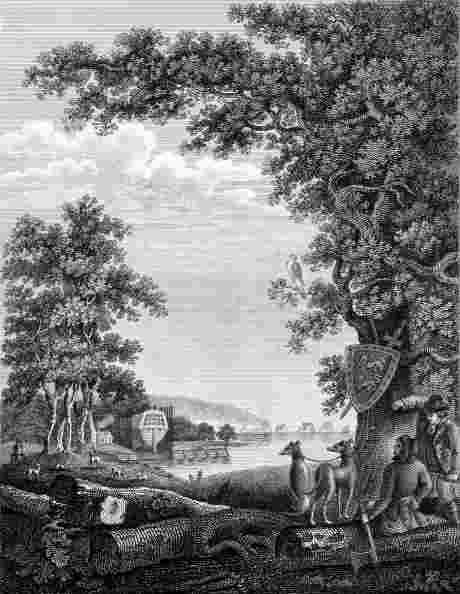 The study (the first study of its kind) tracked the fate of 80 forests worldwide in 10 countries across Asia, Africa, and Latin America, over 15 years and under differing models of ownership and management. Furthermore, the authors of the study, (published in, Proceedings of the National Academy of Sciences, Chhatre and Arun Agrawal of the University of Michigan in Ann Arbor ) suggest that locals would also make a better job of managing common pastures, coastal fisheries and water supplies.
This is in direct contradiction of the “tragedy of the commons” Agrawal says, “communities are perfectly capable of managing their resources sustainably”.
See links and quotes below,
http://www.newscientist.com/article/dn17937-give-forest....html
"....In the first study of its kind, Chhatre and Arun Agrawal of the University of Michigan in Ann Arbor compared forest ownership with data on carbon sequestration, which is estimated from the size and number of trees in a forest. Hectare-for-hectare, they found that tropical forest under local management stored more carbon than government-owned forests. There are exceptions, says Chhatre, "but our findings show that we can increase carbon sequestration simply by transferring ownership of forests from governments to communities".
One reason may be that locals protect forests best if they own them, because they have a long-term interest in ensuring the forests' survival. While governments, whatever their intentions, usually license destructive logging, or preside over a free-for-all in which everyone grabs what they can because nobody believes the forest will last.
The authors suggest that locals would also make a better job of managing common pastures, coastal fisheries and water supplies.
They argue that their findings contradict a long-standing environmental idea, called the "tragedy of the commons", which says that natural resources left to communal control get trashed. In fact, says Agrawal, "communities are perfectly capable of managing their resources sustainably"....."
http://www.pnas.org/content/early/2009/10/05/0905308106
"Trade-offs and synergies between carbon storage and livelihood benefits from forest commons Abstract Forests provide multiple benefits at local to global scales. These include the global public good of carbon sequestration and local and national level contributions to livelihoods for more than half a billion users. Forest commons are a particularly important class of forests generating these multiple benefits. Institutional arrangements to govern forest commons are believed to substantially influence carbon storage and livelihood contributions, especially when they incorporate local knowledge and decentralized decision making.
However, hypothesized relationships between institutional factors and multiple benefits have never been tested on data from multiple countries. By using original data on 80 forest commons in 10 countries across Asia, Africa, and Latin America, we show that larger forest size and greater rule-making autonomy at the local level are associated with high carbon storage and livelihood benefits; differences in ownership of forest commons are associated with trade-offs between livelihood benefits and carbon storage.
We argue that local communities restrict their consumption of forest products when they own forest commons, thereby increasing carbon storage. In showing rule-making autonomy and ownership as distinct and important institutional influences on forest outcomes, our results are directly relevant to international climate change mitigation initiatives such as Reduced Emissions from Deforestation and Forest Degradation (REDD) and avoided deforestation. Transfer of ownership over larger forest commons patches to local communities, coupled with payments for improved carbon storage can contribute to climate change mitigation without adversely affecting local livelihoods...."
However, none of this should be surprising given the multifarious faults* with Hardin's original article.
*
The Myth of the Tragedy of the Commons
http://climateandcapitalism.com/?p=513
Once Again: `The Myth of the Tragedy of the Commons`
http://climateandcapitalism.com/?p=576
|








 printable version


 Digg this
 del.icio.us
 Furl
Furl Reddit
 Technorati
 Facebook
 Gab
Gab Twitter
View Comments Titles Only
save preference
Comments (4 of 4)
Jump To Comment: 1 2 3 4This is a really important article because it challenges some of the key assumptons about how we should manage the environment and there tends to be a lot of politics between supporting the view that the commons cannot be managed and we are effectively all doomed and this article which says otherwise BUT ONLY under particular circumstances.
There are many in the environmental movement and peak oil movement who argue their case using the tragedy of the commons and one person in particular is Jay Hanson who was one of the early people in the Peak Oil movement with his famous www.dieoff.org website. And while he falls on the less than optmistic end of the spectrum, he cannot be dismissed easly as he has done years of background research in all related fields from energy, resources, politics, and the evolution of the human mind and how it handles denial and self deceives and so has thought really long and hard about the massive problems we face. But I do feel that he, perhaps has failed to acknowledge that various traditional societies at different times and places HAVE successfuly managed the commons for centuries. Having said that it only takes one generation to totally undo the sustainability of all the previous generations.
Probably what this article demonstrates is that to manage the commons, it must be done rigidly (in terms of management) and there can be no exceptions to the centrality of sustainability, otherwise it is 'game over'
That's true Terence. What's more we'll be hearing a lot of a priori guff about water charges in the near future.
For even more evidence of the providence of community management look at how the 2009 Nobel Prize for Economics (or more accurately the Bank of Sweden Prize in Economic Sciences in Memory of Alfred Nobel), has gone to Elinor Ostrum.
Ostrum who has devoted her career to studying Commons – and to disproving Hardin's "tragedy" claims, – won the Prize “for her analysis of economic governance, especially the commons”.
Over the past three decades Ostrum has demonstrated, self-organised communities of "commoners" are quite capable of managing water systems, forests, fisheries, the genome and other finite, scarce and rivalrous commons resources without destroying them.
check out;
Elinor Ostrom, Governing the Commons: The Evolution of Institutions for Collective Action (Cambridge: Cambridge University Press, 1990)
Nobel Prize in Economics to Elinor Ostrom “for her analysis of economic governance, especially the commons”
http://creativecommons.org/weblog/entry/18426
also
Carol Rose, “The Comedy of the Commons: Custom, Commerce, and Inherently Public Property,” University of Chicago Law Review 53 (1986): 711–781
All pre-industrial societies did good in "managing commons".
Why ?
They had no choice.
Nature ruled.
Every human action was achieved by muscle-power.
You slashed the corn with your own muscle power ...and that's how you slashed your enemies.
With Hammers and Sickles.
Horrible Machines changed all that.
The Hammer and Sickle is no match for the the Bulldozer.
Whole armies are no match for something as lethal as this destructive flying beast:
http://www.richard-seaman.com/Aircraft/AirShows/Nellis2...6.jpg
Technology got us into this hole.
Technology,and common sense, will dig us out of it.
Anyway,If we fail, Nature will not miss the Human Race.
Just one more failed species....like most species.
When the climate changes..........
"Necessity is the Mother of invention."
Not really.
The REAL mother:
"Desperation is the Mother of Invention."
.