Trump hosts former head of Syrian Al-Qae... Tue Nov 11, 2025 22:01 | imc Trump hosts former head of Syrian Al-Qae... Tue Nov 11, 2025 22:01 | imc
Rip The Chicken Tree - 1800s - 2025 Tue Nov 04, 2025 03:40 | Mark
Study of 1.7 Million Children: Heart Dam... Sat Nov 01, 2025 00:44 | imc
The Golden Haro Fri Oct 31, 2025 12:39 | Paul Ryan
Top Scientists Confirm Covid Shots Cause... Sun Oct 05, 2025 21:31 | imc Anti-Empire >>
Indymedia Ireland is a volunteer-run non-commercial open publishing website for local and international news, opinion & analysis, press releases and events. Its main objective is to enable the public to participate in reporting and analysis of the news and other important events and aspects of our daily lives and thereby give a voice to people.
Trump hosts former head of Syrian Al-Qaeda Al-Jolani to the White House Tue Nov 11, 2025 22:01 | imc
Was that not what the War on Terror was about ?
Today things finally came full circle. It was Al-Qaeda that supposedly caused 9/11 and lead to the War on Terror but really War of Terror by the USA and lead directly to the deaths of millions through numerous wars in the Middle East.
And yet today the former head of Syrian Al-Qaeda, Al-Jolani was hosted in the White House by Trump. A surreal moment indeed.
In reality of course 9/11 was orchestrated by inside forces that wanted to launch the War of Terror and Al-Qaeda has been a wholly backed American tool ever since then.
Rip The Chicken Tree - 1800s - 2025 Tue Nov 04, 2025 03:40 | Mark
That tree we got retained in 2007, is no more
2007
http://www.indymedia.ie/art...
2025
https://eplan.limerick.ie/i...
Study of 1.7 Million Children: Heart Damage Only Found in Covid-Vaxxed Kids Sat Nov 01, 2025 00:44 | imc
A major study involving 1.7 million children has found that heart damage only appeared in children who had received Covid mRNA vaccines.
Not a single unvaccinated child in the group suffered from heart-related problems.
In addition, the researchers note zero children from the entire group, vaccinated or unvaccinated, died from COVID-19.
Furthermore, the study found that Covid shots offered the children very little protection from the virus, with many becoming infected after just 14 to 15 weeks of receiving an injection.
The Golden Haro Fri Oct 31, 2025 12:39 | Paul Ryan
Disability Fine Lauder and Passive Income with Financial Gain as A Motive
Why not make money?
Top Scientists Confirm Covid Shots Cause Heart Attacks in Children Sun Oct 05, 2025 21:31 | imc
A comprehensive study by leading pediatric scientists has confirmed that the devastating surge in heart failure among children is caused by Covid mRNA shots.
The peer-reviewed study, published in the prestigious journal Med, was conducted by scientists at the University of Hong Kong.
The team, led by Dr. Hing Wai Tsang, Department of Pediatrics and Adolescent Medicine, Li Ka Shing Faculty of Medicine, School of Clinical Medicine, the University of Hong Kong, uncovered evidence to confirm that Natural Killer (NK) cell activation by Covid mRNA injections causes the pathogenesis of acute myocarditis.
Myocarditis is an inflammation of the heart muscle that restricts the body?s ability to pump blood. The Saker >>
The Wi-Fi and Mobile Phone Cancer Debate Heats Up Thu Feb 05, 2026 19:00 | Gillian Jamieson
Do mobile phones and Wi-Fi cause cancer and other harms? The World Health Organisation will soon pronounce on this question, and the scientific debate is heating up, says Gillian Jamieson.
The post The Wi-Fi and Mobile Phone Cancer Debate Heats Up appeared first on The Daily Sceptic.
Stripping Peers of Their Titles Could be Used as a Mechanism to Suppress Dissent Thu Feb 05, 2026 17:00 | Toby Young
In the Lords earlier, the Lord Privy Seal said the Govt would be bringing forward legislation so peers can be stripped of their titles. We should be very wary of this. It could be used as a mechanism to suppress dissent.
The post Stripping Peers of Their Titles Could be Used as a Mechanism to Suppress Dissent appeared first on The Daily Sceptic.
Starmer Blames MI5 and MI6 for Failing to Flag Mandelson?s Well-Known Epstein Ties as He Grovels for... Thu Feb 05, 2026 15:39 | Will Jones
Sir Keir Starmer has frantically tried to blame MI5 and MI6 for failing to flag the "depth and darkness" of Peter Mandelson's ties to Jeffrey Epstein despite the links being well-known as he grovels for his job.
The post Starmer Blames MI5 and MI6 for Failing to Flag Mandelson’s Well-Known Epstein Ties as He Grovels for His Job appeared first on The Daily Sceptic.
Premier League Star ?Complains His Club Are Making it Look Like He?s Gay? After They Put Him on the ... Thu Feb 05, 2026 13:23 | Will Jones
A?Premier League?star has reportedly complained to his club that they made him look like he's gay by putting him on the cover of their rainbow laces game programme two years in a row.
The post Premier League Star “Complains His Club Are Making it Look Like He’s Gay” After They Put Him on the Cover of Their Rainbow Laces Game Programme Two Years in a Row appeared first on The Daily Sceptic.
Lucy Connolly?s Racial Hatred Charge Was Fast-Tracked in ?Proof That She Was Stitched Up? Thu Feb 05, 2026 11:23 | Will Jones
Lucy Connolly?had her prosecution for stirring up racial hatred following the Southport attacks fast-tracked for approval by Lord Hermer, the Attorney General, in "proof that she was stitched up".
The post Lucy Connolly’s Racial Hatred Charge Was Fast-Tracked in “Proof That She Was Stitched Up” appeared first on The Daily Sceptic. Lockdown Skeptics >>
Voltaire, international edition
Will intergovernmental institutions withstand the end of the "American Empire"?,... Sat Apr 05, 2025 07:15 | en
Voltaire, International Newsletter N?127 Sat Apr 05, 2025 06:38 | en
Disintegration of Western democracy begins in France Sat Apr 05, 2025 06:00 | en
Voltaire, International Newsletter N?126 Fri Mar 28, 2025 11:39 | en
The International Conference on Combating Anti-Semitism by Amichai Chikli and Na... Fri Mar 28, 2025 11:31 | en Voltaire Network >>
|
Food Sovereignty in Africa
 international |
environment |
opinion/analysis international |
environment |
opinion/analysis
 Tuesday August 25, 2009 14:35 Tuesday August 25, 2009 14:35 by F Anderson E Russo - Food Sovereignty Ireland by F Anderson E Russo - Food Sovereignty Ireland

Ireland needs to speak out - neoliberalism cannot save Africa
International companies and foundations are pushing for a "Green Revolution" in Africa - promoting a model which is heavily dependent on fossil fuels and represents the kind of "same box thinking" which has left up to 1 billion people in the world hungry.
It is time for us to recognise that the system some believed in so blindly through the Celtic Tiger years is in fact causing increasing poverty, hunger and desperation at its “other end”. Around the world, countries and peoples are looking at ways to fight back.
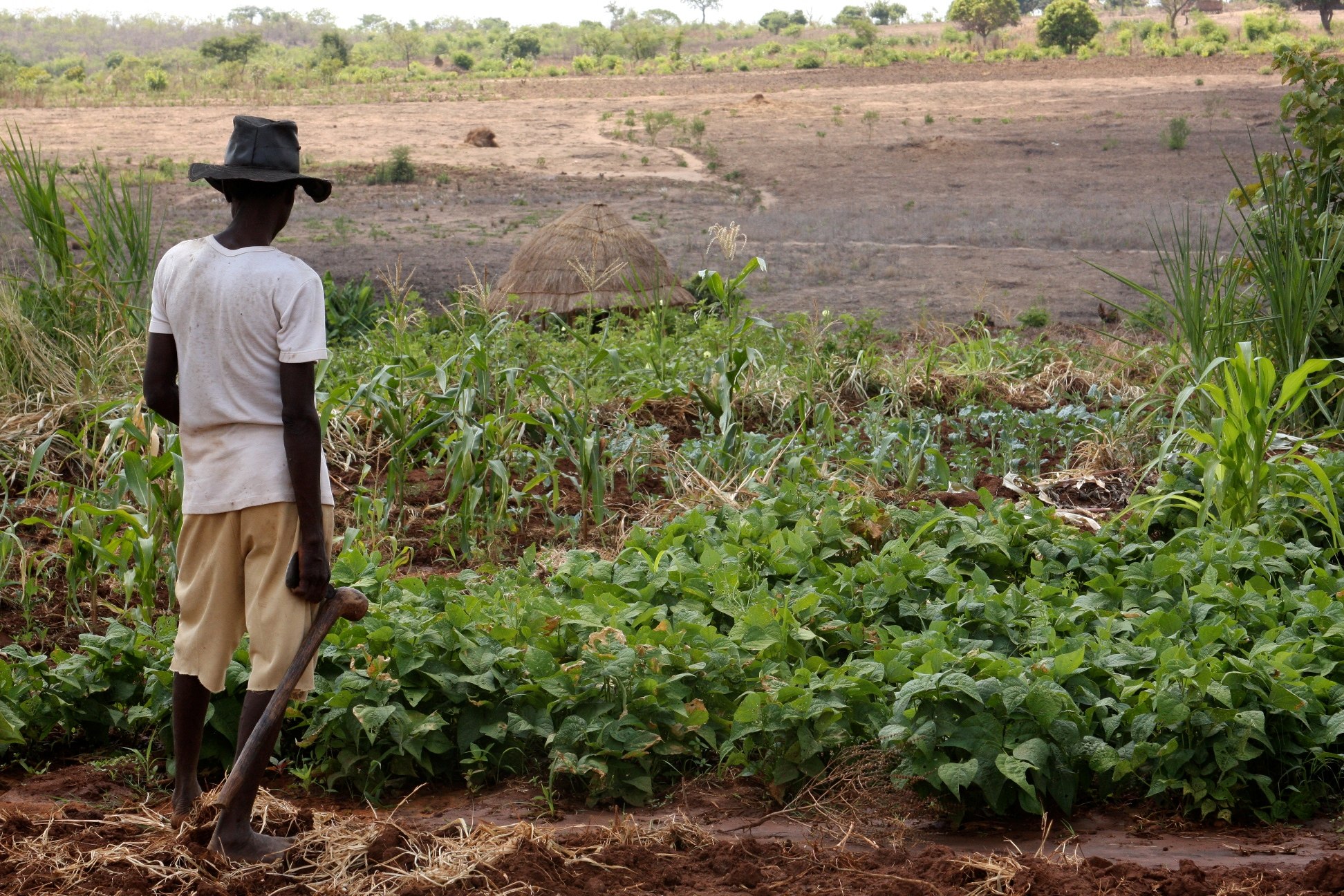
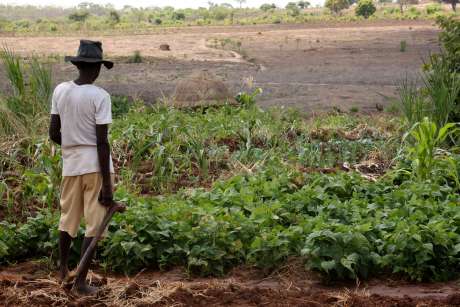 A farmer surveys his crop in Manica province At the recent G8 summit in L’Aquila Barack Obama said "There is no reason Africa should not be self- sufficient when it comes to food”. Of course this is true – Africa would have been feeding itself a long ago were it not for the policies which have prevented it from doing so. In order to really emancipate the people of Africa they need to be given back control over their own food systems, their own internal markets. This control has been constantly eroded by these same systems which purport to promote “development”. In this not-so-pretty world of our real here and now, one fact stands out more starkly than any other. With all the wealth, growth and seeming abundance of our times, it is now estimated that over 1 billion people in the world go hungry every day. It is another number which in these heady days of tumbling stock markets is so difficult to quantify in real terms. One billion is one thousand million, 250 times the population of our little island. This is the greatest shame on our planet, an embarrassment, an epic failure of our civilisation. It requires us, and our leaders to ask some hard questions.
The most shocking thing about this figure of course is not so much its magnitude, but the fact that it has arrived after twenty to thirty years of so called “development aid” and after government after government has committed to the eradication of hunger. Even more, it arrives in the wake of the declaration of the so-called Millennium Goals, which aimed to halve the numbers of hungry people in the world by 2015, and in spite of their efforts, the numbers have increased. There are more hungry people in the world now than when the governments of the world made those pledges. This is a catastrophic failure. One would imagine that it puts into question the method, the system of change which these governments propose. And the fact that it does not, the fact that the industrialised countries continue to push for further market liberalisation, to throw money at governments and NGOs and keep pushing forward with private investors for Africa, is more than embarrassing, it is irrational.
Differing views – AGRA?
The “Alliance for a Green Revolution in Africa” is an example of the kind of same-box thinking which has led to the current calamity. Backed by the Rockefeller Foundation as well as the Bill and Melinda Gates Foundation, AGRA calls for help for small farmers – good – but then begins to talk about seeds, inputs such as fertilisers, pesticides and herbicides and the need to increase their use in African agriculture. AGRA would provide farmers with “affordable soil additives” read “sell them fertilisers” and establish private seed companies in Africa (SEPA program) read “sell them GMO seeds and herbicides in a contract package”. It would also put into place the infrastructure for agri-business to have access to the one big remaining agricultural market in the world – Africa (APA program).
It is precisely these kinds of “aids” for small farmers in Africa, which envisage these farmers as potential clients in a liberal, open economy which have made the situation worse, not better. Small farmers in Africa and all over the world feed the majority of the world’s population – any measures which threaten their survival or make their lives more dependent on unpredictable markets are potentially life threatening. AGRA focuses on an increases in technological and commercial inputs, not on structural change. Vandana Shiva, an Indian environmental activist, has denounced the Gates Foundation’s role, saying it is the “greatest threat to farmers in the developing world.” Many of these worries may stem from the staff the
Gates Foundation is hiring – many come from multinational agribusinesses, such as Rob Horsch, head of Biotechnology in Monsanto, and now working for the Gates foundation.
Such voices are worried that the “Green Revolution” the Foundations propose may just be a way of engaging directly in African markets, without making any of the necessary structural changes which have caused the current problems – changes which many say need to be made now, and urgently. Taking back control of food In Africa, the food system has been broken for years -effectively since states were obliged to make major changes to their economies by the IMF and World Bank in order be allowed to restructure huge debts (which they had threatened to default on). The IMF effectively “bailed out” many banks which had lent much more than their capital to countries in the south.
The systems of concrete state supports – government stocks, price boards and other instruments of market regulation which are anathema to governments of the north were removed from almost every country in the south through structural adjustment programs enforced by these international institutions, often at the behest of private corporations. Put in the place of these government controls was the faith that markets could and would regulate themselves, providing a better deal for everyone. As we have increasingly seen, the market is a flawed instrument and for food, where normal market rules do not apply (inelastic demand, variation in supply) - these uncontrolled and speculative markets have been lethal. It is in these very countries where the greatest challenges to the dominant “development paradigm” outlined in the Washington consensus are now being articulated.
The way of the peasants
Mozambique is one such example. Pressures upon land, as well as increased dependence on imports due to the liberalization of the internal market in Mozambique meant that the “Food price Crisis” of last year hit the country particularly hard. The prices of staple foods which had once been produced internally (such as rice) but which are now imported shot up, meaning that farmers (above all farmers producing export crops) found it increasingly difficult to make ends meet. Many farmers are subsistence farmers, and any fluctuation in prices can put them and their families into danger.
Gonçalves Fundramo, a farmer in Mozambique says: “Nowadays most of our staple foodstuffs are imported from Europe, South Africa and Asia. The price is too high for the small farmers to afford, and it has increased every year. For example most of our rice comes from Thailand, India and Pakistan.” José Basquete, another farmer in the west of the country says it clearly: “A good number of small farmers have already renounced growing cash crops like tobacco, cotton and piri-piri [African bird-eyes chilli], because peasants don’t have a big margin of negotiation in the prices. Generally they don’t get well paid by big companies, so they don’t have enough money to buy all the foodstuffs they need to feed their families,
especially at present with the rising price of staple foods. They understand that the solution is to grow what they need directly, and to diversify crops, not to depend on just one. First to provide what their families and community need and then the rest.”
The peasants unions advocate the importance of growing crops in a sustainable way according to local traditions (in particular depending on the consumption habits of each region), and ask the government to promote and secure their access to land, water, seeds and credit.
The director of the Peasant Farmers movement in Mozambique gives us a clearer idea of the new framework they follow - “Food sovereignty gives priority to local and national economies and markets and empowers peasant and family farmer-driven agriculture...it promotes transparent trade that guarantees just income to all peoples and the rights of consumers to control their food and nutrition, and it ensures that the rights to use and manage our lands, territories, waters, seeds, livestock and biodiversity are in the hands of those of us who produce food.”
He adds, referring to the “Green Revolution”: “It is important to recognise the difference between “development” and advancement in technological terms. Technological advancement does not necessarily equate to improved standard of living for poor rural peasant farmers – more often than not it further entrenches their impoverishment. Technology is not always the panacea.”
Far from the image of Africa so often shaped by pictures of hunger and helplessness, the farmers of Mozambique are well organized and want to have control over their own future, and to be free to feed themselves, their families and their communities. There is a clear recognition here that the corporations at the heart of the food system have clear obligations to their shareholders – none of which are farmers in the global south.
Feast and Famine
There are many reasons for the increase in the number of hungry people in the world, including Climate change, population growth and other factors. The most overriding reason however, is structural, and has to do with the way the food system has been changed and transformed in the last fifty years. The change that has happened in the food system has not happened alone, but with a parallel push for the liberalization of capital, above all in the global south. This liberalization of capital, of market expansion, coupled with the changes within the food chain and its associated systems, have led to the current catastrophe, which is not only social, but political.
Essentially this change has come about through a constant increase in concentration. Concentration of seed, fertiliser and other chemical ownership, concentration of land, of resources. Concentration of processing facilities, of the entire input and downstream sector. This concentration has made a system of simple, short chains of production and consumption of foodstuffs into an incredibly complex web or cluster dominated by companies which reduce the input of farmers to “labour” and the input of consumers to “profit”. The changes have caused a huge level of rural to urban migration. Literally millions of people have been pushed off their land in the countryside and into the mushrooming cities of the south, where many live in shacks and slums in the huge outlying suburbs.
Farmers in Mozambique want the government to give them the chance to improve their conditions through more investment in agriculture and to protect their internal market from cheap imports so that they have the chance to develop their internal markets and feed their people. These ideas are not new, and they have been increasingly refined and developed into a whole new political and social framework for food – a framework which offers an alternative to the policies which have consistently failed over the last thirty years. From market liberalisation and concentration of agricultural systems to the radical alternative – food sovereignty – when people, farmers and consumers, take back control of how and where their food is produced.
When Peter Power, Ireland's Minister of State for Overseas Development addressed the High Level Summit on Food Security in Madrid earlier this year, he spoke at great lengths about our deep “understanding” of hunger in Ireland. He referred to the Irish Famine, pointing out that this made us credible in the eyes of the world. Mr. Power also supported the propositions of the World Bank and other international institutions at the conference, institutions whose past actions have to a great extent brought us to the sorry place we are today.
The Irish famine, like most of the famines of the last two hundred years - including many of those in sub-Saharan Africa – was not caused by a lack of food resources. There was enough food produced in Ireland during the famine to feed the population, but the population did not have access to the market, the food was grown for export. Similarly, there is no shortage of food in the world today. The world easily produces enough to feed the population. The failure is a failure of the population to feed one another – and to let the vagaries of the market, profit, and corporate control manage this area of human life. We have also experienced the impact of a neoliberal economic model here in Ireland. The situation is not the same here as in the global south, but those of us shaking our heads at the consequences of uncontrolled, unregulated expansion – as our property market demonstrated – should also be thinking hard about how such calamities can be avoided in the future. When we talk of food, the stakes are infinitely higher. Ireland, always the small country with the big personality, needs to speak loudly, and to support the voice of the most disenfranchised – the farmers and people all over the world who are crying out for real change, not for more of the same.
This project was funded by the Simon Cumbers Media Challenge Fund
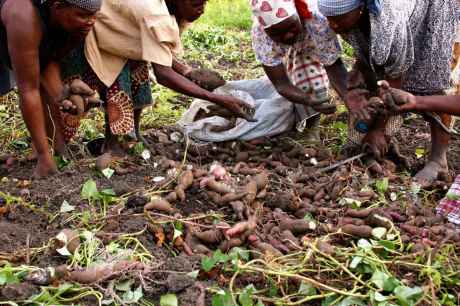
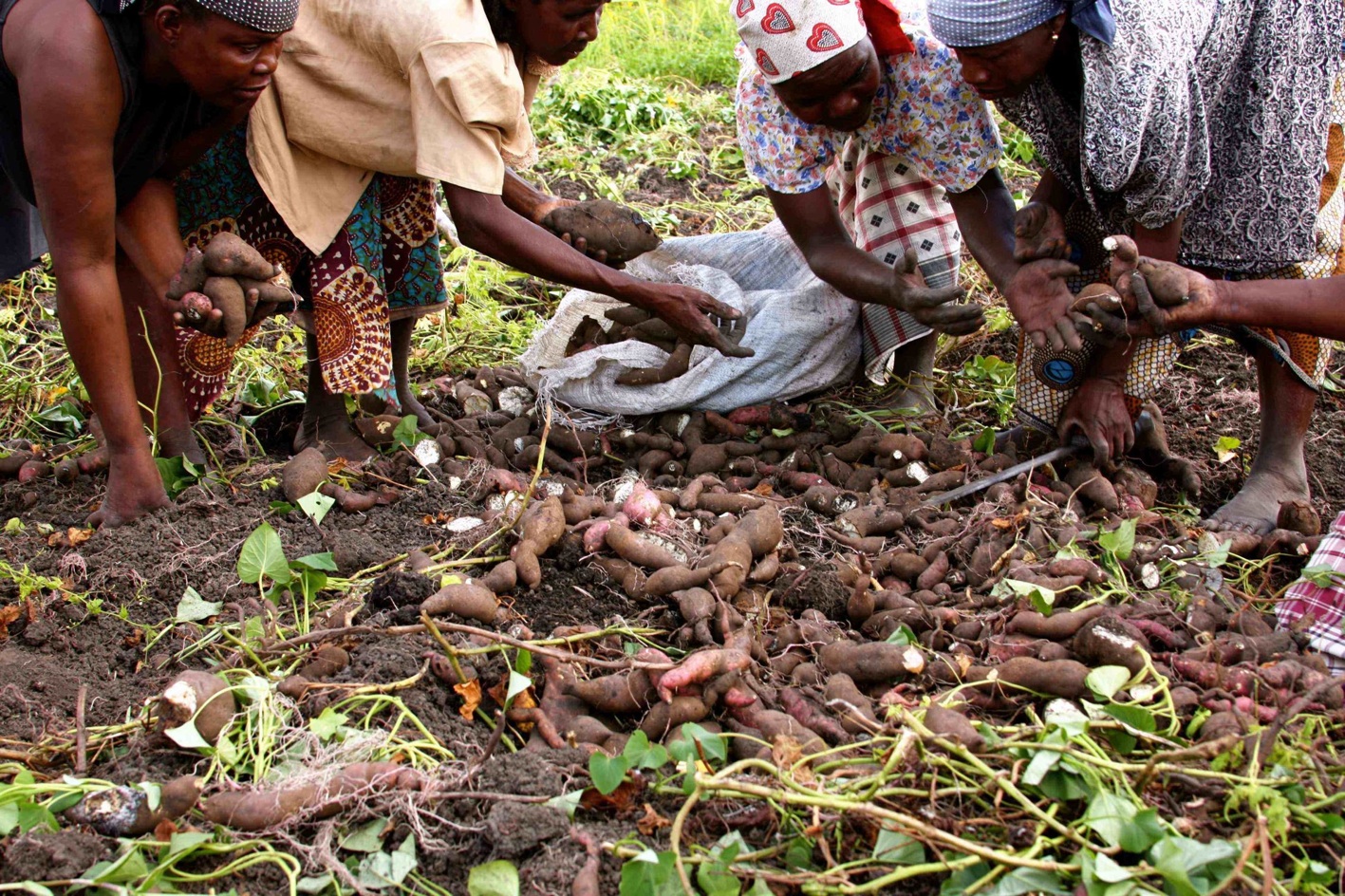
Women pick sweet potatoes near Maputo
|







 printable version


 Digg this
 del.icio.us
 Furl
Furl Reddit
 Technorati
 Facebook
 Gab
Gab Twitter