






|
|
Blog Feeds
The Saker Indymedia Ireland is a volunteer-run non-commercial open publishing website for local and international news, opinion & analysis, press releases and events. Its main objective is to enable the public to participate in reporting and analysis of the news and other important events and aspects of our daily lives and thereby give a voice to people.
Public InquiryInterested in maladministration. Estd. 2005
Voltaire NetworkVoltaire, international edition
|
Over three thousand objections to proposed Poolbeg incinerator in Dublin national |
environment |
feature national |
environment |
feature
 Tuesday October 03, 2006 00:17 Tuesday October 03, 2006 00:17 by rory by rory

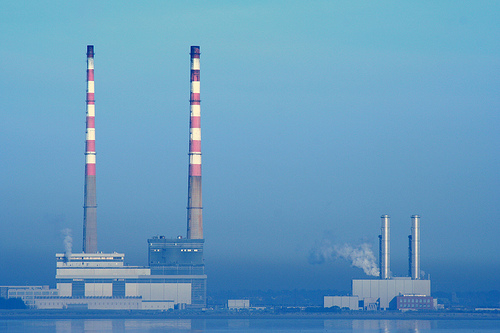
CRAI opposes the siting of an incinerator on the Poolbeg peninsula on grounds of health fears and traffic and environmental concerns. They are calling for alternatives to incineration such as public recycling and for democracy in planning and development.
Dublin City Council along with the other Dublin Local Authorities, Dun Laoghaire Rathdown, Fingal and South Dublin County councils have applied to An Bord Pleanala for approval on the Poolbeg Peninsula of an incinerator that will burn 600,000 tonnes of household, commercial and industrial waste per annum. The Public Private Partnership model has been proven with the Sewerage Treatment Plant to be more expensive for the tax-payer and detrimental to the health of people in the area. Serious traffic, health and safety and cost issues relating to the plant remain to be explained by Dublin City Council and the Government. Dublin City Council have already given €10 million to private consultants for the incinerator. Most of the local politicians have expressed their opposition to the incinerator, including local PD T.D. Michael McDowell. However, despite this, Dublin City Council have gone full steam ahead for approval. A motion was put to the Dail recently by the Green and Labour parties instructing the Minister for the Environment, Dick Roche, to drop the plans to build the incinerator but Fianna Fail and the PDs voted for the incinerator. There was no sign of Sinn Fein and the Labour Party or the Greens at the community organised event today. Apparantly they organised their own seperate photo shoots to get the most political advantage for themselves while the communities on the ground did most of the work in collecting the 3000 objections Rather than getting incineration and over development the poolbeg peninsula should be developed according to what is decided by the people of the area. More appropriate would be a nature park, light-impact community recreation facilities (walks, pitch and putt) and limited housing rather than the proposed incinerator and massive high rise Fabrizia development. The campaign to ensure the environment, communities and people are prioritised over developer's profit will continue with people power and more protests to step up the pressure on politicians to ensure the incinerator and other non-community friendly developments do not go ahead. |


 printable version


 Digg this
 del.icio.us
 Furl
Furl Reddit
 Technorati
 Facebook
 Gab
Gab Twitter
|

View Comments Titles Only
save preference
Comments (280 of 280)
Jump To Comment: 1 2 3 4 5 6 7 8 9 10 11 12 13 14 15 16 17 18 19 20 21 22 23 24 25 26 27 28 29 30 31 32 33 34 35 36 37 38 39 40 41 42 43 44 45 46 47 48 49 50 51 52 53 54 55 56 57 58 59 60 61 62 63 64 65 66 67 68 69 70 71 72 73 74 75 76 77 78 79 80 81 82 83 84 85 86 87 88 89 90 91 92 93 94 95 96 97 98 99 100 101 102 103 104 105 106 107 108 109 110 111 112 113 114 115 116 117 118 119 120 121 122 123 124 125 126 127 128 129 130 131 132 133 134 135 136 137 138 139 140 141 142 143 144 145 146 147 148 149 150 151 152 153 154 155 156 157 158 159 160 161 162 163 164 165 166 167 168 169 170 171 172 173 174 175 176 177 178 179 180 181 182 183 184 185 186 187 188 189 190 191 192 193 194 195 196 197 198 199 200 201 202 203 204 205 206 207 208 209 210 211 212 213 214 215 216 217 218 219 220 221 222 223 224 225 226 227 228 229 230 231 232 233 234 235 236 237 238 239 240 241 242 243 244 245 246 247 248 249 250 251 252 253 254 255 256 257 258 259 260 261 262 263 264 265 266 267 268 269 270 271 272 273 274 275 276 277 278 279 280Rory,
It really is a pity that you had to adopt such a sneering tone in that contribution. As far as the Labour Party is concerned you know that on the City Council myself and Kevin Humphreys have taken every possible step open to us on this issue. You also know that we have supported the activities and events organised by CRAI.
Yes we organised a seperate occasion to submit our objections.this was for two reasons and it may also apply to the other Parties:
1) We did not want o be seen as muscling in on the CRAI event. It was after all their event.
2) There were benefits for the cause in having a series of different submissions over the course of the day.
I have opposed the Poolbeg Peninsula Incinerator proposal since long before it was first mooted and long before there was any campaign of opposition. i do not need a lecture from a late comer, even if fully committed, to the campaign on my support.
Yep- minister Mc Dowell, pardon me-Tanaiste and Il Duce did not have to object
too strenously, he , afterall had Cullen bumped to Transport because the Critical
Infrastructure Bill was going to include Poolbeg thus feck with his vote majority.
We cannot have the Tanaiste not returned in an election can we-
so he lobbied for the Strategic Infrastructure bill-launched 16th Feburary 06 which
does nOT include the incinerator at Poolbeg.
This is called
1. Nimbyism.
2. buying a dail seat.
3. A stay on execution- the incinerator will be built but not until after
The Tanaiste is re-elected.
meanwhile he has 4% of the National vote and is playing chess with Bertie in the Dail.
but no-one gives a fuck about anyone else cos there were less than 30 people outside the Dail
demanding the Taoiseach's resignation.
less than 3o people.
Monaghan has no hospital.
Erris is sieged.
Tara is sold off.
they will come to the door asking for a vote and people are too busy getting
pissed, laid, stoned and playing politics to THINK POLITICALLY about how
to get the fuckers out.
Mc Dowell will play the Poolbeg game , and get returned to the Dail
and when the residents of Poolbeg start bringing their kids to
the hospitals for asthma and breathing difficulties they will find
they need universal heallth insurance cos state health care is
off the right-wing agenda.
WHEN ARE YOU GOING TO WAKE UP AND REALISE THAT THERE ARE NO POLITICIANS
just suits selling your country and go on the streets?
Excuse me, but who elected the PDs in the first place? Nobody. They have no right to be in Government on the basis of electoral support, which stands at about 2% (i.e. nonexistent). They were appointed to Government. If this were merely to "fill the numbers", they would not have been handed major ministerial portfolios.
Need this be spelled out?
Very well, then: The PDs have no mandate to be in Government. They were not elected.
How many times each day do you really think about how much waste YOU are responsible for? When you get out of bed each day, get in the shower, eat your breakfast, go to work - water, food, packaging, energy.....waste waste waste and more waste... We can all reduce the waste in our lives but living in this first world world comsumer society without contributing to its waste burden is IMPOSSIBLE. I am responsible for MY WASTE. YOU are responsible for YOURS. It needs to be dealt with properly in an environmentally responsible way.
We CANNOT recycle everything.
Incineration is a clean and responsible way to deal with the waste that cant be recycled or composted. It can generate heat and energy. I live less than 1km from the proposed incinerator in Poolbeg and I fully support it. For goodness sake the ESB have to import coal from Australia and Argentina to burn ON THE SAME PENINSULA to generate electricity for us - How does that make sense when our waste could be used as a resource in its place?
There are almost 2000 times more dioxins released in Ireland each year from backyard burning (thats people burning plastics and other rubbish at low temperatures in open fires) than the MAXIMUM allowable emissions from a modern incinerator.
I am not a politician. I am a realist.
We need practical, modern, efficient, solutions to deal with our waste.
I think this is one.
Realistic Citizen above displays a monumental ignorance of the facts about incineration. It is not safe and it is not clean. And it is not an 'alternative' to landfill either because the highly toxic ash that it produces (roughly 40% of the original volume) is disposed of guess where? Landfill!!!!! It pollutes farmland, towns and cities within a minimum radius of 50 miles. It causes death and illness and the US EPA is against it. Incinceration is a commercial solution to a civil problem. It is about making profit and not in the least about reducing waste. In fact, incinerator companies can and do influence government policy against more environmentally friendly solutions in favour of incinceration so their profit margins will not be reduced. We in Ireland will have to import toxic waste from other countries to make the proposed toxic waste incinerator in Co Cork viable. The only ultimate solution to our mounting waste problem is to tackle it at its root cause - consumerism. Not a lot of companies want you to think about that, though. They want you to go on spending until you drop dead from pollution. Incinerator companies want you to go on making as much waste as possible so their bank accounts will grow bigger and fatter. Incineration is the equivalent of fiddling while Ireland burns - literally and figuratively.
I have to say that I agree, somewhat, with RC. He/she displays an ignorance of your facts about incineration. there are some studies that would show most municipal incinerators to be operationally safe. Otherwise, the residents of many European cities would be tumor ridden subhumans (or dead) if you took everything you said to be gospel. It can be done relatively safely, with the fact that RC came out with the FACT (ref. EPA publication something or other, definitely there though)about there being more dioxins released by backyard burning in Ireland than any other source. This would indicate that there a whole lot of people on this lovely little island of ours that would support incineration, by virtue of their fact that they carry out small scale uncontrolled incineration in their own backyards. But getting back to the point, I think that many people would support incineration as a reasonable way to dispose of waste in a society that has established itself upon consumerism and the promotion of unsustainable exploitation of resources. You (and I, incidently) consider this to be vulgar, unethical and completely mad, but its the will of the people that should win out at the end of the day (or so they say), and I reckon that most would support incineration, unless of course its in their own vicinity, and therefore impact their property portfolio, and ipso facto their ability to be uber consumers.
I'm all for smashing capitalism, using local produce, being energy aware etc., but this is not going to happen in the short term (barring the unforeseeable happening, which I'm banking on), therefore incineration is a solution, in the short term, for the growing crisis in relation to waste management. Its either that or keep building more landfill space.
People in general don't give a toss what happens to their waste, so long as its out of their sphere of existance. It can be in a hole in the ground, a municipal thermal treatment unit, the moon or a bog up the mountains. You have to realise that unless everyone is going to get in on the whole zero waste aspiration, then it is not going to work, and solutions are required for this scenario,.
I know, it sounds like I have no faith in my fellow man, and you'd be absolutely right to think that of me, because like it or lump it, most of us, are filthly slobs who simply don't care.
'It's the will of the people that should win out at the end of the day.'
The will of the majority of German people during the 1930s was for the elimination of the Jewish race. Pointing to a majority viewpoint doesnt necessarily prove that something is right. In any case, there is no national public consensus on what we should do with our waste - there is no proven majority point of view that anyone can look to - outside of the ferocious local opposition to incineration wherever it is proposed - not just here in Ireland but in many other countries as well. 300 incinerator proposals have been defeated in the USA and it is being abandoned as a means of waste disposal there. Why? Because the US EPA has acknowledged that there is no safe level of dioxin emission - no matter how small - they are the most deadly substance on earth - and incinerators are the single greatest source of dioxin emissions. For your information, many people are indeed tumour ridden and ill in the vicinity of existing incinerators. The public are deliberatelly kept in total darkness about this issue -the only debate is between incinerator objectors wo take the trouble to inform themselves and profiteering of foreign companies like Indaver in Belgium.
As to backyard burning in Ireland - it is against the law - precisely because it is so poisonous. The reason people (a tiny minority, incidentally) do it is because of the gross incompetence and negligence of a governemnt that, in 80 years of independence, has still not managed to organise adequate waste collection and recycling facilities in a country the size of a postage stamp - despite being one of the wealthiest nations on earth. Anybody living in a rural location has to deal with the full reality of their own waste and in fact the vast majority of us recycle everything we can, compost all vegetable matter and pay for the disposal of other rubbish at waste centres, which we have to drive to. The miniscule level on which backyard burning takes place in Ireland is always wheeled out by incinerator apologists as evidence to support incineration. The logic of this escapes me. If backyard burning is deadly too (and it is) why the hell would we want to engage in mass incineration as an alternative?
Consumerism as a way of life is dying - everybody knows that we cannot continue like we are. The ONLY quesiton that remains for responsible people is how to confront the excesses that are threatening to make us extinct. A lot of people already realise this and it is only a matter of time before everyone does. Our way of life will change because it has to. Incineration, oil exploration etc and all the filth, violence and corruption that go with them will be abandoned because we need clean air to survive. It's as simple as that.
The logic of this escapes me. If backyard burning is deadly too (and it is) why the hell would we want to engage in mass incineration as an alternative?
High temperature incineration breaks down many compounds that would otherwise be released into the atmosphere. The question is whether or not the state or private contractors can be trusted to run the incinerators at the high (and expensive) temperatures necessary to do that or will they cut costs.
Of course the main solution would be to reduce packaging and waste and then incinerate what can't be recycled.
"Waste does not disappear when burned
This belief that if we burn things they simply go away is completely erroneous. Breaking things into fine particles has the effect of vastly increasing their surface area and therefore their ability to pollute. A single lump of waste weighing a pound would have a surface area of 44 square inches. When the same pound is broken into fine particles, its combined surface area grows to 9900 square yards (approximately two soccer fields). This fact is important for several reasons. The incinerators act as synthesizers and therefore compound the waste problem because other deadly toxic substances, not found in the original waste stream, are produced in the combustion process. At temperatures ranging from 400 to 1600 C complex organic molecules break down into basic atoms. Then combustion gas cools as it travels up the chimney stack where some atoms recombine to form new, and often more hazardous, compounds. So fine particles, with their large surface area, provide an inviting place for pollutants like dioxins and furans to attach themselves before they are released into the air. These particles can also become coated with toxic metals cadmium, arsenic, chromium and zinc. Some of these fine particles remain airborne for long periods of time and travel long distances, even hundreds of miles before they settle on land or water. So an incinerator can pollute the environment way beyond the immediate are where it is operating.
Creating dioxins and furans
Dioxins, and their closely related organochlorine cousins furans, are created when you burn, organic matter, newspapers and plastic wrapping or any kind of synthetic material. Dioxin is the collective name for numerous toxic chlorinated compounds that are undesirable by-products of the combustion process and chlorine industry. There are 75 different dioxins and 135 different furans. Some dioxins like TCDD -or 2,3,7, 8-tetracholorodibenzo-p-dioxin are particularly poisonous.
In contrast forest fires create very little few dioxins. So dioxins and furans are very a modern phenomenon. Research from core sediments found little evidence of dioxin before the 1930s. Dioxins are also produced during the manufacturing of certain pesticides and the bleaching of paper. As the ecologist Sandra Steingbrabers put it "dioxins and furans are not the natural-born children of fire. They are the unplanned, unwanted offspring of modern chlorine chemistry".
Proponents will argue that the new generation 'state of the art' operate to very high standards. Despite these claims even the modern incinerator spews dioxins into the air. They contaminate the land and subsequently the food that is grown on this land. Dioxins accumulate in the tissue of grazing animals like cows. They, in turn, pass the dioxins on to humans when we consume dioxin-contaminated milk or meat. Furthermore there is no safe levels for dioxin exposure. Recent research indicates that it can disrupt biological process at even a few parts per trillion.
It is also worth bearing in mind that the statistics used by advocates of incinerators to prove that they are not a health hazard normally relate to laboratory tests or those carried out under supervision. But in the real world things are not so neat, clean and tidy. This is what researchers from the US EPA and the Occupational Safety and Health Administration discovered in a 1990 study. They found that the level of emissions achieved under laboratory conditions or even in a commercial incinerator being inspected by prior arrangements by a regulatory authority are likely to be far lower than those routinely emitted during normal operations. They made 62 unannounced visit to 29 incinerators around the country. 69 percent of the facilities were found to have violated of their emission's license. "
This all should scare the pants off of everybody in Ireland because, here, the EPA has announced that it is the duty of the polluter themselves both to report any breaches of their (woefully inadequate) guidelines and also to decide whether the breach is serious or not!!! Call me cynical, but isn't that the same as putting the cat in charge of the cream?
I dont want to assume anything about any of the contributors in this forum however I feel I should reiterate some of my points in defence of my opinion, and my right to express it.
I didnt make my contribution as any kind of an pro-capitalist polemic. Im being realistic about the options I am faced with in dealing with my waste. Like it or not, Ireland is an industrialised, wealthy country which generates lots of waste of all kinds so that we can have all the things we've come to like in our daily lives - housing, transport, food, clothes, CDs, tvs, cosmetics, bars, restaurants, this list is literally endless - just look around you! Im being responsible in taking ownership of my waste.
In taking responsibility for my part of the problem as a willing consumer I therefore resent my opinion on incineration being referred to as one of "monumental ignorance". I'm intelligent and informed and I still choose incineration as part of a balanced solution. I know how the process works and how its wastes and byproducts are dealt with afterwards. I know how the process is managed and controlled and what emmissions are allowed and at what limits.
I just wanted to introduce some balance into the debate and say what I think people can accept if properly informed. We cant pick and choose the technology we want and wish for an Eco-Fairy to come and take away the things we dont.
Hello informed not ignorant.
We are a democracy, we can pick and choose the technology we want - we just have to use our wallet or our vote!
We need sustainable living, alternatives to mass burn are gaining every day, the sell by date for commercial incineration has passed. - too problematic, like cigarettes.
yes, just like cigarettes the reasons for mass incineration are going up in smoke. But theres just one problem with that, unless this silk cut I hold in my nicotine stained fingers is a figment of my imagination, then ciggies are still going strong, as are the arguments for incineration, or thermal treatment as I prefer to call it, far less likely to raise heckles.
Incidently, my faith in mankind has not, and never will be restored by debates such as these, but its amusing to see us argue and throw insults as we try to play God.
Ignorance may not be the will of the people (unusually constructed title), but ignorant are the people. Most people you know may not burn Miriam, but its certainly more than a tiny minority (every survey conducted in relation to unaccounted for waste would suggect the opposite) that continue to burn their waste. You obviously don't frequent the more working class (quaint description, I know) areas of the cities, or indeed most of rural Ireland, and lift your nose to take in that very distinctive odour of burning municipal refuse. Go for a drive through the countryside at dusk just after Xmas, and you may see what I mean, plastic blister packaging melting away, bubble wrap a hissing and a popping, and partially burnt wrapping paper floating away into the night.
Incineration as an alternative to backyard burning makes a lot of sense, one controlled point discharge where the waste is burned in a specialised environment vs.thousands, yes thousands of dispersed point discharges in peoples back gardens.
As for your references to the Holocaust etc. and being a incineration apologist, a wee bit over the top dear, certainly doesn't strike me as being the arguments of someone who has fact on their side.
Decadent action is the way to go......
I apologise if any of this has been stated already but I haven't had the chance to read through all the material.
Firstly, opponents of incineration tend to cite dioxin levels from countries/incinerators that were operational before the EU Directive on Incineration was adopted. This is misleading. An incinerator operating at the very limiits of what's allowed under the Directive would produce 0.33 grammes of dioxins for 600,000 tonnes of waste incinerated in a municipal waste incinerator.
I'd also like to cite Professor Bruce Ames, winner of the Cancer Research Foundation Prize and the Tyler Prize and one-time member of the National Cancer Advisory Board of America. He states that he amount of TCDD (dioxins) emitted from modern incinerators is a trivial pozzible hazard. The carcinogenicity of the dioxins from landfills is negligible because of the fact that the levels from MSW incinerators are ~ 0.001% of the toxic dose.
Finally, bearing the limits imposed by the directive, a Municipal Waste incinerator will contribute less than 2% of the total dioxins.
Make of that what you will.
All those concerned about the dangers connected with incinerators may wish to consider the views expressed by United States chemistry professor Dr Paul Connett's in his talk on Saturday, March 27, 1999 - which relate in part to the cancer causing dioxins from incinerators, and also to the way such pollution is directly linked with corruption:
http://www.europeancourtofhumanrightswilliamfinnerty.co...e.htm
Despite the polemic nature of Dr Connett's speech, he does make a good point about chlorine.
I didn't get through it all so I'm not sure if he mentioned the dioxins from vehicles. I'd like to think he did because it would mean all the bases are being addressed.
But he made his speech in 1999 before the incineration directive was adopted so it doesn't cover the modern incinerators that must adhere to pretty strict limits and pre-2000 the dioxin emissions would be much higher than (a) the directive would allow and (b) the current technology allows.
Wow! Three thousand objectors. What moral authority.
I presume that all these self-righteous NIMBYS will explain how they propose Dublin City and County intends taking responsibility for the 20,000 tons of 'difficult' wastes that are currently being generated in the Dublin area and exported for disposal in the UK, Belgium, and India?
Er......but....mumble mumble.............
Give us all a break.
There are technologies other than incineration and landfil now coming on-stream. They are very very expensive compared to the existing options. Will Dubliners pay the money for disposal of the waste from the industries which make them the wealthiest people in ireland in a more environmentally friendly way? Like hell they will. They won't even pay their existing service charges. Nah goys, lets keep sending it to the Brits, Belgians and Indians.
I know how the process works and how its wastes and byproducts are dealt with afterwards. I know how the process is managed and controlled and what emmissions are allowed and at what limits.
If you actually understood that and the totality of the health, safety and environmental impacts of incineration you could not seriously be making the claims for incineration that you are making. The evidence against it is overwhelming - as any averagely sane and honest person has to acknowledge when made aware of the facts. All of which have been pointed to here on Indymedia and elsewhere repeatedly.
Protestations and claims of ipersonal 'ntelligence' and knowledge are no substitue for the facts. Your post amounts to nothing more than the 'testimonies' we see in advertisements every day of the week, in cheap magazines the world over. Those who oppose incinceration have gone yo a lot more trouble than you clearly have in order to arive at the conclusions they have. Murder is wrong. Incineration is wrong. Same difference.
Nice little letter though. But no £5 star letter awards, here, I'm afraid.
"If you actually understood that and the totality of the health, safety and environmental impacts of incineration you could not seriously be making the claims for incineration that you are making. The evidence against it is overwhelming - as any averagely sane and honest person has to acknowledge when made aware of the facts. All of which have been pointed to here on Indymedia and elsewhere repeatedly."
See, you're probably taking information on dioxin emissions from old data, i.e. data from before 2001. Incinerators that don't meet the standards specified in the directive have, in many cases, been closed down and some have been upgraded so that they do meet the standards. I've yet to see anyone on this site, or anywhere else, give compelling evidence on the so-called health/environmental hazards of a modern municipal waste incinerator....one that cannot emit more than 0.3 grammes of dioxin per annum for a plant incinerating 600,0000 tonnes of waste. And that 0.3 grammes is a worst case scenario...where the incinerator is operating just at the limit.
Of course, if you have new data taken from the last 5 years I'd be happy to consider it but data from any time before that doesn't and shouldn't carry any weight in a debate on incineration because it's simply not relevant to this case.
Hi John Jasper
This must have been on your mind over the Christmas and New Year breaks. I hope it didn't spoil things for you? When you claim that you have seen nothing on Indymedia 'to persuade' you that incinceration is as unsafe as it actually is, that's a porky pie, now isn't it? You have seen loads of proof here in fact. What you really mean to say is that you have seen nothing that you can admit to being persuaded by because that doesnt suit your purpose: to make as much profit as possible by polluting the Irish environment and inflicting death and ill health on many people.
You are here to pedal industry propaganda dressed up as an (unconvincing) attempt to 'debate' the 'possibilites'.
The USA EPA has said: Dioxins are the most deadly substance known to man
There are no safe limits
The incinerator has not been built that does not emit dioxins
There is a ton of scientific evidence behind those statements - which you know all about. When the US EPA makes such statements, and given their pro business bias, it is only a psychotic like yourself who would have the brass neck to dismiss them. You can quote your obfuscating, selective and self-serving figures at us as much as you like but this is not a stacked-hearing where vital aspects of what you are proposing to do to us are not even permitted to be discussed and where government placemen have been primed to endorse you, no matter what nonsense you are talking. This is a level playing field and all you can do here, which is what you are so monotonously doing, is trying to derail all honest discussion of what incineration actually does to people. You are straining to create doubt in the minds of people who may be less familiar with the science. Don't be taken in folks. Go to the Global Anti Incinerator Alliance website and find out just how alarmed people are the world over about what incinceration has done and is doing to our planet.
John's basic argument is that if he and a handful of others can make a vast profit out of exploiting an environmental problem, thats worth putting lots of people in the ground for. And making lots of others extremely unwell over a foreshortened lifetime too. Plus ruining farm land , destorying wild life habitats and spewing the same dioxins into the sea to do their deadly business there too.
Keep it coming - you are giving us an excellent opportunity to highlight the sham of the pro-incineration case.
The Harney/McDowell defence.
"Hi John Jasper
This must have been on your mind over the Christmas and New Year breaks. I hope it didn't spoil things for you? When you claim that you have seen nothing on Indymedia 'to persuade' you that incinceration is as unsafe as it actually is, that's a porky pie, now isn't it? You have seen loads of proof here in fact. What you really mean to say is that you have seen nothing that you can admit to being persuaded by because that doesnt suit your purpose: to make as much profit as possible by polluting the Irish environment and inflicting death and ill health on many people."
There's been no credible evidence to suggest that modern incinerators are the sources of dioxins that you portray them to be. You've engaged in misinformation - incinerators are responsible for 70% of dioxins and citing the Stockholm Convention which states nothing of the sort - and I'd just prefer to see some data, some fact and figures that aren't based on incinerators that cannot be built or tolerated under the Directive.
"You are here to pedal industry propaganda dressed up as an (unconvincing) attempt to 'debate' the 'possibilites'."
I'm here to peddle nothing but my opinion. If you think that there's no flip-side to the debate then why do you keep posting? You're incapable of debate if that's your stance.
"The USA EPA has said: Dioxins are the most deadly substance known to man
There are no safe limits
The incinerator has not been built that does not emit dioxins"
That's true. But ~2% of all dioxins is negligible when compared with other sources. Like home heating, like cars, like backyard burning.
"There is a ton of scientific evidence behind those statements - which you know all about. When the US EPA makes such statements, and given their pro business bias, it is only a psychotic like yourself who would have the brass neck to dismiss them. You can quote your obfuscating, selective and self-serving figures at us as much as you like but this is not a stacked-hearing where vital aspects of what you are proposing to do to us are not even permitted to be discussed and where government placemen have been primed to endorse you, no matter what nonsense you are talking. This is a level playing field and all you can do here, which is what you are so monotonously doing, is trying to derail all honest discussion of what incineration actually does to people. You are straining to create doubt in the minds of people who may be less familiar with the science. Don't be taken in folks. Go to the Global Anti Incinerator Alliance website and find out just how alarmed people are the world over about what incinceration has done and is doing to our planet. "
The US EPA makes statements that one of your cohorts dismissed and discredited in a previous debate. Yet now it's ok to cite them? Personallly, I've no problem with you citing them. But anyway, I've cited the work of Professor Bruce Ames who has won awards for cancer research who said that the effect of dioxins as carcinogens wasn't truly known because any tests were at the toxic limit as opposed to 0.01% of that which is what the output from an incinerator would be. But leaving that aside, the US EPA stated that dioxins are harmful - they didn't say that incinerators were the sole generator of them. And that's because they're not. Now if you want to cite recent data, that's fine. Do so. Don't just say "there's loads of evidence out there". Links and actual sources, if you wouldn't mind. Anything in the last five years would do.
The US EPA has also characterized modern incinerators as "producing electricity with less environmental impact than almost any other source of electricity". The US EPA also said that modern incinerators are no longer significant sources of dioxins and furans. The US EPA said those things despite saying dioxins are deadly!
See, you've said dioxins are deadly and while that may be true, it doesn't mean incinerators are. You need to stop trying to make tenuous links like that.
"John's basic argument is that if he and a handful of others can make a vast profit out of exploiting an environmental problem, thats worth putting lots of people in the ground for. And making lots of others extremely unwell over a foreshortened lifetime too. Plus ruining farm land , destorying wild life habitats and spewing the same dioxins into the sea to do their deadly business there too."
Hysterical nonsense. Putting people in the ground? Cars have been around a lot longer and dioxins have been around a lot longer than incinerators. Ireland hasn't ever been dioxin free so maybe wise up a little and stop trying to make a point that incinerators, that will contribute no more than 4 g of dioxins, per annum (at total capacity), will kill 'lots of people' and basically turn Ireland into some post-nuclear holocaust place.
"Keep it coming - you are giving us an excellent opportunity to highlight the sham of the pro-incineration case."
You need to educate yourself a bit more. Look at the directives, current practices and emissions, do the maths and read up on the science.
Arsenic is another extremely dangerous substance when ingested. However, the North Sea, for example, contains arsenic - enough to kill every person on the planet if it were to be extracted, in fact - yet people swim in the North Sea and eat fish caught in the North Sea.
Toxicity doesn't always constitute a 'clear and present danger'. It's the concentration or the risk it adds that determines the 'danger'.
Arsenic is another extremely dangerous substance when ingested. However, the North Sea, for example, contains arsenic - enough to kill every person on the planet if it were to be extracted, in fact - yet people swim in the North Sea and eat fish caught in the North Sea.
And that's the crux of the matter ... will incineration release dioxins in a manner which allows them to be concentrated to sufficiently high levels that they'll cause health problems to e.g. the local residents? As I'm sure you're aware there's lots of mercury in some seas and we can swim just fine in them, but it's not a good idea to eat the fish if you're pregnant. Are the people living in Ringsend going to receive all of the 4g dioxins or will it magically be dispersed like pixie dust into the atmosphere? Will there be a plume of dioxin-concentrated smoke blowing inland? What concentrations and exposure levels are safe for air-borne dioxin exposure?
A related issue is that the presence of incineration capability may actually decrease the reduce, reuse components of waste-strategies because it's a lot simpler to just burn it. (Will centralised city located incinerators remove the problem of people burning their waste in the country? Probably not if we're charged a per-unit-use fee for waste, in which case it's cheaper to burn it out the back, or in the Jotul and hope that you don't get inspected.)
I'd agree on the need for clarity on what specific types of incinerators we're talking about though and for sticking with facts rather than diverging into personal insults.
"And that's the crux of the matter ... will incineration release dioxins in a manner which allows them to be concentrated to sufficiently high levels that they'll cause health problems to e.g. the local residents? As I'm sure you're aware there's lots of mercury in some seas and we can swim just fine in them, but it's not a good idea to eat the fish if you're pregnant. Are the people living in Ringsend going to receive all of the 4g dioxins or will it magically be dispersed like pixie dust into the atmosphere? Will there be a plume of dioxin-concentrated smoke blowing inland? What concentrations and exposure levels are safe for air-borne dioxin exposure?"
Firstly, it's 0.4 g and that is the worst case scenario but most modern incinerators won't produce more than 10-15% of these limits.
There will naturally be dispersion since that 0.4 g is over a full year.
The Directive thresholds are based on consultation with the World Health Organisation so they're already taking into accound exposure limits.
"A related issue is that the presence of incineration capability may actually decrease the reduce, reuse components of waste-strategies because it's a lot simpler to just burn it. (Will centralised city located incinerators remove the problem of people burning their waste in the country? Probably not if we're charged a per-unit-use fee for waste, in which case it's cheaper to burn it out the back, or in the Jotul and hope that you don't get inspected.)"
The incineration targets, as far as I'm aware, are based on exhausting the present and likely recycling capabilities. There probably aren't enough quantities of the different materials being generated for a recycling market to be set up indigenously and besides, the waste that cannot be recycled now is being landfilled or exported for landfill and/or incineration. It won't mean that everything will just be lobbed into the incinerator. Other countries around Europe have incineration as part of an integrated waste management system that achieves high recycling levels as well. Forfas published a report on it a few months back if anyone's interested in looking at that.
"I'd agree on the need for clarity on what specific types of incinerators we're talking about though and for sticking with facts rather than diverging into personal insults."
Seconded.
Also, I don't have a vested or professional interest in this. I just happen to be interested in it because I come from a scientific background. And I'm not strictly pro-incineration since I'm on the record as disagreeing with the incinerator in Meath and the one in Ringaskiddy. So, I'd prefer a little of the hysteria and acccusations about being pro-incineration and what-not and just addressed as someone who happens to have a differing opinion.
Far safer alternative methods are now available including recycling, mechanical biological treatment and plasma gasification, a combination of these would be safer, would produce more energy, and would be cheaper than incineration in the long run, much cheaper when the health costs were taken into account. These more up-to-date methods should be employed.
Health costs should be routinely taken into account when deciding on waste disposal strategies.
Besides dioxins, serious health consequences of fine particulate pollution from incineration have become apparent in the last ten years, making incineration the least preferred option for getting rid of waste.
For the incinerators in Cork Harbour, which are all inhouse, except the crematorium, there is no routine monitoring the body burdens of some key pollutants in local inhabitants, no periodic monitoring of the content of dust in homes in the locality, no funds to routinely monitor the health of our school children or even do a base study. Don't wish our concerns on any community be it Ringsend or the other areas in the country earmarked for incinerators to burn our resources.
Every single one of the 'arguments' that Jasper has raised in his post above has already been annihilated on this and on other threads. The science and the evidence has been posted in response to him over and over again. The campaign of misinformation is from John, in fact. He keeps going round and round and round the same points hoping that each time there is a different audience for his distortions and hoping to wear us down by constantly making us post the same information over and over again. It is a war of attrition and it is a very determined one. Indymedia is just about the only place that comprehensive information is being published in Ireland about the effects of incineration. It has to be neutrealised.
John/Jasper cannot deny the US EPA have said there is no safe limit for dioxins and yet he goes on to argue that the amounts the 'new improved incinerators' emit are safe. They are not - they can never be as has been shown again and again - and the finer particulates from these oh-so-safe incinerators are MORE dangerous than before.
Add into that pot the fact that virtually every incinerator in the world frequently exceeds the limits set them - sometimes by horrific amounts. The record in the UK is shocking. And the monitoring record of our EPA on these sorts of issues is atrocious. Not least because they have stipulated it is the polluter who decides whether they have breahed limits and whether or not those breaches are serious. The polluter reports themselves. It's their decision!!!! And how likely is that?
Also the arrangements that are now in place for 'on the spot' inspections are appalling. There is virtually no such thing. We had a situaiton in Cork Harbour where 260 tonnes of cuastic soda was leaked into Monkstown Bay. A few days later 100 children started a sailing course in the same water. Yet it was only seven weeks later that the spill was made public. God knows what damage was done to the marine environment and what may yet turn out to be the case for some of those children, but our EPA has valiantly defended this state of affairs. Consider also the degeree of influence the incineration industry has on government policy and the fact that IBEC is behind it as an economic essential for businesses who might otherwise have to care about the damage they are doing and pay for more costly forms of disposal. But even where businesses have found LESS costly alternatives, the incineration industry has scuppered it because the effect on their own profit margins. Its poisonous in every single way. Incineration is a business - it is about profit - waste will have to be imported. We dont need them. It is a gigantic and deadly con.
Well done. My arguments have never been annnihilated on a scientific or any other level. You pick and choose the US EPA statements you want to...carefully dismissing the ones that state that incinerators pose no health risk.
2% of total dioxins.
There's none so blind as those who will not see.
I've quoted and given sources. You've yet to do anything of the sort. But yet you consistently engage in vacuous attempts to discredit what I say because it doesn't suit you to concede anything. Your hyperbole does you no favours in your cause.
Here is just one of hundreds of disgusting outcomes that John is anxious to associate himself with:
Incinerator Emissions and Shrinking Genitals
Poisonous emissions from incinerators could be seriously hindering the sexual development of children, a medical research has confirmed.The research, published in The Lancet and released in May this year, found that teenagers living near incinerators had smaller sexual organs than those in non-incinerator areas.
The teenagers' bodies, insist the findings, contain high levels of toxic chemicals that not only retard and diminish sexual development, but are also linked to cancer, heart disease, allergies and breathing illnesses.
The study looked specifically at heavy metals, dioxins and polychlorinated biphenyls, all of which are key contaminants in incinerator emissions. The study compared the levels and effects of environmental pollutants in the bodies of children living near two waste incinerators in Belgium with those of adolescents living in rural Belgium away from incinerators.
Boys living near the incinerators were found to have smaller testicles which could be due to exposure to endocrine disrupting chemicals from the emissions of the incinerators and a nearby lead smelter during fetal, neo-natal (immediately after birth) and prepubertal periods of their lives.
While girls adversely suffer from breast retardation as a result of high concentrations of dioxin-like compounds, boys are said to suffer mainly due to high consumption of PCBs. The release of report coincides with a worldwide awareness campaign on the negative effects of incinerators in the environment.
The Lancet is a highly respected professional medical journal. For the complete report, please issue 357,2001 (www.lancet.com) or cntact
Dr.Jan Staessen of the Environmental Health Study Group e- mail :jan.staessen@med,kuleuven.ac.be, www.lancet.org
The study was carried out on teenagers. That's the key. They were near incinerators at a time when they were unregulated and the emissions were way above what they should be.
The modern incinerators and the ones allowed under the EU Directive, ie ones that have only come online in the last 5 years or so are subject to limits approved by the WORLD HEALTH ORGANISATION.
Next.
from the Irish EPA website, press release 22/07/2005
“From the outset, it was clear that there was no risk to human health and the impact on marine life was minimal and localised.
“The EPA’s priority is to protect the environment and human health. It was clear, as soon as we were advised of the incident that there was no risk to human health and therefore a public action plan was not required. The company, ADM, commenced an internal investigation. We in the EPA have initiated our own separate investigation.
“Caustic soda is a non-toxic material used in the process of making soft drinks. Nonetheless, the EPA considers the spillage to be significant demonstrating a serious breakdown of systems at ADM, Ringaskiddy. All enforcement options remain open to the EPA and appropriate enforcement action will follow."
So there you go Miriam, just in case you were worried about the children who went sailing, the caustic spill won't cause their reproductive organs to fall off or anything like that. And if you're going to link well known journals, at least allow them the courtesy of getting their website address correct: www.thelancet.com
Also, putting your comments in bold print doesn't make you seem any more authoritive you know, just pushy, and annoying.....
By the by, I just noticed why you were calling me 'John'....I hadn't realised who John Ahern was. I take it you don't read what I type then since you haven't noticed my stated objections to the planned incinerators in Meath and Cork. Which wouldn't be the Indaver party-line. They don't have any vested interest in the Ringsend plant so it would be very strange for someone from Indaver to be against the incinerator they hoped to build but be for one that they had no interest in.
I hope there's no too much logic there for you to get your head around.
The purpose of putting the article quoted in bold was to emphasise it as a quote - i.e. an independent submission. Nothing at all to do with asserting my own 'authroity'. So calm down.
You provide us with the EPA's defence of itself in the matter of the caustic soda spill. What a joke. This is the same agency that took itslef seven weeks even to acknowledge that there had been a problem. Caustic soda is not harmless. The history of what happened with that is a matter of record, the incompetence and delay. The fact of their being no personnel to answer the phone when it was reported days after it happened. The fact that no attempt was made to assess the damage, I could go on and on. All that evidence has been linked to from several stroy threads on this newswire - the evidence gone over in mainstream newspapers and about a million other places.
Links and information to many articles, research projects and websites have been provided for you and John Jasper on about a hundred occasions. If you choose to keep yourself in the dark, or not to read the articles and data included on Indymedia already, that is a matter for you. Im under no obligation to make up for your own disinclination to research this issue properly or to read what has already been handed to you on a plate by me and many other anti-incinerator campaigners. Do your own homework.
You are also being devious. I did not make the least attempt to associate the caustic soda spill with the pheonomenon of shrinking genitalia in children. The cause of that is incineration. You are trying to elide two entirely separate posts in order to undermine the shocking evidence which I just presented. It's not working.
Now to get back to the real discussion. Here is another item of interest to any honest people reading this thread. A significant victory in the campaign by local communities around the world against this deadly industry. In bold for ease of reading and to help emphasise its message:
MEPs Reject Proposal to Rebrand Incineration as Energy Recovery
Brussels, 28 November, 2006. Today, the European Parliament's Environment Committee committee voted against a controversial proposal to rebrand and effectively promote the incineration of waste.
The coalitions Health Care Without Harm (HCWH) and Global Alliance for Incinerator Alternatives (GAIA) welcomed the decision.
The European Commission had proposed reclassifying incineration as a "recovery" rather than a "disposal" option, based on an energy efficiency threshold.
Dr. Cestmir Hrdinka, Executive Director of HCWH Europe, said, "HCWH and GAIA approached MEPs and warned them about accepting this proposal, because it would prevent reuse and recycling by making incineration the preferable option for dealing with waste.
"We welcome this result because, as the European Court of Justice has stated, the primary purpose of an incinerator is to dispose of waste, not to produce energy."
HCWH and GAIA have pointed out that the European Comission proposal to classify incinerators and disposal options is in contradiction with the European Court of Justice ruling (case C-458/00). This decision classifies dedicated municipal waste incinerators according to primary purpose, not energy efficiency, and therefore classifies incinerators as disposal operations.
"We hope that all MEPs will vote against the proposal to rebrand incinerators when the full plenary of the European Parliament takes place," added Hrdinka
For more information, please contact:
Dr. Cestmir Hrdinka
Mobile: +420 732 223 404
We need urgently to get behind this initiative - right across Europe.
Just in relation to your assertion that you've cited hundreds of articles.
Also, you haven't acknowledged the fact that the physiological effects in that article were due to older incinerators that emitted dioxins with no limits being imposed. It has been accepted that that was a heallth hazard which is why there is a directive that specifies limits that are determined by the WHO. Or does it not suit you do accept that fact?
Also, as has been stated many times and has been stated in the Dublin waste Management Plan, recycling is the greater priority and ambitious targets have been set for recycling.
Finally, the Waste Management Hierarchy states that incineration is only a rung up the ladder above disposal. No one has disputed that. Energy is recovered which actually reduces air emisssions also, by the way. But that's a moot point since the dioxins emitted are so low compared to the total dioxins.
You need to be less rabid and just put forward your points as opposed to trying to be facetious and/or snide.
There has been much written recently about the NDP and how the last round didn't deliver all it promised.
The same goes for the Waste Plan. It's all about the implementation. If Recycling is such a priority where are the initiatives, as in the Netherlands, where people are paid to return all plastic bottles. Even in Marks and Sparks in the Hague one can return their empty plastic bottles and get a small stipend for doing so. Irish policy is to get consumers to pay, not to look at how society can best manage what we use and what industry produces.
Where is the big public conversation that the council and government is having with us.
Dublin Waste management is about streamlining for privatisation and individualising responsibility.
"There has been much written recently about the NDP and how the last round didn't deliver all it promised.
The same goes for the Waste Plan. It's all about the implementation. If Recycling is such a priority where are the initiatives, as in the Netherlands, where people are paid to return all plastic bottles. Even in Marks and Sparks in the Hague one can return their empty plastic bottles and get a small stipend for doing so. Irish policy is to get consumers to pay, not to look at how society can best manage what we use and what industry produces.
Where is the big public conversation that the council and government is having with us.
Dublin Waste management is about streamlining for privatisation and individualising responsibility."
I agree to a certain extent, though I wouldn't say that the motives are necessarily the same.
Sometimes it's money, sometimes it's for other reasons.
For example, how come the green bins in DCC area don't collect plastics? Why is it just paper, cardboard and tin cans? I wrote to my local councillor to ask him why. He got onto the local authority and they said it was a money issue with the collection companies...they wanted more money.
Maybe we should be paid for our bottles though I don't see why we should need a financial incentive to bring plastic bottles to somewhere for them to be recycled.
Some aspects of the plan have been implemennted though I can only comment on what I've seen myself and anecdotal evidence...there are more bottle banks for me to use - where I go, there are now 5 but there were only 3 up to a year or so ago.
I'm not entirely sure what you mean by 'individualising responsibility'. Do you mean that we shouldn't be responsible for our own waste generation...that we should just fire ahead and then have a financial incintive to recycle but not if there isn't? I'd be disappointed if you did mean something like that.
I don't think we, as a nation, do nearly enough to help recycle or even reduce. I don't think anyone could sugggest that we do. For every conscientious person that recycles as much as they can, there are 10 that dump bags of rubbish over a wall or throw all sorts into the bottom of the green bins.
From the CHAIN website - Cheshire Anti Incinerator Network. The quote a Greenpeace Report into the effects of incineration:
"3.5 fold increase probability of mortality from lung cancer (incinerator workers)
1.5 fold increase probability of mortality from oesophageal cancer (incinerator workers)
2.79 fold increase in mortality from gastric cancer (incin. Workers)
44% increase in soft tissure sarcoma (residents living close to an incinerator in France)
27% increase increase in non-Hodgkin’s lymphoma (residents living close to an incinerator in France)
37% excess mortality due to liver cancer for people living close to incinerators (study of 14 million people in the UK)
2 fold increased probability of cancer mortality in children (studies on 70 waste incinerators and 307 hospital waste incinerators in the UK)
Increased congenital abnormalities inchildren including spina bifida, cleft palate, eye malformations, lower thyroid function and hypospadias (genital defect) all in infants born close to incinerators.
Studies also show that cows grazing close to incinerators have elevated dioxin levels in their milk. Theis phenomenon has been seen in Holland, England, Switzerland, Austria, Belgium and France. Some herds had to be destroyed."
And
‘Supporters of incineration today will tell you that modern plants all meet these new stringent emission levels but omit to tell you that the Environment Agency could not find an incinerator in England and Wales that hasn’t breached its emission level targets. The Environment Agency has also admitted to Parliament that it does not know how dangerous modern incinerators are to human health.’
And again, there no safe limits of dioxins. There are only achievable limits of dioxin emissions - its impossible to eliminate them from the process. 2% of something that is deadly is still deadly. And remember too that by the time all of the proposed incinerators are built that percentage will be drastically increased. The industry is mounting ferocious pressure on the Irish governement - always susceptible to foreign corporate pressure.
In 2000 John Prescott, the Deputy Prime Minister in the UK said ‘we should not loose site of the fact that it is the poor who suffer most from pollution’.
Official knowledge of that fact appears to have been cynically exploited because in government reports on increased incidences of cancers and other health problems near incinerators, they have attributed them to lower socio economic factors rather than to the incinerators. And to nail the point home, in the UK, they are targeting poorer areas in which to site them. Nice.
You might want to look at the BBC article by By Dr Vyvyan Howard - Head of Research at the Developmental Toxico-Pathology Research Group - and the ancillary programme below*,
(oh and I would be most wary about trusting the WHO in totality in this area as they are very much a political organization, not like, say, a peer-reviewed journal. It was only by a pure fluke (as in it was everyone agin the US) that they did not back down on the daily minimum level of sugar a few years ago)
*
http://news.bbc.co.uk/1/hi/programmes/if/4375003.stm
"The pressures of safe waste disposal are mounting, as illustrated by IF's latest drama-documentary. Toxico-pathologist Dr Vyvyan Howard argues that the threats to human health from toxic emissions mean incinerators are not an acceptable option. "
[…]
"The foetus is the stage of life which is the most vulnerable to damage from hormone-disrupting chemicals.
These affect the many ways in which hormones regulate development in the womb and early childhood, with effects which can last throughout life.
These effects can range from an increased likelihood of respiratory problems or allergies, to reduced IQ, less efficient kidneys, reproductive problems or a higher probability of contracting cancer.
Effects on the intelligence, immune status and hormonal status of infants have been related quantitatively to the amount of dioxin-like substance in the mother's body.
Furthermore, many effects, including altered brain function and lung function, appear to persist past the age of seven.
Neurobehavioural and immune system deficits have been shown to be correlated with the level of PCBs and dioxins that infants received from their mothers while in the womb.
Effects on brain development include altered play behaviour as well as general mental and psychomotor development. Other papers also document various reproductive problems.
There is general acceptance that male reproductive health is under threat, and dioxin-like substances have also been related to a reduction in the proportion of male to female births."
[….].
"In summary, my researches have led me to the firm conclusion that there is no place for incineration in municipal waste management.
Policy should instead concentrate on maximal waste minimisation, reuse and recycling, together with substitution of toxic chemicals in products."
Miriam, firstly (again) you can't really use studies that have shown adverse affects in the past. It doesn't hold any sway in the context of the argument. I do however, take on board the statement that the plants are breaching the targets. Though I would be interested to see how other plants are doing in terms of meeting the targets.
Also, I'd be wary of quoting lobby groups, primarily because they tend to twist things as I've seen before.
I've encountered the argument that "Incinerators = dioxins = cancer and therefore incinerators are the cause of cancer"
I'm not suggesting that dioxins aren't dangerous though a Prof Bruce Ames did suggest that the carcinogenic effects of incinerator emissions aren't known since the tests on dioxins are only carried out at the toxic threshold rather than the less-than-one-percent of the toxic threshold that they probably would emit.
My point is that, while I accept that 2% is bigger than 0%, are there obviously not more worrying sources of dioxins that should be tackled?
Slainte...that's fair enough to link that and at least it's somewhat independent.
My point of view in all this is that, while it's not a panacea nor the solution to waste management, at this point in time, we either have to incinerate or landfill or export for the purposes of either of those 2. There is a large fraction of the waste stream that is residual, i.e. cannot be recovered, reused or recycled.
If people don't put the same vim and vigour into objecting about it being incinerated abroad, then do they really have the right to object when it's here? I just wonder how much of the NIMBY aspect comes into all this.
I mean, it's fair enough if you don't want it in your backyard...but just say that's why you don't. But I just have a problem with people dressing it up as much more than that when there seems to be very little consideration for the people of Germany, Finland etc etc where our waste is being incinerated at present, if the concern about the pohysiological effects are as grave as they let on.
So, lobby groups - i.e. unpaid private individuals give up days, weeks, months and even years of their lives to opposing incinerators because they're just interested in twisting facts about incineration? They'd rather have all that grief than their spare time to themselves? I'm thinking of all the people I know who are involved, from all walks of life - builders, publicans, farmers, office and trades people, doctors, scientists - all intelligent people capable of understanding a pack of lies when they see them and of following a scientific argument. Stop being so patronising. You are in no position to dismiss the acumulated knowledge of lobby groups - which is based on the science. The opposing lobby group websites are full of information gathered from independent scientific sources - links to many institutes and organisations who are studying this issue without any vested interest in doing so other than to see whether or not they are safe.
Whereas, the incineration industry, with its appalling track record on emissions, sickness and death, and which makes vast profits out of it all has no interest whatsoever in twisting the facts? The business case for incineration is based on nothing more than the bottom line of the incineration industry - health and safety is a nuisance - it has to disguised and denied. That's where the twisting of facts occurs. Why were CHASE actually prevented from arguing the health impacts as part of their representation to approvals process? If Indaver Ireland are so keen to be open, why did it consent to a biased process like that?
It is a matter of stated fact that safety levels of dioxin emissions have been set, not at what is safe, but what is merely achievable. The industry has had no choice but to admit that. They have exaggerated the claims they are making for how reliably they can operate even at these levels. In other words, their claims for the 'new improved' incinerators are bogus.
"Fallout on your family
Supporters of incinerators will tell you that anyone protesting about them knows nothing of today’s technology and that they are perfectly safe. We hear this from many sources, from the Government of the day, incinerator manufacturers, lobby groups and even some local councillors. However, there are a few points worth remembering in this debate.
*Despite extensive research we have yet to find any politican living in the shadow of an incinerator and still agreeing that it’s a good thing and it’s safe.
*The principle outputs of modern incinerators are dioxins and furnas and they have been proven to be carcinogenic.
*In the USA they are obliged to put warning signs on the perimeter fences of incinerators warning that they produce lethal and toxic outputs. No new incinerators have been built in the USA for the past 8 years – all through public protest.
*No one knows for sure what levels of exposure to dioxins are safe for humans, except that in excess they can be lethal. (At odds with US EPA which states there are no safe levels.)
In May 2001 Greenpeace produced a report
[http:www.greenpeace.org.uk?MultimediaFiles/Live/FullReport/3766.PDF]
which showed the following breaches by incinerators across the UK
1. Sheffield 156 self reported breaches
2. 2Coventry 90 self reported breaches
3. Dudley 80 self reported breaches
4. Wolverhampton 68 self reported breaches
5. Nottingham 53 self-reported breaches
6. Stoke 40 self-reported breaches
7. Edmonton 19 self-reported breaches
8. Tyseley 15 self reported breaches
9. Cleveland 11 self-reported breaches
10. Lewisham 8 self-reported breaches
How many breaches went unreported. "
[ And this is in just one part of the UK. NB the 2% which John Jasper is so fond of quoting represents the amount of dioxins incinerators contribute to world totals if they were operating at permitted levels - which they never, ever do reliably. It takes NO ACCOUNT of the millions of breaches that are occurring all over the globe.]
"The checking that is done is by limited sample taken at a pre agreed time and notified weeks in advance! It’s a bit like telling a child you will inspect their bedroom the day after next and if it’s tidy they will get their pocket money! Miracle of miracles the room is suddenly immaculate! It never fails.
Greenpeace:
“Allowable limits for emissions of about a dozen pollutants from incinerators are specified by the EA. They have confirmed that these limits are based on what is technically achievable, not what is safe for human health. It is widely accepted that the health effects of incinerators are poorly understood, and th elimited amount of studies on workers at incinerator plants and populations living near to incinerators have identified a wide range of associated health impacts.
So there is evidence to show tha tliving and working near an incinerator is not safe. There is evidence to show that no matter how modern the plant it will breach its emissions limits. There is evidence to show that dioxins are carcinogenic."
On top of all of the above our EPA has had its remit arranged so that it has a minimal role maintaining the safety of incinerators. And given the public opposition to incinerators which is virtually totoal, are our EPA going to me more rather than less likely to cover up breaches? The incineration industry is selling a product which none of us want to buy.
You tell me I'm dismissing the opinions of lobby groups despite the fact they've accummulated a wealth of information that opposes incineration yet you dismiss the scientific evidemce that suggests there is no hazard....from professors that have won awards in Cancer Research?
Catch yourself on.
Jasper,
In case you burn yourself up with "emissions" please tell me the reasons you are not in favour of the incinerators planned for Cork and Meath, but you think Ringsend deserves a huge perpetual bon fire.
Where exactly will the ash be buried? - "You don't care" neither do the EPA .
That really is the problem, A consultation process where nothing is discussed with the public only with the vested interests.( Sounds like Shell to SEA) Where seminars are held on subjects such as energy, sustainability , the environment, which directly involve the public, get supported by the government and then ignores the public by pricing these information days out of reach of ordinary NGOs. 300 to 500 euros a go. Vested interests get to direct waste policy, honestly!!
The EC have had to intervene and point out breaches of environmental law on numerous occasions - the failure to submit a plan to limit certain air pollutants, - the failure of the State to properly implement the EU Directive on the use of Environmental Impact Assessments, and - the failure to submit reports on the use of certain ozone depleting substances.
The groups you diminish have watched the games the Planning Dept and the EPA play - pass the parcel - just get it away from me before I have to take responsibility for the health and wellbeing of anyone living beside an incinerator, or a landfill. These problems are in the future they don't concern to-day. The nod and the wink will win out and appointments will be made to outwit the common man assessing what is Now in My Back Yard.
Five years ago you could have argued that incineration might be looked at to deal with a waste problem at that time. Not now, when the CO2 footprint is so heavy we have to put away money to deal with it for 20 to 30 years. Experts are telling us how unsafe it is now that they know more about the health aspects. We know what to expect if our body is burdened with respiratory problems,or cancer,- waiting, waiting, waiting, and probably ending up with MRSA. Factor in these costs and the cost of burning our resources which are becoming so scarce, and the books don't balance. . Incinerations is not productive where energy is concerned if you factor in the costs of transport, the proximity principal, the co-dependence on landfill, and the disposal of resources. It makes no sense to-day with regard to Best Available Technology when taking into account Climate Change.
So I 'll wait to hear what you have got against Ringsend.
Is Jasper correct when he claimes that all of the evidence cited above refers to older style incinerators?
Are the incinerators proposed for Ireland of the "old" type or of some new type with different emission profiles?
I'm skeptical of the willingness or ability of the Irish government to run incinerators (even if they are capable of being used in a safe manner) in a way which doesn't affect a significant number of people's health. However, the "anti-incinerator" arguments above don't appear to address those points clearly.
We outside Dublin would all have more respect for these objectors if they had the honesty to address some difficult questions.
The Greater Dublin area is the source of more than 50% of the domestic and hazardous waste generated in the Republic of Ireland. At present most of the domestic waste is landfilled in neighbouring counties. The hazardous waste is mainly exported to the UK and Belgium. Some is exported to the Third World - India in particular.
All this waste is generated by the people who live in the most prosperous region of this small island. The domestic waste is generated by the property owners who own the most expensive homes in Ireland. The hazardous waste is a by product of the industrial wealth that sustains their standard of living.
At present this waste is being dumped in the backyards of people who are poorer on average than the people who generate this waste. The recipients of Dublin's waste are not the recipients of the jobs and wealth produced by the industries which produce the waste.
If Dublin is refusing to deal with its waste by incineration how does it intend dealing with it? Right Now - not in twenty years time. Or is it the intention to keep dumping on other people? (I cannot help noticing that there were never 30K Dublin objectors to the current arrangements)
There are high-tech alternatives to incineration coming on stream. All these alternatives are even more expensive than incineration. Are Dublin people prepared to accept the large hike in local charges which these alternative technologies would entail? Are the people who refuse to pay even the modest service charges that are currently required to fund waste-disposal in pampered Dublin prepared to pay for green technologies? My guess is that the service-charge spongers and dumpers-on-thy-neighbour element is predominant among the incinerator objectors.
Come on guys and gals, some straight answers please. We need to know whether you are prepared to put your money where your mouth is before we decide whether you deserve our support.
My guess is that you are really NIMBYS and you will be quite delighted to keep dumping on the culchies and third world. Convince me otherwise.
(p.s. - no good going for the cop-out of saying that you can make industry pay cost of green-tech. Sadly, that isn't an option. Increase taxes on industry and it will go off to India and China with the waste - and jobs)
p.s. - no good going for the cop-out of saying that you can make industry pay cost of green-tech. Sadly, that isn't an option. Increase taxes on industry and it will go off to India and China with the waste - and jobs
As long as there's a profit to be made, even if it's a reduced one, then we'll see cheap excess packaging on goods. I'll wager that a significant proportion of our dioxins are carried in the plastic wrapping and re-wrapping and trays on commercial goods. I can't imagine though, that as long as there's a few bob to be made that importation will become any less profitable.
Your post appears to suggest that most of the dioxins in Ireland are the result of industrial production. Do you have a source to back that up?
Green Tech will pay handsomely for industries looking ahead. Those who represent the more viable business opportunities will be around in the next ten years - we have to become sustainable.
We are already looking at waste differently than in the past, it is valuable, it should not be burned to become valueless and to cost billions to the environment in terms of health, tourism and the effect it will have on climate change - it is too costly.
Sustainable development is development that meets the needs of the present without compromising the ability of future generations to meet their own needs, a balance must be struck between the resources used by this generation and those placed in reserve for the next.
What have we now - development that has to be sustained at all costs, even at the expense of future generations.
There are high tech alternatives coming on stream certainly, the public want them, but who is listening, they don't want commercial incineration.
Dear Risible,
Perhaps you can't read. Most likely you just didn't bother to read my comments before you rushed to respond.
I made no mention whatsoever as to the sources of dioxins in our environment. I merely posited several questions which are crying out for an honest answer by the so-called environmental activists objecting to the proposed Ringsend incinerator.
Dublin people and industry are responsible for roughly half the entire burden of domestic, industrial, and hazardous waste being generated in the entire Republic of Ireland. Rather than taking responsibility for this waste, Dublin is dumping it on other people - culchies, other European countries, and the unfortunates of the third world.
The pressing issue for the rest of us is not this proposed incinerator but what you wonderful Dublin environmentalists intend doing RIGHT NOW to take responsibility for your own waste.
Once you have taken responsibility (including financial responsibility) for your waste it is a matter for yourselves whether or not to take steps to minimize the production of the stuff in the first place. So long as the cheap (to Dubliners) option of dumping on other people remains, Dubliners have no incentive to adopt (and pay for) serious waste-minimization programmes.
BTW, since you raised the subject, vehicular diesel engines are the source of approx 85% of the entire dioxin burden in the Irish environment. The proposed incinerator when it goes ahead (even if it's emission-profile were 10 times worse than the worst-case suggested by the anti-incinerator people) would have a minimal effect on that statistic. In other words, if you are really scared of dioxin contamination you should go and live as far as possible from a public road.
The reality of course is that Dubliners are loath to pay for, or take responsibility for anything, and this is just another NIMBY outbreak.
I'd love to be proven wrong.
Dear Outraged of Tunbridge Wells (Col.Mrs.Ret.),
If you don't believe that industrial production has anything to do with the production of dioxins then why did you introduce the material which I quoted? I'll quote it again here for you:
p.s. - no good going for the cop-out of saying that you can make industry pay cost of green-tech. Sadly, that isn't an option. Increase taxes on industry and it will go off to India and China with the waste - and jobs
Now, this quite clearly implies that you believe that dioxins are created by industry in Ireland. That was without a source and interested me because I wondered where you got that from. Now you've made another unsupported claim, namely that 85% of dioxins come from diesel engines. Do you have a source for that either?
Perhaps your outrage is fuelled by a secret fear that your Kimberely Mikados will no longer be presented in 3 layers of plastic?
In any event, please cite a source: that's the only interesting thing you can contribute. I can get outrage and hatred anytime I like from much more amusing exponents.
According to the most recent US EPA data the major sources of dioxin are:
Coal fired Utilities (PowerStation’s and Large Scale Industrial processes)
Metal smelting
Diesel trucks
Land application of sewage sludge
Burning treated wood
These sources together account for nearly 80% of dioxin emissions.
Last time I checked none of the above activities where conducted in the home.
I think it would be a safe bet to assume therefore that the vast majority of Dioxins are indeed generated by Industry both here and abroad.
Now, what is your point exactly?
Official Spin:
"Modern incinerators are safe. All the studies showing health effects (cancer, birth defects) relate to the old incinerators."
But the truth is a little different:
It is often claimed that modern incinerators are safer because they have better abatement equipment which reduce emissions of dioxins and other chemicals than older incinerators. There are good reasons to doubt this claim.
The parliamentary report (DSW 56) by Public Interest Consultants noted that in spite of the efforts of incinerator promoters to make a distinction between new incinerators and those that were forced to close by European regulations in 1996, the new incinerators are not operating in compliance with their authorisations.
There are several concerns about the newer incinerators:-
(1) Modern incinerators are much bigger.
Size itself increases the volume of emissions and hence the risk. Many modern incinerators burn 400,000 tonnes per year. This would be nine times the size of the incinerator that devastated the community at Sint Niklaas. By analogy even with the best filters in the world 9 filter-tipped cigarettes would be more dangerous than one unfiltered cigarette.
(2) There is no evidence that modern incinerators are any safer.
There are no long term studies of modern incinerators. Looking at the Sint Niklaas study it is obvious that it would take a 20 year study to reveal an excess of cancer because of the long latent interval. Evidence from the Cape Cod and Long Island studies shows it would also require a study of considerable sophistication to show up increases of cancer. This means that, at the moment, incinerators are being operated in the absence of evidence that they are any safe. In effect people living nearby are being treated like guinea pigs.
The simple inescapable fact is that incinerators emit carcinogens.
Particulates themselves are known to be carcinogenic, many heavy metals are carcinogenic, up to 10% of the chemical pollutants are carcinogenic and there is abundant evidence that carcinogens are far more dangerous when combined than when in isolation. To allow these to be released into the environment and into our bodies is both unacceptable and irresponsible.
(3) The fly ash from modern incinerators is far more toxic.
It takes a large number of tankers to transport this toxic fly ash from incinerators to waste sites. Just one accident would cause an ecological and health disaster. Sooner or later it will happen. Fly ash is dumped at waste sites. Here it can enter the air and water causing further health and environmental problems.
The bottom line is that it is foolish beyond belief to pour more carcinogens into the air at a time when cancer is at an all time high. Recent studies have shown we already have to cope with 65 carcinogens in food, 40 carcinogens in water and 60 carcinogens in the air we breathe. They should not be there at all. They should certainly not be increased. It is time to say enough is enough.
From the SAIN website
According to the most recent US EPA data the major sources of dioxin are:
Coal fired Utilities (PowerStation’s and Large Scale Industrial processes)
Metal smelting
Diesel trucks
Land application of sewage sludge
Burning treated wood
These sources together account for nearly 80% of dioxin emissions.
So, the claim has now moved from being "diesel trucks produce 85% of dioxins" to "diesel trucks are responsible for less than 80% of US dioxin emissions". Not the same thing. Also please bear in mind that we're talking about Ireland, not the USA and there's no reason to suppose that our emissions profile is the same or similar. How many "large scale industrial processes" does Ireland have compared to the USA? Does Ireland practice "Land application of sewage sludge", do we have "coal fired utilities"?
What you claim above (also without a citation -- e.g. an unambiguous link pointing readers to the exact source of the information so that we can read the entire thing in context and judge for ourselves whether or not you've omitted or misunderstood the original source) doesn't seem to necessarily apply to Ireland.
Now, what is your point exactly?
Sorry, I haven't been making a simple point. I've been asking for clear sources of information about where dioxins in Ireland are generated and contained. I'm wondering whether or not the majority of our dioxins are contained in a "diluted" form in the packaging of commercial goods, mainly but not exclusively, produced abroad. The reason that I'm interested in that is that if we start burning our landfill in an incinerator then we'll be importing dioxins from foreign industrial production and profit and concentrating them locally.
I don't know if that's true or that the local concentration will be carcinogenic (Jasper claims that there's "new" incineration technology) and so far there's been no research presented with deals with this point. Similarly there have been no clear sources of research about dioxin concentrations and emissions currently in Ireland.
Not very much information for a member of the public to inform themselves with. Without any of the above information all discussion is moot and pointless.
If it is information you want, do look into www.chaseireland.org -health effects, or do your own research.
In an April 3, 1998, press release, the French Ministry of Environment revealed that of 71 MSW incinerators processing more than 6 metric tons of material per hour, dioxin emissions from 15 of them were above 10 ng I-TEQ/m3. Only 1 of these 15 (Besançon, emitting 16.3 ng I-TEQ/m3) is located in an area ("département" of Doubs) covered by a population-based general cancer registry. This finding prompted them to examine the spatial distribution of cancer cases that, if located mainly near the incinerator, could have been caused in part by dioxin.
Do we have in Ireland a population-based general cancer registry, around the Cork harbour area
that could be used as a base line health study, for the six hazardous incinerators that have been there for the past years. Perhaps one exists for the new Poolbeg incinerator, so a base study can be done now, and can be reviewed in the future and the risks could then be assessed.
Putting incinerators near heavily populated areas with heavy transport needs is crazy planning.
Bearing in mind that the Irish Government has been an important target for industry lobbyists, it may explain how appointments are made to statutory boards. It can't just be down to the name Aherne.
We need to support those communities threatened with incinerators before other towns and villages face the spectre of a contract incinerator in their backyards. It's far better to encourage existing companies, toxic producing or not, to deal with their own waste. Dublin Meath and Cork, are only three of the nine centres for incinerators, they are unwanted, unsafe, and unnecessary.
What is particularly lethal about incineration is how little the indsutry knows about what it is doing. Its exponents try to locate the debate exclusively within the very restricted parameters of the data that they think they can use to support their case - and even there they are forced to make wild claims for its safety for which there is no supporting evidence. They then invite you to discuss the issue on those terms, exactly what 'Jasper' is doing here. It's like being put into a room with no windows and being asked to describe the scenery outside.
The Irish Doctors' Environment Association produced a report which illustrates this point well:
There are many types of compounds in our domestic waste, which contain numerous chemicals. We do not know enough about the chemicals that we already have in our environment; for example, the European Environment Agency has said that of the 100,000 chemicals on the European market, there is insufficient toxicity information available for even the most basic risk assessments on 75% of them. These are the chemicals that will be present in our waste.
Even more worryingly, 10,000 of these chemicals are at present on the EU list for priority assessment, of which 42 had been prioritized for EU assessment between 1996 and 2000. However, to our most recent knowledge, only 21 risk assessments were publicly available. And these are the chemicals that we already have! It does not make sense to burn unknown and unquantified chemicals, which will combine in the furnace forming new compounds, whose composition and effects we know little or nothing about about, and disperse them widely in our air, food and water.
With such little knowledge, it is impossible to predict adverse health effects of incinerators, new or updated. The decrease in waste volume, seen by it's proponents as the advantage of incineration arises from the dispersal of gasses and particulate aerosols into the environment, and by the formation of ash. Our association is concerned about adverse health effects from these emissions, and from the ash remaining, both bottom and fly ash removed from the stacks. Incineration transforms municipal waste into hazardous waste, producing toxic ash from household waste. The issue of where this is to be stored has not yet been resolved in the Irish context.
The emissions include organic compounds, e.g. dioxins (which have recently been classified as a human carcinogen), polychlorinated bi-phenyls (PCBs), volatile organic compounds (VOCs), and other chemicals, heavy metals, particulates, inorganic gasses and other gasses. With regard to the emission of chemicals from incinerator stacks, it is generally regarded that setting maximum concentrations to allow ‘dilution and dispersion’ strategies, are adequate for substances of acute toxicity. This is only suitable in situations where the compound is water soluble, with established NOAEL (no observed adverse effect level), and where it is rapidly degraded. Dilution and dispersal will not work in the situation where dioxins and other compounds are soluble in fat, and are persistent and/or bio-accumulate. The human body is not designed to cope with the carbon/chlorine compound. The concentration of these compounds simply increases as they ascend through the food chain and the compounds accumulate in fat tissue. Every living creature on earth now has persistent carbon/chlorine based compounds in it’s fat. It is conservatively estimated that the average person in the ‘developed’ world has between 300 and 500 discernible residues in their bodies, the so-called body burden of chemicals.
We do not need any more. The effect of individual compounds, let alone a mixture is completely unknown and unmeasurable by current technology.
Link to report quoted above: http://www.ideaireland.org/incineration.htm
The inventory of dioxin from incineration could only be made in the Cork harbour area where there has been 6 inhouse incinerators for the past number of years this now includes the new crematorium.
When siting incinerators the precautionary principal must apply, when assessing the risks you must take into account the synergy effect of what is already there beside the site in emissions. Clean air cannot be seen, sometimes you can smell polluted air, but it must be monitored and not disguised by monitoring in heavy traffic areas. There is no safe level of dioxin, but it is the particulate matter now so fine they travel further, that does so much damage.
The handling of our waste management is structured to support the burning of our resources, instead of rewarding the communities who have performed so well by their recycling, we have failed to reduce packaging, failed to support industry to reuse this waste and failed to create thousands of sustainable jobs.
It is not necessary to create a tolling incinerator industry in direct competition with efforts to cut down on waste, cut down on emissions, and do our bit for climate change.
Claims that dioxin emissions from incinerators fell by over 98% between 1990 and 1997, so any studies that rely upon data from that period should probably be treated with care. They also claim that in 1999 (in the UK) domestic heating accounted for c. 19% of dioxin emissions whereas the EfW incinerators accounted for < 1%. ( EfW seems to be industry speak for Energy from Waste and is part of a European Union directive on Waste Management: http://www.ciwem.org/policy/policies/energy_recovery_fr...e.asp )
I'm guessing that ESA-UK and CIWEM are both respectable fronts for their various industries, decked out in UN-blue and logos to look like something to do with the government.
"The handling of our waste management is structured to support the burning of our resources, instead of rewarding the communities who have performed so well by their recycling "
How so? Costs are reduced by recycling more. The more you recycle, the less need there is for the residual waste to be collected and thus the costs are reduced.
The fact that the presentation rates for green bins is poor is lost on some who think, because they're proactive in recycling themselves, that everyone is. I'd probably be the same except i see the opposite where I live....which isn't even that far from a recycling centre that accepts almost any kind of waste, i.e.
Aluminium Trays
Books
Cans
Cardboard
CDs
Clothes
DVD players
DVDS
Furniture
Glass
Newspapers & Magazines
Paper
Plastic bottles
Plastic Packaging
Radios
Rubble
Scrap Metal
Stamps
Tetrapak
Textiles
Tumble dryers
VCRs
Videos
Washing machines
Car batteries
Cooking oil
Engine oil
Fluorescent tubes
Freezers
Fridge
Gas Cylinders
Household batteries
Ink Cartridges
IT Equipment
Light bulbs
Medicines
Mobile Phones
Paints
Print Cartridges
Toner Cartridges
TVs
Weed Killers
Yet, on my own road, we're only one of three houses that put out a green bin to be collected and there are about 50 houses on the street. That's just shameful.
By the by, the WtE plant doesn't preclude recycling sincet he Dublin Waste Management Plan that recommends it specifies a target of 59% recycling also.
For the victims of Dublin's current waste disposal practices (The residents of the neighbouring counties in which Dublin waste is landfilled; the people of Birkenhead and Ghent in whose neighbourhoods your waste is currently incinerated, and the powerless people of south-western India where your waste goes to enrich the wealthy few at the expense of the health of the voicless many) this incinerator is both preferable and more moral.
Oppose the incinerator and pay for greener alternatives by all means, but first and much more importantly Dublin must take responsibility for its waste rather than dumping on other people.
Has anyone in the anti-incinerator campaign got the guts and honesty to deal with these questions or is this a NIMBY campaign, and continuing to dump the waste on your neighbours and the third world is acceptable if it enables you to avoid taking responsibility for your waste.
What Questions? Do you seriously think anyone will take what you have to say seriously when you display such a rudimentary and arse about tit understanding of the failures of the government’s waste management from the top down.
If, for some bizarre reason, you are trying to galvanise support from rural Ireland by hanging the dubs from the scapegoat tree you should remember the waste management plan for all urban areas is exactly the same. Not to mention the sheer numbers of people resident in Dublin who are actually from the counties you describe as ‘Being dumped on’. Very much a case of YIMBY.
Those who oppose the incinerators also oppose landfill. They recognise the government has used the 3 R’s campaign as a publicity stunt because they have largely forgotten/ignored the first R. Which is ‘reduce’ and was completely aimed at industry.
The recycling bit has been hi-jacked by the Bin-tax brigade as moral justification for double taxing the public.
Racketeers on a grand scale have shrewdly manipulated good incentives and spotted an opportunity for profit.
70-80% of domestic refuse is unnecessary packaging. Plastics, non-degradable and in some cases bio-hazards. Redress this imbalance first and in one swoop you will drastically reduce the need for landfill and the incinerator issue becomes moot there after.
Get behind the campaign to get Government to legislate for industry to ensure better eco-friendly and waste reduction practices. That is where the real culprits lie.
You looking at the incinerator as a stand alone issue has blinkered you to these facts.
Either that or you are a vested interest.
As for this: “the people of Birkenhead and Ghent in whose neighbourhoods your waste is currently incinerated, and the powerless people of south-western India where your waste goes to enrich the wealthy few at the expense of the health of the voicless many”
The people of Birkenhead, Ghent and south-west India are ‘victims’ of the government’s short-sightedness with regard waste management. Not because of any actions of those who oppose the incinerator.
But regarding those in SW India. Thank you for admitting that incineration does indeed enrich the wealthy few at the expense of the health of the many.
Its not a case of NIMBY. It shouldn’t be in anybodies back yard. But we can only fight the good fight one area at a time.
"Its not a case of NIMBY. It shouldn’t be in anybodies back yard. But we can only fight the good fight one area at a time."
Indeed. Then why was the 'good fight' not being fought before an incinerator for Dublin was mooted?
Marlboro Man makes the usual cop-out argument always made by NIMBYS.
Everyone knows that, even with a much greater concentration of effort on recycling, recovery, and reduction, without the incinerator, most domestic and industrial waste generated in Dublin will continue to be landfilled, incinerated, and otherwise dumped on other people for many years. This option is environmentally worse and more immoral than any incinerator for the victims of the current practices of Dublin citizens and the industries that provide their wealth and jobs.
I am not pro-incinerator. I am just against the cop-out by Dublin people failing to take responsibility for the waste they generate. They can do this because they have the continuing option of dumping on other people with less political and economic power than they.
Once all the very worthy options proposed by Marlboro Man take effect the incinerator will become redundant and it can be closed down and we can all celebrate.
What is really divisive is not pointing out the total inconsistency and lack of genuine environmental credentials of this anti-incinerator campaign, but the continuing dumping of YOUR waste on us.
So, how many of the three-thousand objectors objected to the recent application to extend land-fill of Dublin waste in neighbouring counties? None.
Now, Marlboro Man and your pals in this campaign: When do you propose starting your campaign to curtail the practices which seem to have suited you all very well up to know?
The answer isn't rocket science. But it will be very telling of your bona fides.
“Then why was the 'good fight' not being fought before an incinerator for Dublin was mooted?”
It was Jasper. Do you not remember the bin tax campaign. All these issues where are the forefront of that good fight too.
The Incinerator just became an even bigger focus and has further consolidated efforts to get this government to tackle the real issue here and that we see through the smoke screens of NIMBYS, Incinerator safety and the laughable hijacking of the recycling initiative to make a 'greener' buck.
Jasper you are a vested interest and an apologist for those that would impose an unsafe revenue generation plant on the door-steps of those who do not want it. You are a relentless zealot who will not allow local democracy a say in this decision.
I strongly urge those with a genuine interest of public welfare and those of an eco-friendly slant to ignore this guy. He is in the employ of the very same idiots that would have you believe incineration is safe despite his alter-ego “nimbolical” above letting it slip that it is clearly not.
He will now give a long sophist account of how he is just a concerned citizen. Blitz you with industry tainted facts and swear blind he has only your best interest at heart.
Amusing and almost convincing, if not for perseverance by rubbish none the same.
“Everyone knows” that you are building straw men nimbolical, or is it Jasper?
"It was Jasper. Do you not remember the bin tax campaign. All these issues where are the forefront of that good fight too."
That's not the same as protesting about the dioxin emissions, that you and others are citing, being 'forced' upon others. During the bin tax campaign, how many people protested at Dublin Port or cited the health effects on our European neighbours who take our waste?
"Jasper you are a vested interest and an apologist for those that would impose an unsafe revenue generation plant on the door-steps of those who do not want it. You are a relentless zealot who will not allow local democracy a say in this decision."
I am a vested interest or I have one? Either case, you're wrong. A vested interest suggests I stand to gain financially or politically. Neither could be further from the truth. My personal circumstances won't be affected whether it goes ahead or not. You just try and tarnish everyone that has a different opinion to yours with the "you have a vested interest so you couldn't possibly have an impartial opinion" brush. That's sad.
"
"I strongly urge those with a genuine interest of public welfare and those of an eco-friendly slant to ignore this guy. He is in the employ of the very same idiots that would have you believe incineration is safe despite his alter-ego “nimbolical” above letting it slip that it is clearly not."
Exactly as above...of course I have a vested interest. I couldn't possibly be armed with scientific knowledge, an impartial view and still not be anti-incineration. Whjereas you're just a concerned citizen at the whim of corporations and you're downtrodden by the filthy lucre. Do me a favour!
He will now give a long sophist account of how he is just a concerned citizen. Blitz you with industry tainted facts and swear blind he has only your best interest at heart.
Amusing and almost convincing, if not for perseverance by rubbish none the same.
“Everyone knows” that you are building straw men nimbolical, or is it Jasper?"
I'm just Jasper. God forbit two people might actually have a similar opinion and disagree with you.
I’m sorry jasper but this scientific knowledge you keep drumming up again and again has been countered with equally scientific knowledge supporting the idea that incinerators are not nearly as safe as you would have us believe.
Big tobacco hauled out scientist after scientist who claimed their products where non-addictive. It took years of campaigning and exhaustive studies to finally convince everyone concerned that they where indeed addictive. I know it’s an old chest nut but it fits this situation perfectly.
Suffice to say, the science bit has been done to death on this thread.
So your motives are open to question.
To err on the side of caution without said exhaustive studies on the long term effects of these incinerators is not only prudent it is an absolute necessity. Your dismissal of such and the zealousness of your argument makes the assumption that you are a vested interest a reasonable one.
I have not tarred you with any brush. You have stuck doggedly to your position. You are not impartial. Either that or your ego is doing the arguing for you.
Either way, ignoring you is best all round.
Suffice to say, the science bit has been done to death on this thread.
Actually it hasn't. A very poor showing has been made by both those that are "pro" and "anti" incineration. On the "anti" side there's a distinct lack of clarity about what the actual dioxin emissions would be from the proposed incinerator (most of the studies cited have referred to older models of incinerators) and what the modelled health effects of those anticipated emission levels would be. Instead of clear information on this (perhaps there isn't any?) there have been repeated personal attacks made on "Jasper". The effect of those attacks are probably counter to what their originators intend: they make it look as though the "anti" side has nothing but invective to offer.
On the "pro" side there has been no convincing demonstration that any model of incinerator has been operated in a large city with no serious health effects on the population. Indeed if Jasper is correct that the type of incinerator that he talks about has only existed since 2002 then they may not have operated long enough for meaningful population-level data to be collected. There has been no presentation of succesful government oversight of incinerators run according to clear standards and the specific monitoring regimes that enabled that and a comparison of what might be achieved with Irish regulatory structures.
The last few contributions by Jasper, MarlboroMan, nimbolical et al are just personal bickering devoid of information and is not what the "comments" on indymedia.ie are supposed to be about, especially the flinging of demeaning epithets such as "idiot".
Science and information have been in very short supply on this thread and have been substitued with invective and large cut and pastes obviously taken from specific online sources, but with the easy to follow links removed, both marks of an absence of a convincing position and poor netiquette.
Still avoiding the question.
You cited bin tax protests as an example of how the anti-incineration lobby was against incinerating our waste abroad but that's not particuularly true. Bin tax protests were because they affected the people who'd be paying bin taxes....not out of any great concern for those who are subject to these huge dioxin emissions, as some would have you believe, that people abroad are subject to when incinerators burn our waste.
R. Isible, the fact is that in the past incinerators didn't have to scrub their emissions in the same way that cars didn't need to have catalytic converters. The technology has increased in both the scrubbing and the incinerators.
I'll have some data about incinerator emissions for you again....though I had posted some on a different thread about incinerators a while back.
if anyone wants to peddle the lie that I have a vested interest, fine. I don't really care and it only reflects upon a need to try and discredit me rather than what I'm saying if you harp on about it. I'm just putting forward an alternative view and I can't see why there needs to be personal attacks if you're so convinced that the scientific and environmental arguments that back your stance are good enough. Just a thought.
The question now arises whether this so-called "Marlboro Man" is in the pay of the various companies who make millions from contracts with the Corpo transporting Dublin filth to neighbouring counties for landfill. Or is he getting his bungs from REChem in Wales or Indavar in Ghent who currently make millions incinerating hazardous waste from Dublin industry? Perhaps his 'interest' has been bought by one of the bogus recycling outfits who dump our waste in insecure sites next to third world slums. Is he one of the landowners in Meath or Louth who stand to make zillions when their land is rezoned to take Dublin landfill? All of these scumbags will lose their Chavet shirts when the Dublin incinerator gets built.
We should have answers to these questions too.
ps I'm NOT Jasper.
Well, with the latest polls published this morning, it appears that FF/PD and FG/LP are neck and neck. As reported, and if it stays that way, the greens will be contingent on any formation of the next government. And we all know their naked hostility to this incinerator. Gormley has locked horns with the poodle quite publicly on this.
So there you have. In a bizarre twist it appears that vested interest will be over-ruled by expediency in the scramble for power come June.
A strange victory, but a welcome one all the same.
If you look at the figures (and this poll seems to be anomalous in several respects and should be treated with extreme caution) it appears that, presuming no one will accept SF as a government partner, FF/Lab is the only viable alternative. No FG-led combo adds up to a working majority. Rabbitt has studiously avoided ruling out a FF-Lab arrangement after the election.
However, it will be very interesting at the hustings to question GP candidates in the counties surrounding Dublin as to their feelings about the present arrangements for dealing with Dublin waste. The GP can't have it both ways.
In the very highly unliklihood of the GP being in government after the election, and if the incinerator decision is somehow postponed by a political intervention in the planning process, Dublin people can expect to pay a multiple of their present service-charges to fund the GP's alternative proposals - if they have any - (and compensate the incinerator applicants for the interference with their property rights), and if there is an attempt to pass the costs on to the commercial sector, expect to see a flight of jobs and capital from Dublin. I would anticipate an early second election and a GP melt-down in the entire 'Pale'.
You'll get your incinerator all right. And what is more, because Dublin people won't pay for anything, you'll be 'gagging' for it (as the tabloids say!)
Of course, if you really believed that you have triumphed over the incinerator you would just disband your campaign and wait for the inevitable deliverance in May. I rather think that the 'deliverance' you guys will get after the election is closer to the sort received by the four heros in the movie of the same name.
hasta la vista
I’m loath to ignore Marlboro mans advice and ignore this guy but what the hey, one post can’t hurt
There’s nothing dubious about this poll at all. Polls are always dismissed as dubious when the results are damaging and always held aloft when favourable but you can be damn sure FF will be taking notice of it.
Nimbolicals arbitrary analysis of this poll and the potential it shows for possible coalitions is no where near enough to make me reject the collective media analysis which concludes that the greens will be pivotal in the next formation of government.
No amount of hysterical ranting and doomsday scenarios amateurishly bawled by this vested interest will change that.
All parties bar FF oppose this incinerator. As desperation sets in with FF and with the collapse of its neo-con side kick it will have no choice but to re-examine crucial issues. This being one of them. Nimbolical thinks that property rights are enough to prevent him and his consortium from being shafted by FF. Dream on. They’ll shaft anyone for power.
Nimbolical has an unhealthy obsession with Dubs and what they’ll pay for, and who’ll they vote for and is still stuck in the 17th century with regard the pale. I’m afraid you’ll find Irish people are far more sophisticated than you give them credit for. They see this exactly for what it is. The dub/rural card.
No problemo
http://www.seas.columbia.edu/earth/wtert/sofos/Waste_In...r.pdf
In 1990, incinerators were responsible for a third of dioxin emissions. In 1994, it was 10%. In 2004 it was less than 1%.
http://www.mnp.nl/mnc/i-en-0159.html
Dioxin emissions to air from waste incineration facilities in the Netherlands, 1989-2000
The upgrading of waste incineration installations has reduced dioxin emissions from this source to virtually zero.
Jasper,
It is distracting to get bogged down in the dioxin debate, it is a fact that incineration does increase dioxin levels in the atmosphere. The debate on mass incineration is over for the following reasons;-
The Stern Report is alrerting governments to the importance of reducing Co2 emissions. Mass incineration will seriously increase our emissions of Co2 into the athmosphere, as well as many other pollutants that lead to global warming. We as a nation are already over our Co2 limits by l5-20% This to date has cost the tax payers - 240 million euros in fines to the E.U.
This is an irresponsible waste of tax payers money. Think of how many hospital wards that would open, or how many new shcools it would provide or what a contribution that sum would make towards providing proper public transport in an effort to reduce our dependence on cars!
How can our Government ministers attend Kyoto summit meetings and commit to reducing our contribution to global warming and then endorse mass incineration as a means of waste management?
It is possible to deal with our waste and meet the Landfill Directive without incineration, using the latest technologies. The benefit of a no burn policy is that;
(a) it will conserve global resources,
(b) reduce the valume of waste,
(c) improve air and water quality
(d) reduce our Co2 footprint
The debate on mass incineration if over and only those individuals who have been successfully lobbied or who will benefit from its profits, are still promoting it.
"It is possible to deal with our waste and meet the Landfill Directive without incineration, using the latest technologies. The benefit of a no burn policy is that;
(a) it will conserve global resources,
(b) reduce the valume of waste,
(c) improve air and water quality
(d) reduce our Co2 footprint
The debate on mass incineration if over and only those individuals who have been successfully lobbied or who will benefit from its profits, are still promoting it."
What global resources are there in residual waste that cannot be recycled or where there is no scope for recovery?
How does not engaging in incineration reduce waste volume?
I can accept the air point though its actual effect is negligible when compared to other sources that you don't seem to object to.
Also, you're overdoing the CO2 emissions. You have to consider the alternative management techniques and their CO2 contribution or do they come completely free of CO2 emissions. Also, with the use of the incinerator as a means of generating electricity, you're reducing emissions because (a) the 'exhaust' is siphoned off to a heat exchanger and thus isn't emitted to air or water that re-enters the environment and (b) it rreduces the CO2 emissions caused by other energy producing processes. I'm sure you're aware of the ESB contribution to the CO2 footprint.
Jasper we are considering BAT Best Available Technicology, In this era of global warming, the overdoing of CO2 emissions is not the problem. Any effort that supports sustainability must be looked at.
Just bringing in prevention of waste the first in the waste management requirements means a reduction in the volumn of waste, something incineration companys do not want.
You did not answer my question, why anti Meath and Cork, and not Ringsend.
I don't agree with the site being used in Ringaskiddy.
I don't agree with incineration being a solely commercial operation.
Agreed - the site in Ringaskiddy could not be more inappropriate with real risk of flooding, affecting the River Lee and therefore Cork City, emissions blowing straight at Cobh, "dipping her toes in the water" and directly across from 700 pupils in residence at the National Maritime School, where Indaver admits is near the heaviest fall out of pollution. . But our development plan had protected us from all this - how come a private company drove our waste plan to these lengths.
I think the Dept of Heritage Environment and Local Government did not rise to the challenge of planning for sustainable waste management , did not engage or "intensify cooperation with the private and voluntary sectors, and particularly with other Government Departments and agencies, so as to introduce new thinking and solutions, and establish broader support, in relation to the management of waste. The empowering of City and County Managers, versus local authorities in relation to enforcement of planning and environmental legislation, only dismantled democracy.
It was the lazy way out, but now in such fast changing times of climate warming and Co2 footprints we must acknowledge greener facilities for disposing of non-recyclable waste and declare a maratorium on commercial incineration.
"A clever man solves a problem, a wise man avoids making one"
"we must acknowledge greener facilities for disposing of non-recyclable waste and declare a maratorium on commercial incineration.
"A clever man solves a problem, a wise man avoids making one"
What are the greener facilities you had in mind for dealing with the non-recyclable waste?
Also, the quote at the end ties in with the comments of others regarding industry putting too much packaging into goods. Though that can be reduced, we could also reduce the amount of packaging waste we generate....buying more in bulk, being more favourable towards goods with less packaging etc. In many cases there are alternatives to the goods packaged in excess packaging.
The fact that municipal waste generation is always rising isn't because industry adds an extra layer of packaging every year.
The 'power of one' concept applies to more than just energy.
Cost effective and eco-efficient waste management alternatives to incineration exist.
Glass, metals and paper can be easily recycled and reused. Organic waste fractions can be composted at household or community level. Some plastics such as polyethylene and polypropylene can be efficiently recycled if collection and recycling systems are based within the region.
Cleaner production is as much about attitudes, approaches and management as it is about technology. This is why it is called cleaner production and not cleaner technology."
If all the PVC and chlorinated wastes were eliminated from the waste stream, incineration would still be a poor solution due to high costs, loss of jobs in the recycling industry, lost profits from secondary resale and on-going contamination from heavy metal, hydrocarbon and other air emissions. Plus the cost incurred for not adhering to the Kiota agreement and increasing our carbon emissions.
For disposing of infectious waste there are several alternative dioxin-free methods that are cost comparative. When transporting this waste and the health risks of burning it are taken into account - future claims for risks to safety and health must make incineration costs prohibitive.
If insurance costs for a playground are high, what are the insurance costs for a commercial incinerator, built in the middle of a community with fallout area of 20 mile radius, depending on the wind, supported by a government publication that states there is no risk !!!!
Three of these are autoclaving, microwave disinfection and superheated steam sterilisation
link to greenpeace.org/toxics/html/content/incineration/alternatives
In a recent debate about the incineration versus landfill versus dump it all on the third world options for the 3 million tons of municipal and commercial waste Ireland produces annually, a friend said he would possibly favour waste incineration were it not for the sheer incompetence of the state and corporate sector here when it comes to anything connected with the environment. But as other contributors to this post have pointed out, the problem really is with creation of waste, not disposal. Even with the best will in the world, not all waste will be 'recycled'. If the quantity of waste produced is reduced by 90% at least what we can't recycle will be of manageable quantities. This will still not resolve the issue of what happens to the stuff we can't reuse, but to use the argument ( as many opposed to the incineration option seem to do), that we shouldn't incinerate because in theory all this stuff can be recycled, simply doesn't cut it. So what do we do in the meantime, put it all in a big pile and wait for the golden era of recycling to come along? Sure we need to educate and legislate for both a drastic reduction in waste, and a move towards recycling a much higher proportion of it, but how long is it going to take the country to take this stuff on board.? The plastic bag culture is nearly as bad as ever.
I don't have the answers, but this s*** simply ain't goin' to go away. Wishful thinking about recycling however, ain't going to change the reality of the here and now.
Penguin from Mayo
The government is incompetent and they certainly should not be trusted with such an issue. The private sectors sole concern is profit, environmental friendliness will always take a back seat in that regard.
When we talk of the reduction of waste (as in the first R) we are not talking about reducing through recycling, that is the 3rd step in the initiative and is the only step that be addressed by households.
The first R is solely directed at industry. They should reduce their waste in packaging etcetera. (Cleaner production)
This is the biggest offender. Industry should endeavour to ensure all its products are reusable/recyclable
Aggressive recycling of municipal/commercial waste at present will not address the problem as it stands. But incineration is lazy and will only further push us past out Kyoto commitments and will in the long run, through carbon credits, cost us a hell of a lot more than investing in green technologies now. (They have been listed above, I’m not going to list them again)
Pro-incinerators are either vested interests or are looking for a quick fix, and we all know the inherent dangers of that.
Lets just for once in this country, apply a long term solution that doesn’t involve ‘cute hoorism’ brown envelopes and wasn’t drawn up on the back of a cigarette box in the Dail bar.
Cost effective and eco-efficient waste management alternatives to incineration exist.
Glass, metals and paper can be easily recycled and reused. Organic waste fractions can be composted at household or community level. Some plastics such as polyethylene and polypropylene can be efficiently recycled if collection and recycling systems are based within the region.
"Cleaner production is as much about attitudes, approaches and management as it is about technology. This is why it is called cleaner production and not cleaner technology."
If all the PVC and chlorinated wastes were eliminated from the waste stream, incineration would still be a poor solution due to high costs, loss of jobs in the recycling industry, lost profits from secondary resale and on-going contamination from heavy metal, hydrocarbon and other air emissions. Plus the cost incurred for not adhering to the Kiota agreement and increasing our carbon emissions.
For disposing of infectious waste there are several alternative dioxin-free methods that are cost comparative. When transporting this waste and the health risks of burning it are taken into account - future claims for risks to safety and health must make incineration costs prohibitive.
If insurance costs for a playground are high, what are the insurance costs for a commercial incinerator, built in the middle of a community with fallout area of 20 mile radius, depending on the wind, supported by a government publication that states there is no risk !!!!
Three of these are autoclaving, microwave disinfection and superheated steam sterilisation
link to greenpeace.org/toxics/html/content/incineration/alternatives"
Most infectious waste isn't incinerated anyway. Only pharmaceutical waste and a small amount of questionable waste is exported for incineration. There is one company in Ireland that has an all-island contract for the collection and treatment of such waste. They steam sterilise it and the shredded and sterilised waste is tested 48 hours later to see if it's still free of infection. The only problem is that there is only one landfill in Ireland that will accept this innocuous waste and that's due to close as it is. So whilst you've mentioned means of treating waste, it's waste that is already treated in such ways by the major companies that handle this waste.
Secondly, the economies of scale dictate that there just isn't enough of any material types to recycle in Ireland...not even on a 32-county basis. A study was carried out on it and even with paper and cardboard, the only sub-category that had enough to make indigenous recycling viable was tissue paper. It's why the Smurfit mill in Clonskeagh closed, for example.
What doesn't help is (a) that plastics aren't segregated, ie HDPE, PET etc and plastic recycling csystems aren't robust enough to handle mixed plastics and (b) the fact that waste plastic isn't recovered by the companies that collect our waste.
Nor does the appalling participation rate in recycling help.
Jasper, Great to see you are on my side and making my arguement. There is no hazardous landfill licenced in Ireland, nor non saught by Indaver, the ash must be landfilled or exported!!!!
If we are recycling in the past 4/5 years a base rate of 9% to Galway 59% - even Dick Roche admitted "they" never envisaged "us" doing so well. Please keep quoting me, it really does help.
"Jasper, Great to see you are on my side and making my arguement. There is no hazardous landfill licenced in Ireland, nor non saught by Indaver, the ash must be landfilled or exported!!!!"
Yes, I never suggested there was a hazardous waste landfill in Ireland because there isn't. It was pointed out in the National Hazardous Waste Management Plan that was published a few years ago and nothing has been done yet though it's moving further up the ladder so I wouldn't be surprised if there was one within the next 5 years.
Also, Indaver don't have anything to do with the Dublin inciinerator so I don't know why they're being brought into this particular discussion. But yes, the flue ash would have to be exported. The waste material that generates it upon incineration is already being exported for incineration or landfill so are you suggesting it's better to keep exporting the problem or applying the proximity principle?
In case the hazardous landfill was in relation to the infectious waste you mentioned, there isn't one needed since it's not infectious after being treated. A landfill in Kildare takes it.
And the green altwernatives you suggested earlier, i.e. autoclaving, steam sterilisation etc were a red herring since they don't treat municipal waste. They don't reduce the waste. In fact they don't impact on any aspect of municipal waste management really.
Maire, you're debating the most mobile set of goal-posts on the planet. Why do you bother?
Those who are anti-incinerator are in the majority in the area that it is to be built. Does local-democracy count for anything?
There are alternatives, those in power know those alternatives.
They choose the lazy option of incineration having been lobbied by vested interests. Thats really how simple this is. All the padding providing from pro-incinerator hacks is swings and roundabouts designed to draw energy from the real issue by getting bogged down in twaddle.
Incineration has not been proved to be safe. It increases carbon emissions. It will render Ringsend locals nothing more than guiney pigs in a political gamble.
Something that is not safe does not need exhaustive alternatives thrashed out by those who object to it, to justify that objection.
End of story.
"Maire, you're debating the most mobile set of goal-posts on the planet. Why do you bother?
Those who are anti-incinerator are in the majority in the area that it is to be built. Does local-democracy count for anything?
There are alternatives, those in power know those alternatives.
They choose the lazy option of incineration having been lobbied by vested interests. Thats really how simple this is. All the padding providing from pro-incinerator hacks is swings and roundabouts designed to draw energy from the real issue by getting bogged down in twaddle.
Incineration has not been proved to be safe. It increases carbon emissions. It will render Ringsend locals nothing more than guiney pigs in a political gamble.
Something that is not safe does not need exhaustive alternatives thrashed out by those who object to it, to justify that objection.
End of story."
Tell me what the twaddle that we're getting bogged down in. You tell us that those in power chose incineration through laziness but I'd rather you just cited some actual alternatives that are viable rather than throwing out empty rhetoric.
Maire offered some 'greener' alternatives and I addressed them.
How can you say that inciineration hasn't been proven safe when it has been proved that they operate well within the emission limits that have been deemed safe for humans. You can talk about older incinerators if you like but you'd just be misinforming again.
I suggest you do a little research with a scientific basis rather than that based on the various pro- or anti-incineration groups. And do so with an open mind.
If you look at enough independent material from across the scientific spectrum and you still don't think incineration has a play, then so be it. But don't pan any opinions that are different to yours solely because they differ to yours. You don't have to have a vested interest in incineration to be of the opinion that it's not the evil that some to bellieve it to be.
And I'd imagine that I live closer to the site than you do.
Carbon emissions are the result of transport, power plants and in other countries commercial tolling incinerators, plants that give in some cases dirty energy.
Japan and America are moving away from incineration, Japan because they are finding they have overcapacity, and it is not attracting investors, America because they want to explore less damaging ways of dealing with waste, and are exploring alternatives. .
New Zealand and Nova Scotia, etc are in the great position not to have embraced incineration so" the sky's the limit" for a clean green country.
Local democracy does not exist at the moment - it is driven by acquisitive industry , yes - I must quote Cork Harbour where 30,000 signatures were against it, Cork County Council voted against it - 33 votes to 9, a Senior Inspector appointed by an Bord Pleanala advised against it on safety grounds. County Cork Development plan had written into it - no commercial incineration to be included, and this was materially contravened by a vested interest.
I am afraid the local democracy in Ringsend will fare no better, and all other areas to be involved in incineration will fare even worse because of the Strategic Infrastructural Bill. Hazardous Installations need time for the public to be involved in consultation, - not "presentation" as happens at the moment. Simple language instead of technical waffle, unless the management of our waste gets the support and consent of the electorate you have a problem, that could have been avoided.
Under E.U. Environmental Legislation for stakeholders, with regard to incineration, -
"Ensure that prior to the development of the regime, stakeholders are consulted on waste management needs, proposed waste planning processes and disposal/reduction options.
Stakeholders should include representatives from waste management firms, major waste producing sectors, local government, NGOs and other affected parties.
Ensure regular public communications about initiatives and public role in planning."
This government was a little too quick off the mark with their waste management policy, and global warming had not been judged.
"Simple language instead of technical waffle"
I agree wholeheartedly.
I do think that there's not enough consultation and information evenings where information is presented and questions answered to get the public onside before ploughing ahead with anything. I think it's a problem that's happened in many areas both here and abroad.
An old college lecturer, who sits on advisory councils to the EU and further afield, on matters nuclear, said this many years ago though he was talking mainly about nuclear power.
Carbon emissions are the result of transport, power plants and in other countries commercial tolling incinerators, plants that give in some cases dirty energy.
If waste is not incinerated then it will be transported somewhere else to be dumped. If it contains e.g. paper then there's every chance that will biodegrade to produce methane and CO2 (landfills have a big problem with managing the build up of explosive methane). As it's shipped or trucked to the destination landfill then fossil-fuels will be consumed in the process and CO2 (and a lot of very nasty pollutants including lead, cadmium, mercury and other heavy-metal dusts) dispsersed along the routes of the trucks.
In order to claim that incinerators are more of a problem in producing either CO2 or any other substance a reasonably complete environmental audit would need to be completed. At present it seems that the anti-incinerator argument is simply to try and associate incinerators with "bad" things, but not specify exactly how the alternatives stack up.
I have every sympathy with people that don't want to live near the incinerator, especially given the history of e.g. the MerckSharpDohme incinerator in Clonmel, but making claims about the CO2 output of incinerators as compared to the current "waste management strategy" might not wash and certainly is unconvincing without figures.
As several/many people have said before now, the problem really lies with the useless production of plastics and their wanton overuse in disposable products and the complete lack of any proposals to restart the glass recycling plant at Ringsend (closed in 2002 and slinging out a lot of people gainfully employed in doing a good job). The comments at the link below (especially by Seedot and PhuqHedd are though provoking especially when you note that it's from 3 years ago.
I wonder what wonderful results there have been in the reduction of household refuse as a result of the extra Bin Tax?
The reason we can't yet quote exact figures is becuase the so-called 'modern' incinerators would need to be in operation for a minium of ten years - probably twenty before you could begin to reliably ascertain what damage had been done. In effect, local populations are being used as guinea pigs for a form of waste disposal which is highly toxic in its effects. There is a lot of information available for older incincerators but those proposed for Ireland are the 'modern' variety. Objectors therefore are forced to rely on all that is known about dioxins and the damage they are known to cause. The incineration industry is in the enviable position of being allowed to say 'go on then, prove it's dangerous' without ever being required themselves to prove that it is not. But not even the incineration industry can say that there is a safe level of dioxin because they are so deadly - and as has been admitted by them, even these modern incinerators are not built to function at safe levels, they function only the least dioxin emitting level that the industry claims to be able to achieve. There is a big difference.
What we are trying to highlight therefore are the following:
The industry consistently fails to maintain emissions at the minimum levles they are supposed to operate - there are thousands of breaches in the UK alone every year.
The reporting of breaches is deliberately left in the hands of the industry itself as it would be in Ireland.
The medical evidence for what dioxins do is incontrovertible
The seriously dangerous and wholly unquantified effects on human health for the hundreds of other toxic agents and combinations of toxic agents that will result from incineration is virtually unknown. What we can say is these emissions are toxic. We know that toxic emissions affect human health adversely. It is sensible to conclude that people will suffer serious health and death if incineration is allowed to go ahead. It would be crazy to think otherwise.
Mass incineration is also ideologically motivated. It's about much more than waste. It forces us to look at our greed and at the profit motive itself. Incineration is also about maintaining the fiction that we can go on as before. Food packaging alone is a huge industry. If we really addressed the wastefulness of packaging, some people would lose a lot of profit - a lot more would loose jobs and work. That then begs the question about how we can live so as to keep a clean environment and ensure that nobody is disadvantaged. Capitalism is clearly not the answer. We know that we produce enough food to feed the world's populatin three times over and yet so many are starving and impoverished. Objection to incineration has the capacity to expose the rotten nature of capitalism in a very effective way and its promoters know that very well.
Incineration is about making profit. These are private companies with a vested interest in promoting the production of waste so as to maintain profitability.
"The medical evidence for what dioxins do is incontrovertible "
Only if incinerator emissions are at the maximum tolerable level. Incinerator emissions back in the late 80s were less than 1% of that level so one cannot state that the effect of dioxins is known. Especially since the other producers of dioxins are never cited in any studies. No country is dioxin free as it is, whether they have incinerators or not.
...there is no tolerable level for dioxin emissions.
The European Parliament has rejected attempts by the Commission, on behalf of the incineration industry to rebrand incineration. The European Commission's original proposal, to classify incineration as a source of renewable energy, set out efficiency levels for energy production from waste incineration, which would have allowed some incinerators to be classed as "recovery". In Ireland, where there are so far no large-scale waste incinerators, this would have served to encourage incineration as a waste treatment option, causing emissions of gases and substances which would be harmful to the environment and health. It would also have meant a setback to recycling, and to the re-use and prevention of waste.
In December, the Environment, Public Health and Food Safety Committee voted to take this re-branding out of the proposal and keep incineration as "disposal". Some MEPs attempted to change the definition back to the Commission's proposal in plenary, but the vote yesterday meant that this did not happen.
Then why don't you protest against all other sources of dioxins as well: transport, home heating and so on?
Or do they not actually emit dioxins because it's all just a charade put forth by the incinerator industry which is the sole producer of dioxins?
This is risible.
"If waste is not incinerated then it will be transported somewhere else to be dumped"
Eco logic asks you to look at the problem of transporting waste to an incinerator located in a city or trucking toxic waste to the far end of the country and all the CO2 emissions that will cause. The capacity of these incinerators means they will be greedy, greedy, so there is a big problem of trucking. The bottom ash - the part which falls to the bottom of the incinerator after a burn - is created because municipal waste contains approx. 25^% noncombustibles. The bottom ash may be more hazardous than the original waste because it concentrates heavy metals that cannot be destroyed by combustion. This ash has to go to landfill or be exported. The fly ash - the particulate matter emissions which may include dioxins and furans goes up the smokestack, and even with the most modern incinerators releases toxins including trace organics and PCBs directly into the air.
There is no eco logic to burning our waste in the Time of Global Warming.
The capacity of the Ringsend incinerator is 600,000 tonnes p.a. but the projected waste input is 400,000 tonnes p.a. which is 25% of the current municipal waste generation in Dublin. So unlike the Indaver incinerator in Meath, there won;t be a need to import waste to make it viable.
I don't see your point about trucking. The waste is still there to be moved...not bringing it to an incinerator doesn't mean it won't be moved. There will probably be more emissions from transporting it elsewhere. Though if it goes overseas to be incinerated, that doesn't count because it's someone else's problem then.
The bottom ash isn't actually toxic and is perfectly safe to be used in road construction as is done across the globe. The flue ash is the ash that presents the problem but that's typically vitrified or encased in concrete.
I understand that trace organics will be released along with PCBs. But i don't see any great effort to protest against waste being exported for incineration, direct protests i mean, nor do I see other producers of organics, dioxins etc being lobbied.
The incinerator in Meath will have to import waste to be viable. That was the argument against building the incinerator there in the first place. Vested industry directed our waste policy in that region.
Trucking waste to burn in an incinerator into a city, and then trucking the ash back to landfill makes no sense financially.
You advise putting it into road construction, Bottom ash would not be considered green building material. In the GreenSpec criteria a few product components were singled out for avoidance in most cases : substances that deplete stratospheric ozone, and those associated with ecological or health hazards.
"We have not the resources to monitor the health affects of people living near incinerators" - ref. Mary Kelly, Director of the EPA.
Eco logic asks you to look at the problem of transporting waste to an incinerator located in a city or trucking toxic waste to the far end of the country and all the CO2 emissions that will cause.
That's exactly what I said. Describing my contribution as "risible" is inappropriate and adds no value. It's a personal attack and does you no favours.
You need to do a complete audit in order to determine which is the the better option. If you're going to concentrate on CO2 emissions and the Stern report then you need to have some figures which support your contention that incineration would release more CO2 than trucking the municipal waste out of Dublin and letting it "bio-degrade" in a landfill in Meath or wherever.
For each potentially harmful substance CO2, dioxins, heavy-metals, etc you need to at least be able to produce an estimate grounded in reasonable assumptions for each method.
Otherwise your case against the incinerator remains very unbelievable and the incinerator industry will walk all over you and put forward a much more convincing picture. With the obvious lazy attraction of just burning the stuff (and the prevailing winds blowing the fumes out to sea) you'll find it hard to convince anyone that doesn't actually live at the site of the incinerator that it's a bad thing. I remain highly skeptical of the incinerator, but repeated unsupported assertions (like the CO2 one above) make me even more skeptical about anything that the anti-incinerator campaign says. It seems that you just throw accusations in the hope that one of them might pan out. A public relations disaster. Add to this your propensity for personal attacks and your doing an excellent job at killing your own case.
It's also possible that incineration is actually the best option, but given there's been no presentation of relevant figures on this it's impossible to tell.
Apologies R.isible if you felt I was making a personal attack by using the word risible.
It is not my contention that incineration would "release more C02 than trucking the municipal waste out of Dublin and letting it "bio-degrade" in a landfill in Meath or wherever. "
Rule of thumb at the moment , please prove me wrong - one ton of waste - one ton
of C02. when burned in an incinerator. Landfill and incineration both at the bottom of the waste hierachy are co-joined as ash needs to go to landfill. There is no "either or " also with trucking - it is on top of the already C02 that incineration brings.
Your contention that the Incinerator Industry will walk all over us - we don't expect otherwise - they already have.
Overcapacity in Meath, when they secretely lobbied the goverment for more capacity which meant the Proximity Principal went out the door.
Siting a 600.000 ton municipal incinerator in the middle of the capitol city - ignoring the health concerns, and not involving the communities in meanful consultation.
Siting the National Toxic incinerator and a municipal incinerator in Cork Harbour on a flooding site 50 metres from the National Maritime College with 750 pupils, a stone's throw from Navy Headquarters. Ignoring our Development Plan, our Strategic Plan, 30,000 objectors, our County Council, a Senior BP Inspector who warned of safety risks. Who has friends in high places?
Incineration is not the best option in the Time of Global Warming.
"The incinerator in Meath will have to import waste to be viable. That was the argument against building the incinerator there in the first place. Vested industry directed our waste policy in that region."
You keep counter-pointing with reference to the Meath incinerator when I've already stated that I don't agree with that incinerator. This discussion is about the Poolbeg incinerator.
Also, to state that one ton of waste incinerated produces one ton of CO2 is nonsense. If you've any scientific basis for that, I'd be very interested in seeing how that relationship was derived. Not stated, but derived.
Meath, Ringsend and Ringaskiddy are all proposed sites for incineration and as such should be examined, for the benefit of other communities who will face this policy.
Please derive or state your figures on one ton of waste burned, equals ? , of C02.
I'm not the one making the claim. Do you have a decent basis for the claim other than a lobby group claim?
I have a figure here that's quite different which I will give once I've seen where you got yours.
Since I did ask first.
I am not the one denying the figure. If you are sure of your figures, be brave show us them.
Re Ringsend Sandymount and Irishtown and your wish to concentrate on the proposed Poolbeg incinerator- Chris Andrews is asking the European Commission to consider petition on the Poolbeg site as is may have contravened a European directive that requires to ensure waste is disposed of without endangering human health or the environment These residental areas are already subject to an "unacceptable degree of environmental pollution, accompanied by alarming noise levels and fierce odours due to industrial activity and sever traffic."
Call me cynical but I would suggest that Chris Andrews might have another agenda than the greater good. What with it being in his constituency and an election looming.
Secondlly, the figure I have is ~ quarter of yours
"It doesn’t have to be somewhere in Dublin South East - it could be anywhere. There is no requirement for it to be in this constituency" - Chris Andrews, eco-warrior.
Once it's not in your back yard, eh Chris?
Jasper - Incineration should not be in anybodies backyard but particularly not in the chosen backyard of the Industry.
It is unwanted, unsafe, and unneccessary.
The extra taxes we will require to buy credit from countries who manage their pollution. Why should we ask other countries to manage their pollution when we won't manage our own.?
Cork Harbour Alliance for a Safe Environment - the main opposition group to government plans for two waste incinerators in Cork Harbour - has issued the following press release in response to the announcement of the decision to abandon plans for an incinerator in Ringsend in Tanaiste Michael McDowell's constituency.
"LOCAL DEMOCRACY ONLY AVAILABLE TO THE CITIZENS OF DUBLIN
Minister for Justice Michael Mc Dowell announced that plans to build a 600,000 tones mass burn incinerator in Ringsend have been abandoned. The Tainiste has claimed this as a victory for local democracy.
The decision was welcomed by a CHASE spokesperson who said, “at last sanity is breaking out within some sections of the Government. The Progressive Democrats have now recognized the futility of settling for such harmful methods of waste disposal. This is the only rational conclusion to be drawn in light of the overwhelming international evidence about the effects of carbon emissions on the planet. It is also in line with latest E.U policy on waste. This clearly states that waste should be diverted from incineration and landfill.”
It is now time for the rest of the Government to face up to its obligations and change Government policy on incineration and accept the reality that it is an economically unsustainable and morally repugnant form of waste management.
The silence of Minister Michael Martin is deafening. It is time he came out in support of his constituents, to ensure local democracy is not just for the citizens of Dublin.
Incineration must be removed from Government policy as it is unsafe unnecessary and unacceptable."
Ends
"The extra taxes we will require to buy credit from countries who manage their pollution. Why should we ask other countries to manage their pollution when we won't manage our own.? "
We're already doing that as it is. Other countries are taking in our waste - residual and otherwise. The waste generation in this country can't be turned around in a year or two and while there's an inertia amongst the general public about managing and/or minimising the waste they generate, that situation isn't going to change.
So why should we ask other countries to deal with our waste when we do nothing about it? That goes across the board.
Jasper, I don't hear any complaint from other countries getting our valuable waste to recover or to feed their overcapacity incineration industry.
Waste is a product to be used in this country for the tolling of waste, compare it if you will with road tolling, industry getting their hands of the tolling of waste - what returns, one can understand the ferocious lobbying by the industry, particularly if the government is dragging their heels on prevention methods. The public are doing their bit with recycling, some industry with recovery, some with reuse, and the landfill directive could be met if the government tried action instead of words., and tackled prevention, packaging, and supported clean energy.
The recent EU MEP's rejection of the amendment to move incineration up the waste management hierarchy as was being lobbied by the incinerator industry is encouraging. Marking once again that incineration is disposal and not recovery, and demonstrates that the policy of burning our waste at this time in Ireland is dead in the water.
"Jasper, I don't hear any complaint from other countries getting our valuable waste to recover or to feed their overcapacity incineration industry."
They recover our waste because we don't really have the quantities to do it here. But that's a red herring. I was talking about the waste that's going for incineration. Why should it be incinerated elsewhere if we're not happy to incinerate it here? Are we not foisting our residual (this is the key word here) waste on another country and thereby rendering their health as being less important than ours?
"The public are doing their bit with recycling"
The figures would beg to differ. The majority of people aren't doing their bit. We all know plenty of people that are but for every one of those there are several that couldn't be bothered. The quantities of illegally dumped municipal waste etc would back that up.
"The recent EU MEP's rejection of the amendment to move incineration up the waste management hierarchy as was being lobbied by the incinerator industry is encouraging. Marking once again that incineration is disposal and not recovery, and demonstrates that the policy of burning our waste at this time in Ireland is dead in the water."
I wouldn't have understood why it would be moved up the hierarchy anyway. It's disposal with a recovery aspect.
You're still missing the point about there being a lot of waste that is residual and cannot be recovered. It has to be landfilled or incinerated.
In an ideal world, we wouldn't need to consider incineration because everyone in the chain would be doing their bit - from government (though they can't necessarily force companies to reduce their packaging), to industry to us.
I'm not necessarily pro-incineration. I'm just not anit-incineration. I don't believe it's this behemoth of a source of carcinogens and other harmful emissions.
It is imperative that incineration remains classified as disposal rather than recovery. Incineration is a ’waste-of-energy’ not a ‘waste-to-energy’ process as the incineration lobby group would like us to believe. There are vast amounts of carbon tied up in waste than can be recovered by far more favourable technologies. Burning it and releasing it into the atmosphere is not alone a waste of resources but reckless in terms of the amounts of excess carbon dioxide being released back into the atmosphere. Waste incineration releases more harmful gases into the environment than the burning of fossil fuels
It is not true that incineration with energy recovery is a greener option than landfill. The two materials that supply a significant calorific value in municipal waste are plastics and cardboard. Plastics consist mostly of oil. In terms of the impact on climate change and our responsibility under the Kyoto Agreement, burning plastics is equivalent to burning fossil fuels. In terms of resource and energy recovery, it is far more efficient to recycle paper than burn it.
I think you are missing the point about the "residual has to be landfilled or incinerated. " If we generate waste for incineration we generate ash to be landfilled. Why not cut down our waste and landfill what cannot be recovered. That would focus all minds to reduce, reuse and recycle.
I
For each tonne of waste that is burnt there is approximately the equivalent amount of Co2 released to the atmosphere. This has huge implications in terms of Global warming and the Stern Report has clearly warned Governments of the danger of ignoring the importance of reducing our CO2 emissions. The penalties that Ireland would incur in Carbon taxes will be enormous and it is we the tax payers that will be footing the bill
I am anti-incineration, mostly for health reasons. I have listened to medical experts:- (All below can be found on www.chaseireland.org under Health effects of Waste Incinerators.
Please read Dr. A. Staines report :-
(1)Human health impact of the proposed waste incinerators at Ringaskiddy
A critique of the health assessment in the EIS submitted with the waste licence application. Presented at EPA Oral Hearing by Dr. Anthony Staines, Senior Lecturer in Epidemiology, UCD.
(2)How Pollutants Affect Health - Early Dioxin Exposure in Children
Paper by Dr. Gavin ten Tusscher (Paediatrician), 2004
BSEM report :-
The Health Effects of Waste Incinerators
4th Report of the British Society for Ecological Medicine (Dec. 2005) concludes that no new waste incinerators should be built. "Incinerators are in reality particulate generators, and their use cannot be justified now that it is clear how toxic and carcinogenic fine particulates are."
"It is not true that incineration with energy recovery is a greener option than landfill. The two materials that supply a significant calorific value in municipal waste are plastics and cardboard. Plastics consist mostly of oil. In terms of the impact on climate change and our responsibility under the Kyoto Agreement, burning plastics is equivalent to burning fossil fuels. In terms of resource and energy recovery, it is far more efficient to recycle paper than burn it."
Cardboard and plastics are generally recycled - they aren't residuals - so that's a red herring there.
"I think you are missing the point about the "residual has to be landfilled or incinerated. " If we generate waste for incineration we generate ash to be landfilled. Why not cut down our waste and landfill what cannot be recovered. That would focus all minds to reduce, reuse and recycle."
Cutting down on the waste we generate would be the ideal. But it hasn't been done now and that's not just the fault of the 'powers that be'. We're all culpable. It will take a serious sea-change in people's activities for there to be a significant slowdown in the generation of waste. Incineration reduces the volume of the residual waste, i.e. that which cannot be recovered, to 20% the input waste volume. About 4% of that has tp be landfilled whilst the rest of the ash can be recovered.
"For each tonne of waste that is burnt there is approximately the equivalent amount of Co2 released to the atmosphere. "
This has been addressed before. It's closer to a quarter which I stated. Unless you can find an independent, i.e. non-lobby group figure to suggest otherwise.
"This has huge implications in terms of Global warming and the Stern Report has clearly warned Governments of the danger of ignoring the importance of reducing our CO2 emissions. The penalties that Ireland would incur in Carbon taxes will be enormous and it is we the tax payers that will be footing the bill"
Again, you seem to think that incioneration creates emissions that wouldn't otherwise be generated. You might be aware of landfill gases, or the emissions from processing. Magnifying the emissions of incineration doesn't do anyone any favours.
"I am anti-incineration, mostly for health reasons. I have listened to medical experts:- (All below can be found on www.chaseireland.org under Health effects of Waste Incinerators."
Of course you can find negative ones on chaseireland. I'll steer clear of a lobby group's site anyway. I could, and already have referenced reports from award-winning cancer researchers who have stated that there is no threat from incinerators.
Look, I'm not trying to change anyone's opinion per se. But I'm just offering the other side of the coin, mainly because I don't think incineration is a grave danger. I'm not all that far from where the site is...maybe a 5 minute cycle....and I'd have no wish to live that close to something that I believed was going to cause damage to my health. I just don't believe it will.
But if others can assess all of the available data, and I don't just mean the arguments put forward by pro- or anti- groups, and come to the conclusion that it is a very bad idea, then so be it. You can't really argue with that. I just have a problem with people peddling misinformation purposely.
Minister Roche has finally put this to bed and qualified McDowells assertion that the Poolbed incinerator was dead in the water.
The Deal between DCC and Elsam (DONG) looks like it will be "abandoned" to quote the minister.
Forceful mercies
You keep asking for references :- I have given you Dr. A. Staines,
Dr. Gavin ten Tusscher, and the BSEM report, you can contact them yourself and check out their creditentals - you are behaving like a person who does not want to look at the truth. After you have looked at their studies, then contradict them not me.
I am sure there were many people like you who refused to believe that cigarettes harmed health. Live in ignorance if that is where you are happy.
Educate yourself as to where concerned citizens are coming from, particularly people who have engaged for the past six years in this debate.
"You keep asking for references :- I have given you Dr. A. Staines,
Dr. Gavin ten Tusscher, and the BSEM report, you can contact them yourself and check out their creditentals - you are behaving like a person who does not want to look at the truth. After you have looked at their studies, then contradict them not me.
I am sure there were many people like you who refused to believe that cigarettes harmed health. Live in ignorance if that is where you are happy.
Educate yourself as to where concerned citizens are coming from, particularly people who have engaged for the past six years in this debate."
I didn't ask you for references there, for God's sake. You're just twisting everything. I know what the residents are concerned about - I said the reason I have my opinion is because I don't think the residents need to be concerned. Christ, I didn't think it was that cryptic.
The ongoing debate regarding whether to incinerate or not is taking emphasis away from the basics namely, controlling the generation of waste and ensuring that as much waste that is genetrated is collected for whatever is the best means of safe disposal. The govenrment has failed to set sufficently high standards for big business and places the full responsibility for waste disposal on those that are at the end of the production process, the consumer.
The governments privatisation policy is creating a serious pollution problem countrywide because the amount of illegal dumping and burning has increased enormously. Private collection companies are levying extortionate charges and are refusing to work a waiver scheme so as to ensure that each and every household can access a refuse collection service and the urgent need for a statewide waiver scheme has again been put on hold as the government scrapes around looking for ways to reduce the taxes of big earners. If the government cannot see that this service needs to be provided free at the point of delivery so as to ensure maximum access, than we need to be very concerned regarding their likely plans for disposal. That the government appointed Dick Roche to this critically important portfolio speaks volumes for it's committment to honestly addressing the problems facing the environment.
The problem with politics is that it's presided over by politicians who say what they think people want to hear. So while Dick Roche started his tenure by stating he'd rather have an incinerator over a proliferation of landfills, he went on to say he wouldn't back a proposal that meant an incinerator would be in his constituency.
Chris ASndrews' recent campaign was of a similar breed.
"Minister Roche has finally put this to bed and qualified McDowells assertion that the Poolbed incinerator was dead in the water.
The Deal between DCC and Elsam (DONG) looks like it will be "abandoned" to quote the minister."
Is it or is it just the case that DONG are reviewing their options after buying Elsam?
I think Roche is trying to be all things to all men on this one. While rabid comments from McDowell where a little premature, Roche none the less moved to give his comments a little credibility (A word that should not be used in the same sentence as these two morons)
DONG have now decided the original terms of the contract are unacceptable thus scuppering the deal, its an own-goal that will be seized by FF and used as the excuse they need to renege on the deal. They are aware of how deeply unpopular this incinerator is, especially as it has become such a political hot-potato.
I keep saying that if FF/PD's had any serious commitment to waste disposal they would attack the problem at source, Industry, and work down vigorously applying the principles of the 3 R's.
I am in complete agreement with the poster above (Jim O Sullivan) in that waste management has descended into a fiasco where profit is now the name of the game and Green principles have been hi-jacked to that end.
Jasper we have (here and other threads) bounced ideas off each other but I cannot agree with this incinerator. Its position is dubious (and no doubt the result of some back-hander), its safety not proven to the extent that its introduction into an Urban environment is justified, Its economic viability (i.e. the importation of Trash) does not sit well within a broader CO2 and Global Warming initiative and it is being sold as a quick fix and straw men whipped up in an attempt to garner support or in the very least split dissention.
Ah. I had only caught snippets of the story of late so wasn't aware of the full DONG stance and whether or not they'd put the kibosh on it or just going to reassess it.
I appreciate the fact that you engaged in the debate and I can't argue with the conclusion you've come to because your conclusion would appear to be based on assessing things from non-biased sources. And that's fair enough.
Personally, I don't think it's nearly as bad for the environment as people would contend but if it's not going ahead then I would like to see the government actively tackle the problem of waste generation NOW rather than putting it on the long finger. Things need to change NOW because the Dublin region is runing out of landfill space and exporting the waste is costly. The trend in waste generation is like an oil tanker....it'll take a long time too turn around and if it's left too long, we'll be buried in a mountain of waste that we'll need others to manage for us.
But while we're waiting, we should all be doing what we can and taking responsibility for the waste we generate. Not as a means to allow industry to keep foisting excess packaging on us to hope we can manage it but just to instill good practices so that when the time comes when industry is forced to cut down on what they generate and pass on, we'll have a routine of BAT for our own waste management in place.
We have just witnessed the problem of road tolling by a private company, and what it has cost the country, and will cost to rectify the delay in buying out at this time. 600,million.
Commercial incineration is a tolling waste industry with huge rewards for those that can get to that position. If they can count on support from the government by adopting it as a policy,a company can go through development plans, strategic plans, etc. with a coach in four. They can downface 30,000 objections, overrule the County Council, (The unelected County Manager, can overule ther County Council thanks to legislation by Martin Dempsey., and site them next to communities and schools.
So what about health risks? At the planning stage the company Indaver concerned with Meath and Cork manipulated their application to be lodged 3 weeks before they would have been obliged to allow the public to scrutinise health aspects. Martin Cullen appointed the project Manager of Indaver as a Director of the EPA. before they got their licence, and again Government publication Race Against Waste - Do Modern Incinerators harm health? - NO.
Misinformation on a government scale.
On the financial side, investors are shying away from incineration, because of the climate that has evolved - global warming, Co2 emissions, health reports, the possibility of big payouts for damage to health. Not really an ethical investment. There are Better Technologies available, now being availed of by countries moving away from incineration.
We the Irish however, are going the wrong way.
Are you talking about other thermal treatment technologies that are better...out of interest?
Pyrolysis and gasification are only really pre-treatment methods and aren't as efficient in terms of energy recovery and therefore processing costs are higher. They're not significantly better in environmentasl terms. Also, they're not as versatile or robust when it comes to dealing with MSW. They also produce the same levels of residual waste that has to be dealt with afterwards.
Both pyrolysis and gasification turn wastes into energy rich fuels by heating the waste under controlled conditions. Whereas incineration fully converts the input waste into energy and ash, these processes deliberately limit the conversion so that combustion does not take place directly. Instead, they convert the waste into valuable intermediates that can be further processed for materials recycling or energy recovery.
Gasification can be used in conjunction with gas engines (and potentially gas turbines) to obtain higher conversion efficiency than conventional fossil-fuel energy generation. By displacing fossil-fuels, waste pyrolysis and gasification can help meet renewable energy targets, address concerns about global warming and contribute to achieving Kyoto Protocol commitments. Conventional incineration, used in conjunction with steam-cycle boilers and turbine generators, achieves lower efficiency.
On the other hand:
Pyroloysis:
* the waste has to be shredded first - time, energy and financial consumption
* Pyrolytic oil/tar contains toxic stuff and carcinogens
* The residue contains 20-30% of the calorific value of the primary fuel and has to be coimbusted in a boiler or gasifier. Cost.
* The char is high in heavy metal content
* Needs a back-up fuel supply
* Lack of long-term international experience.
Gasification:
- Very low energy recovery efficiency
- Need for waste to be shredded before gasification
- The gas contains traces of toxic and carcinogenic compounds that could contaminate the quench water which may need to be treated as a chemical waste
- Complicated gas clean-up for engine use.
- It generates NOx
- There may be some carbon in the residual ash
- Very costly
- Only a few non-prototype plants around
- Because it's such a complex process, i.e. it's akin to a chemical factory, it may not be viable in the long term.
- No long term operational experience
Yes, on the other hand,
For every unit of energy recovered by one of these machines, three to 5 units of energy could have been saved by recycling the products instead of destroying them in an incinerator and then replacing them with new ones.
By destroying useful resources that must then be replaced, incinerators -- including plasma arc, pyrolysis, and gasification -- make our waste problems far worse then they would otherwise be. Incinerators prevent us from adopting sensible modern ways of doing business, namely "zero waste" and "clean production.
This is why fighting incinerators is so crucially important -- incinerators are dinosaurs that prevent us from making the transition to a modern lifestyle based on resource conservation and clean production. If we don't win the fight against incinerators worldwide -- we will never be able to make the transition to a sustainable economy.
Once you build an incinerator, you must "feed the machine"- tolling tolling, tolling - for the next 30 years to get your investment back. Once you build an incinerator, resource conservation, recycling and waste reduction become "the enemy" because the machine must have a new load of fresh rubbish every day. The machine needs waste, so its very existence serves as a major deterrent to less wasteful life styles and ways of doing business.
I have seen the light - incinerators promote waste. They thrive on waste. They need waste. They demand waste, Incinerators are a major deterrent to clean production, full recycling, resource conservation, zero waste, and a sustainable economy.
They are a waste of energy.
Apparently, if DONG decide to pull out of the Poolbeg incinerator then DCC will just re-tender for a replacement
The re-tendering process is available to DCC but it will be under far greater scrutiny now. In any case the minister still needs to approve the new deal, something that is considerably more difficult to do with such a huge spotlight shining on Ringsend. The city manager may be unaccountable and can spout defiance at a whim but Roche has to be seen(at least) to be more tactile in matters such as these and will have to hand-lead the Media and public through the tendering process and show a transparency I'm sure that will be utterly alien to him.
Indeed, it will be easier for Roche to shelve the incinerator especially now he has no constitutionally binding contract, signed and in place, to wring his hands with (The Toll Bridge for example).
As I said before political expediency will win the day here over back-room profiteering. You can expect nothing more from this recalcitrant bunch of gombeens in power. It is an uneasy solution as it is still not one of principle, but it will do for now.
Oh I know it's not simple and straightforward...i just thought that people had been under the impression that the DONG takeover meant the end of any incinerator.
I'm all for transparency and though it's a second chance to right some of their wrongs, it's probably too late.
I don't think there's enough interaction with the public before these things are rushed through and certainly not in a way that's accessible to all.
It is quite clear the government and the city council have a complete disregard for the people. Democracy is an alien concept to them, as if you go and visit the Dublin Waste website run by Dublin City Council, you will find under their "April Topic" an announcement for Oral Hearing into the Incinerator
Naturally they don't call it that but prefer to use Orwellian double-speak and refer to it as the "Thermal Plant"
Here's the blurb from the website and link below:
April's Topic - Dublin Waste to Energy (WTE) Plant
The oral hearing on the Waste-to-Energy (Thermal Treatment) project for Dublin will take place in April 2007.
The facility, if approved, will provide long-term capacity for the the treatment of residual waste or black bin waste type material which is currently sent to landfill. The recovery of energy from the process is also part of the project.
What are your opinions on the proposed Dublin WTE facilitiy and its role as part of Dublin's integrated waste management infrastructure?
Now note what it says: black bin waste. When the council decide it is time to start charging for Green waste, we will see that people will of course not be bothered and just put all that burnable green waste in the black bags.
What's more if it is only going to take black bag waste initially, you will find there will be very little material with any calorific value since there will be a lot of potentially (wet) compostible material in it. Of course they should have given out free compost bins to every household for home composting, but thats another matter. Anyway, they will find that they will have to use oil or gas to burn this stuff. Hence there will be a financial crisis with the private operator as they will be making a loss. It will be then that the pressure will be applied discreetly. And lo behold it will no doubt be the Competition Authority that will declare that Green Waste must be charged which they will duly do, because it is unfairly competing against other 'waste management services' -i.e. incineration.
Hopefully though people will continue to recycle, but should they persist, undoubtly barriers will be put up. I noticed whenever I go to the recycling center at the local dump, that there is always a huge amount of people there too, recycling their plastic like myself. How long before this free service is deemed uncompetitive?
The Government is intent on bringing in the burning of our waste, despite global warming, health effects, safety and totally ignoring Best Available Technology.
I know this sounds incredible coming from the PDs, but this is being reported on the RTE news website:
Thousands of objectors to the proposed incinerator at Poolbeg in Dublin made their opinions known to An Bord Pleanála today including three sitting TDs from Dublin South East.
The inquiry at Croke Park featured nearly 3,000 objections from Dublin South East residents to the waste burning facility.
Tánaiste Michael McDowell went as far to say that the Progressive Democrats will not go into Government unless the Incinerator project is stopped.
He also accused Dublin City Council officials of lying about the breakdown of negotiations with a Danish contractor that has the option to build and operate the facility.
Mr McDowell claims he has seen documents that show the whole public-private partnership process will have to be started over again.
The plan for a mass burning incinerator to deal with 600,000 tonnes of refuse is also opposed by most local representatives, including deputies Ruairi Quinn of Labour and John Gormley of the Greens.......
he doesn't walk the walk.
He moved the Planning legislation through the Oireachtas which left out Poolbeg.
Theres an election coming.
Do we have to put up with this crap.
Why does he not just get a placard like everyone else and put his money
where his mouth is.
nimby!
McDowell PD/FF in govt.cannot be trusted.
If he is minister for justice the police will be used to baton any local objectors into submission.
Think not? - just look at what is happening in N. Mayo
or do you too think that people from the west are sub-human?
Actually McDowell is on the record for saying that the incinerator should be built as two smaller incinerators and that they be situated somewhere along the M50. His logic was that trucks would be able to get to them easily.
The reason of course is that Dublin 4 is nearby to the proposed Poolbeg / Ringsend incinerator and this would not go down well with his constituents and thus could damage his election chances.
He is obviously so concerned about this, that he specifically went to the trouble of making sure the incinerator would not be included in the new The Strategic Infrastructure Bill which is basically a bill that will run roughshod over people's rights as it will exempt projects that the governments considered of 'national strategic importance' to any of the review processes and other checks and balances
Some details of that bill can be found at:
Thermal Treatment of household waste reduces its bulk and results, ultimately, in less in emissions and less hazardous waste to landfill. I think it is arrogant for the residents of Dublin city who,arguably, are the nations most prolific waste producers to have this 'not in my back yard' kind fo mentality. It might be an eyesore and potentially hazardous (though much of this fear can be dispelled) but it is more appropriate that the cities waste is managed in the city, The area around poolbeg is already industrialized and if we're going to produce so much waste we should be able to tolerate it.
Tell ya what Derek, you should campaign and organise a petition to have this enormous incinerator built in your back yard since you think its such a good idea.
That'll show those pesky 'NIMBY's' and will show those filthy Dubs how to act responsibly and might just stop them littering.
While all this is going on we will actively urge the government to research this 'litter gene' that only exists in Dubliners so that a treatment can be found to heal them and bring them into line with the squeaky clean non-dubs.
Jayz Derek, you're a genius.
And again - incineration does not reduce waste - it only disperses it - into the air and into the residual ash which is 40% of its original volume - only it has now been converted into a highly toxic substance - much worse than the original waste and it too can only be disposed of in landfill. Where all the toxins leach into the land and the water table...
We often heard about how incinerator is setup in many a debate in the mainstream media. It's always presented as Landfill vs Incineration -like as if there is no such thing as reducing, reusing and recycling.
Now many have pointed out that the ash for incinerators while reducing the volume to about a third still needs to be landfilled and is often more toxic than the original input material because the various streams of waste can no longer be separated.
However it appears the puzzle as to why the pro-incinerator lobby never answer the question as to where this ash goes, seems to be solved, because it appears that in some countries, they may be simply reclassifying this as fertilizer and spreading it on land. It could even be sold as roadfill where it's toxic residue could seep onto adjacent land and poison it.
So in light of the recent problems regarding the spreading of sewage sludge on farmland around Eyrecourt in Co. Galway, the question has to be asked, is there a plan for this practice to be expanded and will it include the toxic ash from the Poolbeg / Ringsend Dublin incinerator?
So these questions need to be asked about the incinerator? Where is the ash going to go. Is it going to be exported and dumped on someone else? Is it going to be used as roadfill? Is it going to be reclassified as fertilizer? And what is the position in this country with regard to what can be defined as fertilizer?
For the recent story: Eyrecourt to Galway Co. Co.: Stop Shitting On Us -see the URL below
http://www.indymedia.ie/article/82138
For an article describing the murky trade in incinerator ash, see: Toxic Wastes and the
New World Order, Part 1 at http://www.zmag.org/nov00cohen.htm
Here's some interesting extracts from it:
How Could Toxic Ash Be Fertilizer?
Every year, thousands of tons of “recycled” waste from the U.S., deceptively labeled as “fertilizer,” are plowed into farms, beaches, and deserts in Bangladesh, Haiti, Somalia, Brazil, and dozens of other countries. The Clinton administration has followed former President George Bush’s lead in allowing U.S. corporations to mix incinerator ash and other wastes containing high concentrations of lead, cadmium, and mercury with agricultural chemicals. This is sold to unsuspecting or uncaring agencies and governments throughout the world.
These dangerous chemicals are considered “inert,” since they play no active role as “fertilizer”—although they are very active in causing cancers and other diseases. Under U.S. law, ingredients designated as “inert” are not required to be labeled or reported to the buyer.
And it seems the problem of incinerator ash has been causing problems elsewhere too:
In Nicaragua, a proposal to import hazardous waste and incinerator ash from Philadelphia generated a storm of protest from all sectors of the Nicaraguan population, although nothing of it was reported in the U.S. press. The revolutionary Sandinista party, which came to power in 1979 and which was voted out ten years later in the midst of intense counter-revolutionary warfare sponsored by the United States, led the opposition in the Nicaraguan congress. The only support for the proposal came from Steadman Fagoth, a Miskito Indian contra leader and follower of fascist evangelist Sun Myung Moon who, after the defeat of the Sandinista government, was rewarded by the new government by placing him in charge of “environmental concerns” in the Atlantic region of the country. The Nicaraguan Association of Biologists and Environmentalists countered that the heavy rainfall on the Atlantic Coast would cause the deadly components of ash to enter the aquatic ecosystem and cause severe damage to the water table, flora and fauna, as well as to human life.
“The rain washes heavy metals, such as mercury, nickel and arsenic into the ground, carrying them to rivers, puddles, creeks, the ocean and lakes. There, fish, snails, shrimp, etc. would be contaminated... [as well as] the fauna which is then eaten by birds and other animals as well as human beings.
“In this way the chemical compounds are transferred from small animals to human beings and accumulate in muscle tissue.
“Underground water sources would also be contaminated, as the water is absorbed through the soil. In this way the chemicals reach the water table and thus, wells and other sources used by people and entire communities.
“Plants would also be contaminated by absorbing the water and therefore all crops grown for human consumption.
“Finally, the wind would carry the ash considerable distances, even reaching distant towns and communities. Their inhabitants would absorb it through their respiratory systems. Domestic animals would also be poisoned.” Faced with widespread resistance, the importation of hazardous waste was rejected...for the moment...
Thermal treatment - incineration, is just that - burning waste in your back yard - the back yard chosen by the industry. Yes it reduces its bulk , but it does not result in less emissions and less hazardous waste to landfill.
The most serious aspect of this proposal is that it will dump over 620,000 tonnes per annum of greenhouse gas into the atmosphere. Ireland cannot tolerate any further increase in the CO2 load.
The effect which incineration of our waste will have In Ireland in the short term, up to 2020, will be serious, but particularly serious for countries which embraced this method before the time of global warming. The global warming crisis is now acute making this proposed development unsustainable in the true sense of the word. The legacy from commercial incineration to our grandchildren is beyond comtempt. Perhaps the fact of our Taoiseach becoming a grandfather may focus his awareness of the environment and future planning to sustain the environment may engage his attention.
The unsustainable cost and greenhouse gases suggest that incineration is not the best available technology for handling waste in Dublin and therefore the original decision for deciding on incineration should be reviewed.
The fact that it will be an eyesore and will be hazardous does not concern Derek Doom. Nobody disputes that the cities waste must be managed by the city. But the toleration of waste without any effort to prevent it shouts laziness, and greed.
"Thermal treatment - incineration, is just that - burning waste in your back yard - the back yard chosen by the industry. Yes it reduces its bulk , but it does not result in less emissions and less hazardous waste to landfill."
That's unbelievably wrong. You're likening incineration to uncontrolled backyard burning? Seriously, that just discredits anything you may have to say. If it reduces the bulk, how does it not reduce the amount of hazardous waste to landfill? Either way, you're wrong. It reduces the volume and mass of hazardous waste to landfill.
"The most serious aspect of this proposal is that it will dump over 620,000 tonnes per annum of greenhouse gas into the atmosphere. Ireland cannot tolerate any further increase in the CO2 load."
620,000 tonnes of CO2 from less than 600,000 tonnes? Your maths is getting worse by the day.
"The effect which incineration of our waste will have In Ireland in the short term, up to 2020, will be serious, but particularly serious for countries which embraced this method before the time of global warming. The global warming crisis is now acute making this proposed development unsustainable in the true sense of the word. The legacy from commercial incineration to our grandchildren is beyond comtempt. Perhaps the fact of our Taoiseach becoming a grandfather may focus his awareness of the environment and future planning to sustain the environment may engage his attention.
The unsustainable cost and greenhouse gases suggest that incineration is not the best available technology for handling waste in Dublin and therefore the original decision for deciding on incineration should be reviewed.
The fact that it will be an eyesore and will be hazardous does not concern Derek Doom. Nobody disputes that the cities waste must be managed by the city. But the toleration of waste without any effort to prevent it shouts laziness, and greed"
Having said that, in an ideal world there wouldn't be a need for incineration but lets face it, not everyone is doing their part. I include the public, industry and the government in that. But also, there will always be residual waste and more often than not it needs to be incinerated...whether in Ireland or abroad is a different matter. I don't think we can give out about having an incinerator on Irish shores when no one bats an eyelid at the fact that it's being incinerated abroad. Yes, we pay lip service to the need for prevention but we also have a part to play in that. Not just industry and packaging. We can all cut down on the packaging waste when we shop, for example.
Also, your basing impacts on flawed science.
Finally, it will take until 2020 to turn around the situation whereby incineration is needed.
BAT has to be actually applicable.
It's all well and good shouting for pyrolysis or gasification but they're not feasible and don't give a solution that's a whole lot better because they're more pre-treatment processes than treatment processes.
Incineration adds to our greenhouse gases and to our bad record , that is the grim reality. Meeting the Kyoto Protocol target has to be the ideal, is that too tall an order?
Incineration is not Best Available Technology, particularly when no debate was invited on other better technologies.
If you cannot get public acceptance you are planning for failure.
We could take the opportunity to solve our waste problems without using mass-burn incineration, but vested interests have done such a gagging job that the public are only now becoming aware of the alternatives.
Prudent climate policy is pivotal in developing a safe climate, and the need for clean energy technologies does not include burning our waste, and skyfilling.
The buried ash will contaminate our water, and while we have a choice to buy water, we have no choice when it comes to our air - remember poison in, poison out, with incineration.
"Incineration adds to our greenhouse gases and to our bad record , that is the grim reality. Meeting the Kyoto Protocol target has to be the ideal, is that too tall an order?"
Actually, meeting Kyoto targets aren't nearly good enough but that's a different debate. You're also assuming all other treatment alternatives involve no emissions and you're also suggesting that there's more CO2 emitted than is actually incinerated..wherever you got that notion from.
"Incineration is not Best Available Technology, particularly when no debate was invited on other better technologies."
You've cited two other technologies before...neither are applicable.
"Prudent climate policy is pivotal in developing a safe climate, and the need for clean energy technologies does not include burning our waste, and skyfilling. "
Clean energy isn't the issue at hand. It certainly isn't an issue with the alternatives you cited.
"The buried ash will contaminate our water, and while we have a choice to buy water, "
Oh dear. Honestly, do you have any idea of how they deal with the ash? Or how the hazardous landfills are engineered? Or are you assuming that they dig a big hole and dump in the ash?
Jasper,
I assume nothing because I know incinerator lobbyists have been appointed by this government to key positions in An Bord Pleanala, and to the EPA.
Six years ago it was obvious that burning our waste would create more problems than it would solve.
There are severe health problems for anyone living near an incinerator. It was a quick fix for inaction on our waste problem, and time to examine the technicology is throwing up problems, economic, health, and safety. .
Now events have overtaken it and hopefully we can say phew, that was close as we could have been tied up for 20 to 30 years and could find it hard to obviate an industry which should not have been built in the first place.
We have the opportunity to leap frog to a better environmental safe place in Ireland, while concentrating on organising the hierarchy of waste management.
Lets find out who has the vision to take action in protecting our health, our safety, and our vulnerable environment, that includes the air we breath.
A previous comment:
" It will take until 2020 to turn around the situation whereby incineration is needed"
At the present rate of progress, with Elsam all but pulled out and Indaver threatening the same it will take until 2020 until we get incineration in the first place.
Which is why now we should stop and take stock of the situation and legislate for a better solution than incineration.
MBT is fast becoming the preferred solution in the UK. Irish waste management patterns and habits are not that different to our nearest neighbour.
The EA is not advocating incineration as a solution. Our EPA is out of step in its support of this out dated technology, possibly blinded by the fact that two of its board members are self confessed pro-incinerators.
Incineration has had its chance in Ireland. Your argumements, however correct and well intended are falling on deaf ears. Some technologies like incineration and Nuclear Power, however technically viable are still unacceptable to the masses. And it is a democracy afterall.
We have targets to meet on the European stage. The best way of doing that is to follow the UK path and legislate for MBT. All this talk about incineration which won't happen is merely fiddling while Rome burns.
That is the sensible approach.
I think the incinerator is a dead duck as we speak. Minister Roche has been discredited as an incompetent sycophant and thoroughly out of his depth in this portfolio.
Considering Fianna Fails adept skills at shafting the public in backrooms deals, we have only providence to thank that Roches bumbling indecision messed this up.
I've said it before but 'forceful mercies'
Can anyone attending the Poolbeg oral hearing comment on the decision of the inspector to adjourn and seek legal advice on the complete absence of environmental impacts of district heating from the EIS? No mention at all in the document of impacts of road cutting, pipelaying, traffic delays, traffic considerations during excavation and backfilling increased air emissions etc etc not to mention cumulative effects of incinerator construction at the same time.
Sounds like a big boo boo...and perhaps a failed EIS?
in August 2003, the head of the Irish EPA Mary Kelly was reported in the press as saying that “we will get domestic waste incinerators, beginning with the Indaver project in Meath where planning approval has been secured.” This statement came well ahead of the Meath oral hearing held in early 2005 and right in the middle of the EPS's own licensing process for that facility.
Is this planning bias being used as waste licence Judicial Review grounds in challenges to any of the Indaver sites or Poolbeg? If not it should be.
Contrast the words of the head of our EPA with those of the Head of the Environment Agency of UK and Wales
“The reality is there are only limited wasy of getting rid of waste,” said Environment Agency CEO Barbara Young. “The public don’t like incineration; they don’t like landfill.” She added that the Agency is also even beginning to receive complaints regarding composting facilities. Young explained that what is needed is to “create the virtuous circle that one man’s waste is another man’s raw material”.
The Irish EPA is out of step with International thinking. Incineration is dead. MBT is the way forward.
"Can anyone attending the Poolbeg oral hearing comment on the decision of the inspector to adjourn and seek legal advice on the complete absence of environmental impacts of district heating from the EIS?"
I wasn't at it but in the main District Heating would have more environmental benefits than problems caused. It reduces exhaust emitted and would probably negate the need for any cooling water to be drawn from Dublin Bay and subsequently there wouldn't be any warm water being returned to the Bay that would facilitate the growth of algae and such.
No good Jaspar if its not in the EIS. You can say all that and it may be true but if its not in the EIS then it hasn't been assessed in planning terms. It was a Dublin City Council after thought after all...
Sounds like a boo boo to me - My bet is that it will be a solid ground for Judicial Review.
What I don't understand is how can they proceed with an Oral Hearing into an EIS of a development that wont happen?
ELSAM have pulled out. The EIS is based on an ELSAM design. Even if there is an underbidder it will be a different proposal so there will need to be a new EIS for the new plant.
If the underbidder changes his bid to an ELSAM bid then surely the European Procurement Rules have then been broken?
Any way you look this current planning process is doomed.
Tell your TDs on the doorstep to stop wasting public money flogging a dead horse and go back to the drawing board.
Same goes for Indaver which has been more than compromised by pet appointments to the EPA and ABP...
"No good Jaspar if its not in the EIS. You can say all that and it may be true but if its not in the EIS then it hasn't been assessed in planning terms. It was a Dublin City Council after thought after all...
Sounds like a boo boo to me - My bet is that it will be a solid ground for Judicial Review."
Oh, I know. I was just pointing out benefits of District Heating. And it was an after thought but I'm not entirely sure that any district heating in Dublin was always going to be integrated into an incinerator.
I can confirm that the OH has been adjourned until mid May to consider this issue. Sounds like a big deal. Odd that its getting no newspaper coverage.
The issue is what is party policy on waste management. Who can we vote for?
It's not very clear. FG FF and Labour need to clarify what is now for each of them an ambiguous position on incineration.
Below is a summary of the most recent WM policy statements made by the parties. Despite a lot of waffle, only SF and the Greens are saying no incineration. Labour wants to recycle 75% which sort of rules out incineration but they dont come out and say that. FF has just announced that it will send only 10% to landfill but does not say how this is to be achieved and it does put a question mark over incineration as 30% of incinerated waste is ash for landfill. FG is suspicously vacant of any incineration policy.
Greens:
"We need to respond quickly to the growing waste crisis now confronting Irish society. Rather than investing in expensive resource-destruction technologies, the Irish Government needs to adopt a more sustainable approach to the recovery of materials for re-use or recycling. In a natural eco-system, there is a balance where the wastes from one process become the resources for other processes. Nothing is wasted. In a consumer society, however, waste is an accepted part of life. The Green Party believes that we need to reverse this trend and to avoid leaving future generations with a horrific waste legacy. '
Sinn Fein :
"It commits our party to defending the right of all people to a safe, clean and unpolluted environment. It reiterates our full opposition to incineration. ..'
Fine Gael:
Waste management is absent from recent policy statements. Plenty of individual deputies taking a no incineration stance but no formal policy on that.
Labour 2007 policy:
A State recycling agency for recycling charged with the development of recycling infrastructure and a market for recycled products.
Every household in Ireland to recycle 50 per cent of their rubbish by 2012, rising to 75 per cent by 2020.
A per capita target for municipal waste to encourage householders and local authorities prevent waste production.
Producers to assume responsibility for waste reduction at source through less and smarter packaging.
No labour party policy on incineration but an objective of 75% recycling effectively rules it out.
Fianna Fail Policy 2007
Ony 10% of waste to end up in landfill. No detail on how this is to be achieved. No change to incineration committment however decreasing landfilled waste to 10% would put another query over the viability of incineration as 30% of incinerated waste is landfilled ash which under FF policy may now have to go abroad. No committment to increased recycling.
The solution:
MBT is the only technology that can satisfy all policies!
I still don't get why parties are sticking so firmly to incineration.
Surely its about to collapse anyway with DONG and Indaver pulling out?
Not like politicians to stay on a sinking ship
They stick to the policies because there is no national waste plan. Waste planning in Ireland is done by 10 regional authorities no less - no wonder its so mixed up.
So changing govt policy would require the changing of 10 waste plans that were only updated last year and which all rely on incineration.
Parties should be asked to support a policy for a single national waste plan - it would be easier to incorporate changes such as MBT and the demise of incineration as is happening at present,
I've asked any of the candidates calling to my door to clarify their position on the incinerator, just to see what they say. One canvasser actually said it wasn't a Dublin Central issue...so I closed the door.
The rest just parrotted a few stock quotes but knew little more than that. I was a bit disappointed, I have to say.
In short, each and every politician was short on knowledge of an issue that required thought as opposed to "The health service is rubbish, isn't it. Terrible, to be sure, to be sure".
Direct quote from PJ Rudden RPS-MCOS on the successful ending of the poolbeg incineration debate.
( from attached paper published in 2006)
"There are currently three waste to energy proposals at various stages of
planning in Ireland – two
private proposals in Cork (Ringaskiddy) and Meath (Dunleek) by the Belgian firm Indaver and one
Public Private Partnership project at Poolbeg for Dublin City Council. All projects have
experienced local opposition to varying degrees. The Poolbeg project in Dublin is utilising an
innovative stakeholder involvement approach, which has considerably reduced public opposition in
comparison to the other proposals. This involved the use of a local Community Interest Group
(CIG) who were representative of the local community and independently facilitated getting a
considerable amount of project information from Dublin City Council well in advance of the
statutory process (www.dublinwastetoenergy.ie). The Client Representative is an RPS-COWI joint
venture who have a brief to represent “the public interest” in addition to representing Dublin City
Council in the PPP negotiation and facilitation......
...The issue of emissions and public health has been extensively raised while the majority of the
general public in Ireland now appear assured that properly run modern plants are acceptable
neighbours in city centre locations all over Europe. It is recognised that backyard burning of
domestic waste is a far greater generator of dioxins than properly run incineration. It is estimated
by the Irish EPA that the incineration of 1 million tonnes of municipal waste would contribute less
than 2% of the dioxins emitted nationally. "
no wonder there is no issue in the politicians eyes Jasper - their technical advice is that incineration has been accepted by the residents in these areas..
Sorry,
Forgot to attach papr...
Well if PJRudden maintains that - ..
."The issue of emissions and public health has been extensively raised while the majority of the general public in Ireland now appear assured that properly run modern incinerator plants are acceptable neighbours in city centre locations all over Europe."
why have we got court cases if they are so acceptable. (Not to mention global warming, Stern report and World Health Organisation warnings not to place them near centres of population)
The recent suggestion of Andrew Buroni's (RPS) at the oral hearing of the proposed Ringsend incinerator that local community may benefit from HEALTH GAINS from having an incinerator in their area hardly seems truthful. There is afterall a government Commissioned Health Review Board Report, Feb 2003- stating that there is evidence that incinerator emissions may be associated with respiratory morbidity. Could the fact that RPS has benefitted to the tune of 300 million in 2006 have anything to do with this propaganda.
Incinerator projects employ far less people than reuse and recycling projects, check the Ringsend bottling company's records.
The appointment by An Bord Pleanala of a RPS Consultant, by Minister Roche, who recently reviewed the Dublin Regional Waste Management Plan smacks of croneyism and is inappropriate - Simply friends of Berties?
To call it Bertie cronieism dilutes it a bit.
In reality its the undemocratic situation where consultants like RPS have more power over DOELG civil servants than politicians or the minister
I suspect that the technical ability in the DOE may have eroded over the years to the extent that consultants hold the balance of power
lets hope the new government takes a long hard look at a situation where one or two consultants have a heavy and possibly biased influence on policy
There is a three legged race against waste with RPS and the government. The recent appointment by Minister Roche of another representative of RPS to An Bord Pleanala handicaps the public.
In a keynote address by Mr. Paul Rudden in Copenhagen in October 2006 "Policy Drivers and the Planning and Implementation of Integrated Waste Management In ireland using a Regional Approach" I quote his words ;-
"when the first generation of plans were published in l999/2000 there was considerable political and environmental opposition to incineration or thermal threatment of any kind. This opposition was greatly assisted by misinformation from a number of action groups opposed to incineration. ......
Therefore in order to get the remaining regional plans adopted the Irish Government changed the law by removing the statutory powers from the Elected Members and transferred them to the City - and County Managers or Chief Executives of the local authorities. This legislative change removed the ability of minority groups to unduly influence the politicians."
"As a consequence the Plans were all legally adopted"
So convincing was Mr. Rudden of RPS that those attending thought he was a government representative.
This disenfranchisement of councillors was and remains by definition undemocratic and demonstrates a complete disregard for the genuine and well-informed concerns of councillors and the Irish people. The same Irish people from all walks of life who without any public funding are taking on the combined might of central government and powerful vested interests.
Mr. Roche very recently pushed through the Strategic Infrastructure Bill which will fastract hazardous facilities which will add to global warming and which will copperfasten our disfunctional democracy.
Last week the European Court of Justice has condemned Ireland once more for violating EU environmental law. This time the Court has found that Ireland failed to implement the four year old Directive on public access to environmental information on time. Details of the judgment are at this
link: http://curia.europa.eu/jurisp/cgi-bin/form.pl?lang=EN&S...rcher$docrequire=alldocs&numaff=C-391/06&datefs=&datefe=&nomusuel=&domaine=&mots=&resmax=100Asin
Aside from the politics of the incinerator, PJ Rudden has been at the forefront of a lot of the improvements in waste management in this country.
Perhaps he is at the forefront John Boy, who put him there?, 300 million in 2006,? but improvements to waste management has to be judged in the future, and it is not looking good in this time of global warming, and in supporting Best Available Technology.
""Perhaps he is at the forefront John Boy, who put him there?, 300 million in 2006,? "
No. If you look back at the first EPA National Waste Database where waste generation was quantified for the first time so that it was known how much had to be dealt with etc etc, you'll see his name amongst the authors. I suggest you do a little more research into people before you besmirch their name based on a project that they're involved in that you don't agree with.
Not everyone that isn't anti-incineration has a vested interest in an incinerator. It's not entirely impossible that they believe it's not as bad as you do.
To John Boy
"Aside from the politics of the incinerator, PJ Rudden has been at the forefront of a lot of the improvements in waste management in this country"
Could you illustrate your point with examples please? Credit should only go where credit is due and in many peoples eyes the RPS / MCOS legacy in Irish Waste Management is the as yet unrealised plan to populate the country with Incinerators and the also unrealised great idea to put Irelands biggest dump on top of a very important ground water aquifer in Fingal.
But please please give us the examples of the other great improvements John Boy...
John Boy,
Considering that the EPA in their latest database report question the accuracy of data in previous reports including the first one then being an author of the first EPA database report is hardly a reference...
It is a good point you make though that all of the waste strategies (also authored by MCOS including current ABP board member Conall Boland ) which led to the planning of the current crop of incinerators are based on that first (inaccurate) EPA database which you now tell us was authored by PJ.
It seems that the argument put before the Corporation of Dublin and thence to the Dail about the Incineration Programme for the area is lost to most people and therefore let's stand back awhile.
After the separation of the Recyclables (Glass, Metals, ''Paper'' and Plastics) the residual waste needs to be diverted from Land Fill. In order for this to be the case a suitable method of treatment is needed.
The current promise in this area is to Incinerate the Waste and capture some heat and electricity in order to reduce the overall impact of the costs. Let's face it Incineration of Waste is an inordinately expensive option. Look at the Belvedere (Bexley) programme for London where the proposal is to burn 800,000 tonnes per year of waste. Look at the proposal for Liverpool (in Merseyside Waste Disposal Authority's option) £300 to £400 plus million for 650,000 tonnes per year. But it isn't just the capital cost that is the issue, it is the long term operations and running costs that are the most significant. the Merseyside proposal has a projected cost over 25 years of £1,750 to 2,000 million.
Some say that the capture of heat and electricity from burning waste has an advantage. It does but it is small fry compared to the overall running costs. It acts as a small buffer but it is very small. The reason for the long term contracts is to cover the banking costs for such a programme. Capturing 'green' or renewable energy is hardly worth the benefit. It doesn't affect the long term contract period.
Environmentally the issues of incineration and their harm to the health of the public are well known and well described.
The only real alternative is to go for converting the residual waste to the Biofuels and in that the best option is ethanol. Here there is an existing technology base used by car magnates in the USA in the 1890s and through to the 1930s which turns biomass to ethanol by a catalytic process. It can be used on this part of municipal waste at less than a third the capital cost of the Dublin Incineration project and can provide sufficient fuel to meet over a third the fuel needs as a substitute for petrol in and around Dublin. Better still after less than four years of production he revenue from the sale of the ethanol would be able to be paid back to the Dublin Residents as a Tax Reduction which would be ongoing for ever.
Environmentally there would be no smoke, toxic gases or untoward emissions as everything would be contained and enclosed.
This is hear now and is possible now. A total benefit that betters all other options. A double Economic and Environmental Benefit. Compare that to Incineration. There is no comparison.
A similar argument is made be Dominic Hogg in his latest Eunomia UK Report. He is strong on rethinking the way Ireland meets her targets and advocates a short term solution of MBT and landfill while the whole incineration concept is reviewed and alternatives are considered. MBT is a process that could very well down the line be linked to a bio-vehicle fuel process in the manner described above when such a process has got through our planning system.
The new Irish government urgently has to wake up to the reality that the world has moved on since 2001 when the now outdated waste plans and strategies first came up with incineration as the solution for this countrys waste needs. Finding replacements for the worlds dwindling oil resources is now up there alongside climate change management.
Political parties take note - MBT and bio-vehicle fuel should be a part of your modern waste manifesto - not the outdated FF/PD incineration policy.
"John Boy,
Considering that the EPA in their latest database report question the accuracy of data in previous reports including the first one then being an author of the first EPA database report is hardly a reference...
It is a good point you make though that all of the waste strategies (also authored by MCOS including current ABP board member Conall Boland ) which led to the planning of the current crop of incinerators are based on that first (inaccurate) EPA database which you now tell us was authored by PJ.
"You're missing the point, Iris.
Of course the early days were only an approximation...waste companies' records were hardly thorough and that's the ones that kept records. If you have 20% of the figures needed for making an assesssment of a total number, how possible do you think it is to make it accurate. The process would obviously have made suggestions which have led to better record keeping.
But if you want to use that to suggest someone's being untoward, then so be it.
Personally, I prefer the approach of someone like Recycletta who actually makes constructive comments rather than making an argument that's based on making insinuations.
At long last someone has grasped the idea that it is the Public who will benefit as the Paymaster for the Dublin Waste Master Plan proposals.
Isn't it strange that in all the reports 'engineered' in the recent years by the Corporation of Dublin through its many advisors and consulting engineers that the only recourse to solve this issue is the one that costs the most money. And when that is reduced to fee income the more a project or programme costs the higher the fees paid to the advisors/consultants.
It is about time that the Public and the Paymasters for the Dublin Waste Treatment programme were told outright that the proposal offered at the time of the strategy writing was founded on outdated assumptions. Now we have a better option and that is to convert the residual waste to a valuable fuel for motorists and a substitute for petrol namely ethanol. There'll be no gases emitted as the process is completely enclosed and thus No Chimneys and No Smoke and No Toxic Cancerous Gases emitted. All the products within the waste will either be collected [through recycling] or converted to saleable products the largest of which in terms of volume and value would be ethanol.
But nicely and even more to the point this fuel is made from waste products and not food crops. So here you have two benefits: treating waste in an environmentally and economical way, and making a valuable fuel in the process which would assist in taking the Country out of dependence on fossil fuels?
The same would equally be for Galway, the Midlands and elsewhere in Ireland be it the Republic or Northern Ireland or indeed the UK or World-Wide. But the benefits can be even better for Ireland as it would signal a real move to Green Credentials. Surly this must be an Election issue in Ireland? Didn't the Minister for the Environment once claim...Incineration not whilst I am in Power?
Now raise it in the Election as a major issue. It is the only way to save the Public's Taxes.
Can someone somewhere identify the green credentials of the last three Ministers of the Environment. - Dempsey, Cullen and Roche. Surely they have all been tutored in the "see no evil, hear no evil and speak no evil" school of scandal.
When perfectly reasonable, educated informed individuals are saying that Incineration is no longer an option for commercial, environmental scoial and political reasons then politicans have to start taking note.
When establishment experts are coming out and backing that view it is time for policymakers to take heed.
Incineration is a policy past its best before date.
There are new exciting ways of dealing with our waste problem. Politicans, start listening. The new government has an opportunity to completely revisit this area. It is not too late to meet targets in more technologically sensible ways.
It needs raising at a higher level than this forum.
The Irish Times and the Dublin Cork and Galway papers would be a better venue as well as all the contenders at the General Election.
At least we know that the Green Party and Sinn Fein are against Incineration.
WE believe that the General Public in Ireland are against it and for obvious reasons.
Incineration is Environmentally Unsound, and Economically unacceptable. The 'alleged' capital cost for the plant in Dublin is €266million...this is way below any comparable project costing anywhere else in the EU! Why? Is it being subsidised? It sounds like it.
The 'alleged' fees for treatment are quoted at around €88-33 per tonne. This is very surprising as the financial model for this low gate fee implies that the pay back period cannot be maintained. We understand that the traditional gate fee for any new incineration plant is €120-00. THis accounts to a subsidy, and is an infringement of EU policy! (The other proposals in Ireland concur with this!) Even then under a PPPP proposal the payback period is likely to be greater than 30 years.
The new Waste Incineration Directive requires that the Sponsor of a Project (through his Service Provider) should account for the attenuation or other address of Green House Gases.
Carbon Dioxide produced in the Incineration Process must therefore be added to the Irish Inventory of Green House gases it produces. And this is currently €17-00 per tonne for the Carbon discharged to the atmosphere.
The adjudication of the proposition for a Waste to Energy Plant for Dublin/Cork/Meath/Galway , etc. under the guise of the so-called BATNEEC (Best appropriate technology not exceeding excessive costs) has not been updated to take account of converting the residual waste from Dublin to the renewable fuel Ethanol. A proposal here which would be less than a third of the incineration plant cost and then provide a positive income (without the need for subsidising the gate fee) and one which after paying off the debt burden could share the profits from the sale of the fuel Ethanol with the Tax payers by offering a rebate has not been considered.
The proposition here is that by converting the residual waste from Dublin to the renewable fuel ethanol will effectively not cost the Public any more than the current system for disposal of the waste to land fill.
That is the issue.
It is an election issue.
It has been ignored in Dublin, Meath, Cork, Galway.
Converting Waste to Ethanol is good for the Public's Wealth.
This forum does not raise this issue to the highest public awareness. It needs to be.
Responding to Recyletta
How very right you are in your proactive stance.
Separation to clean the waste and then fuel production is the best option. It is exactly what is proposed for the NW England and in Croatia and in Canada.
This proposition is that it will convert the waste from Dublin to the renewable fuel ethanol
And
will not cost the Public any more than the current system for disposal of the waste to land fill.
No ncreases in Gate fees for Treatment,
No hidden Subsidies to the Service Provider
A truely Open Book System
Whereby the Product [in this case Ethanol] after sale will produce a revenue stream the value of which is significant enough to support Corporation Tax Reductions and thus provide relief for the Public who after all are the Paymasters here.
All the reports by Dublin Corporation and the other major Corporations in Ireland seem to skate over the fact that the current system views waste as costing money to treat ---- and a lot of money ---- effectively a permanent drain on a County's Resources ---- whereas it need not be so. Waste ---- in this instance Municipal Waste ---- is a Raw Material which can be used to make commercial gains, and by extracting the Recyclable Materials and then extracing Ethanol from the residue that final product can alone provide an income which is strong enough to pay for the treatment process of the whole and provide a surplus.
Simply put it converts a cost to treat to one that produces a revenue.
That is the issue. That is an Election issue. That is the Election issue that befronts Ireland!
If the Public were really made aware of this issue and it was put plainly that treating Waste from Dublin [or Cork, Meath, Galway] need not cost these inordinate sums of money [as currently proposed] and it need not be treated by Environmentally unacceptable treatment systems ---- Incineration Plants etc. ---- then we are sure that they would react. After all spending less than €100 million on the capital cost of Dublin's Waste Treatment programme is far more credible than the sums that are currently considered.
You might also consider the fact that nearly a large quantity of the recycled paper collected in Ireland [Dublin and Cork] ----around 400,000 tonnes per year---- is actually shipped to China where the majority is burnt. What a traversty of the situation. This could also be retained in Ireland and used to make Ethanol fuel as well in the same process. In fact it would provide enhanced returns to the Country by increasing the output of Ethanol. Someone here needs to grasp the metal if this as well since between Ireland and the UK 4 million tonnes of Recycled Paper is exported to China. This could make over 1600 million litres of Ethanol fuel, and that is a large quantity ----- enough to meet Ireland's requirements for Ethanol fuel substitution in Petrol alone. But by adding the quantity of Ethanol arising from the Municipal Waste sector it would result in Ireland becoming a potential exporter of this fuel!
Simhurrll,
Your analysis makes me think that this argument should be focussed at the new Minister for Finance, not just Environment.
By NOT incinerating waste the country will save millions of euro
This needs to be quantified.
Annual MSW arisings are 3m tonnes. 75% biodegradable. Can you do your ethanol calcs on that?
Plus
Potential fines of say 60 million euro plus 40,000 euro per day thereafter for maybe 5 years if late delivery of incinerators causees Ireland to miss 2010 landfill diversion targets.
The cost of incineration to the Irish taxpayer is mounting...
"Political parties take note - MBT and bio-vehicle fuel should be a part of your modern waste manifesto - not the outdated FF/PD incineration policy."
I agree. No point sending valuable energy up the chimney
TRy this for size....
a] Dublin's Residual Waste Incineration programme.....budget €266million
Dublin's Waste Treatment Capacity 600,000 tonnes per year (assumed to be
20% water content.)
Dublin's Gate Fee ? Suspected to be €80+ per tonne (index linked)
Operating Period 30 years.
Revenue based upon 7.2 MWhr per 100,000 tonne per year (dry weight) and
qualifies for a Renewable Electricity calculation. (this is based upon the
Taiwan experience of the highest ever value of power. Average is 6.7 MW per
100,000 tonnes.)
Electrical Calculation based upon €urocents 7.5 per KWhr at a pf of 0.97.
b] Dublin's Residual Waste Incineration programme.....budget €100million
Dublin's Waste Treatment Capacity 600,000 tonnes per year (assumed to be
20% water content.)
Dublin's Gate Fee €50 max per tonne (initially, then after 6th year reducing to
€zero by year 10)
Operating Period 30 years.
Revenue based upon 230 litres of Ethanol per dry tonne of Residual Waste
per year.
Assume manning levels are equivalent in each case to 40 popleper year.
Current Internationally recognised low price of Ethanol is €urocents 45 per
litre.
Renewable Fuel Credits recognised as €urocents 28.52 per litre.
Energy calculation
incineration then makes NO economic sense. How on earth did we get into this mess? Is there an Independent TD who can help us fight this if FF doesnt choose the Greens to get back into government with???????
06 June 2007
Biorefineries better than incinerators
IT IS disappointing that plans for an incinerator at Poolbeg are still being considered. Incineration is the worst option, economically and environmentally, for handling organic non-toxic municipal ‘waste’.
All waste materials should be evaluated in the context of their value as biofuel and as feedstocks for biorefineries.
The University of Limerick has advocated for some time the technologies which now exist for producing ethanol and various valuable platform chemicals from organic wastes.
Municipal waste is 75% biotransformable. That asset has been recognised in many countries which are funding waste-to-ethanol projects.
If the material bound for incineration at Poolbeg were to go instead to a biorefinery, it would have a massive impact on our obligations under the European biofuels directive. In fact, we could effectively meet our 2010 requirements for petrol with the 150-million litres of ethanol which would be produced.
Clearly, that would give higher revenue streams than incineration, and capital costs and gate fees would be significantly lower. A similar quantity of ethanol could also be obtained if we were to process the 400,000-plus tons of ‘waste’ paper now shipped to China.
Daniel J Hayes
IRCSET Research Student
University of Limerick
Your article reported in the Examiner 06th June 2007 must be more widely published. the statement that 'Biorefineries better than incinerators' is a truism that has been recognised by many across the world. Even countries that have installed such plants have realised that they are a burden both environmentally as well as commercially.
Not only Is it ''disappointing that plans for an incinerator at Poolbeg are still being considered''' but the issue is that ''Incineration is the worst option, economically and environmentally...... for handling organic non-toxic municipal ‘waste’. ''
A waste material is a resource and it should be returned into use economically as well as environmentally.
Let's set aside the environmental arguments first to concentrate on the commercial benefits first after establishing what is in the waste. There are some parts of the waste
1] Municipal Solid Waste - MSW contains water. This fraction in NW Europe is around 25% of the trucked in load.
2] MSW also contains materials including:-
(i) occasional aggregate debris such as small stones or pieces of broken glass; (ii) glass bottles; (iii) metal products - typically cans; (iv) plastic containers and bags; (v) paper and cardboard packaging; (vi) food waste;
(vii) garden cuttings and trimmings and the likes; (viii) food hall wastes and food preparation waste and discards; (ix) wood and similar discards; (x) and various other commodities which can include biomass such as cotton cloths.
When we recycle the primary recyclable materials (i), (ii), (iii) (iv) and (v) it leaves around 60 to 70% of the waste by weight as a residue. Most of this residue is organic and classified as a Biomass and is dominated by Cellulose.
Although we separate Paper and Cardboard Packaging. Whilst in theory this 'Recovered Paper' (otherwise known as Recycled Paper) is available for incorporation into new paper manufacture this fraction is the proportion of such 'Recovered Paper' which cannot be used for this purpose.
As noted, across the European Union and elsewhere across the 'so-called' Western Nations, a large proportion of this is shipped to the CPR and the Far East where it is generally burnt...yes a small proportion is reused but the majority is unusable having been shipped 10,000 km.
Ireland adds to this by exporting 400,000 tonnes of paper to China.
The UK exported 1,827,000 tonnes in the last reporting period, and is projected to be exporting nearer to 4,000,000 tonnes this year. (Liverpool is one of the focal points for exporting this and last year it contributed over 750,000 tonnes. Sheerness is another port used for the same purpose.)
World-wide the USA and Canada add around 12,000,000 tonnes to this pile each year. It is big business FOR THE CHINESE. (Did you see the programme about Paul Merton in China this week and the reports of the Billionaires making money from the EU's Paper Waste?) They get it delivered to them as 'free' materials - in other words it costs money to ship it to them...roughly €90-00 per tonne (UK£60-00 per tonne) inclusive of €30/UK£20 per tonne shipping costs!
3] Consider now the generalised calculations for Municipal Solid Waste (MSW) referred to earlier as being a starting point for determining the commercial returns for making the fuel (Biofuel) Ethanol from MSW.
Dublin has a programme which has 600,000 tonnes of separated waste after removing the Recyclables. This Residue is Biomass. It contains water.
From the statement in 1,
3.1. The Dry weight of Biomass at (say) 66.667% of 600,000 tonnes per year
3.2. This equates to ............... 400,000 tonnes per year.
3.3. The Capital Investment Cost to build one plant with the capacity to treat
and convert this waste to Ethanol is around
................ €90 to 110 million (UK£62 to 75million).
3.4. The potential production rate for making Ethanol from this is
................ 225 to 250 litres per dry tonne
(it may be more but the assumption is at the lower end of expectations)
3.5. Quantity of Ethanol Produced becomes
................ 400,000 x 225 litres per year
= ............... 90,000,000 litres per year
3.6. Value of Ethanol per litre is currently given as
................ €00--45 per litre (UK£00--32 per litre)
Value per year ................ 90,000,000 x €00-45 (UK£00-32)
= ............... €40.5 million (UK£28.8 million).
3.7. Value of RTFO (Renewable Transport Fuels Obligation) Tax Advantage
which is assumed to be applicable for 5 years ONLY!
................ €00-2852 per litre (UK£00--20 per litre)
Value per year ................ 90,000,000 x €00--2852 (UK£00-20)
say €00-28 per litre.
= ................ €25.2 million (UK£18 million).
3.8. Running costs equate to a cost of around €00-23.5 (UK£00-16 per litre.
= ............... €21.15 million (UK£l4.4 million
3.9. Revenue as a Gate Fee assumed to be €50-00 (UK£33-00) per tonne.
= ............... €30 million (UK£20 million).
From the above information we suggest that you could compare the effects
against an incineration programme and the needs for financing. It will be
seen that after year 6 of production the intention to reduce the costs for
treatment of the Waste progressively to a lower cost is not unreasonable, and
the horizon of a no Gate Fee is perfectly feasible.
4. However using the data about the paper waste exported out of the Country makes the benefits even more useful. Here the 400,000 tonnes of paper waste in a treatment conversion plant would be far more beneficial.
Each tonne of paper would produce around 350 to 450 litres of Ethanol.
= ............... 1,600,000,000 litres (say) for a similar Capital Investment. The commentary by the University of Limerick is therefore very plausible.
What should also be noted is the fact that if Ireland were to Import the Biofuel Ethanol into the Country it (Ireland) would have to pay the RTFO (Renewable Transport Fuels Obligation) to the Exporting Country supplying the Fuel. SURPRISING ISN'T IT?
I trust that you will now appreciate the issue more.
Hi,
It was my letter that was published a little while back in the examiner. You make some excellent points and I would like to discuss things with you further. My email is danieljohnhayes AT gmail.com
I am having some meetings with government officials and private groups in the next few weeks, hopefully this current shambles at Poolbeg can be averted.
Please get in touch
Cheers
Dan,
Good to hear that there is some behind the scenes action on this. I was beginning to fear that The Greenparty was being hoodwinked by Dept officials. Surely Mr Gormley realises the basic fact that while he may not want to compromise a planning procedure by getting involved as Minister he is OBLIGED to get involved in the procurement process that has just announced a complete change in the consortium to whom the PPP contract is to be awarded seperate to the terms understood by the other bidders in the race. The Minister must call a halt to the flawed procurement process before the government gets fined by the EU or sued by a competitor bidder.
This project no longer has any credibility. The Ministers for Environment and Finance have the powers to pull the plug and the reason to do so before this becomes an International scandal.
Is there any insight yet into the new terms agreed by Dublin Council with the Dong substitute bidder? Surely this cant' be legal to introduce a new bidder into a process that has been ongoing for years and from which other bidders have already been disqualified or dropped out? Don't DCC have to go before the Minister to get approval for such changes?
Which party was most vocal against this in the Dail?
Answer.
Fine Gael.
But no, leftie dont like to recognise that FG actually cares about people.
More from our hardworking friends in Limerick
11 July 2007
Why incineration is such a waste
IT SEEMS the Poolbeg incinerator debacle continues apace with even the Greens apparently resigned to its inevitability.
I can only surmise that the reason this white elephant is still being pursued is because policymakers think municipal ‘waste’ is a problem that is inherently costly to deal with.
In this case, attitudes need to change and, instead of thinking purely in terms of waste disposal, we should evaluate incineration against alternative technologies as a source of revenue.
Under a best-case scenario, the €266 million facility would generate 29 megawatts of electricity — a capital cost of €9,200 per kilowatt of installed capacity. This is around 20 times the cost of a gas-fired power station and five times that of a nuclear facility.
Yet while these stations pay for fuel, incineration is so inefficient that the facility will need a gate-fee charge of €88 per tonne.
This is €30 per tonne more than existing landfill fees and will surely lead to increased bin charges. Final economics may be worse if the alleged costs are compared with other schemes — a similar proposal for Liverpool will cost £300m-£400m to build, with projected costs over 20 years of between £1.75 billion and £2 billion.
In contrast, there are several technologies that will profitably provide fuels and chemicals from wastes.
For example, one process, at a capital cost of under €60m, could give at least €100m litres of ethanol from the ‘waste’ planned for Poolbeg. Other processes could offer higher yields at greater capital costs, although still substantially less than those for the proposed incinerator. These volumes could satisfy the EU directive for the biofuel content of petrol by 2010. Also, operational costs would be less than 33 cent per litre (petrol equivalent) — very competitive since petrol costs 50 cent per litre, pre-tax.
Hence, current gate fees could be abolished once capital costs arereclaimed, and the savings passed on to households. Importantly, such facilities could be located at more convenient sites than Poolbeg, reducing traffic problems.
Environment Minister John Gormley, whose web page still contains anti-incinerator articles, is wrong when he says it is too late to stop Poolbeg. He could insist that future gate fees at any waste facility are no greater than existing landfill charges. In such a scenario, incineration could not go forward, but bio-refineries would prosper. The adjudication process for waste treatment facilities has not considered ethanol production.
Our group at the University of Limerick proposes an open debate with the Dublin engineers on incineration and alternative technologies.
We believe this is the best way to address the interests of taxpayers and that such a debate would alert people that their ‘waste’ has significant environmental and commercial value.
Daniel J Hayes
IRCSET Research Student
Chemical and
Environmental Sciences
University of Limerick
"we should evaluate incineration against alternative technologies as a source of revenue. "
It is so logically, and so simple it will never catch on.
Why are we hell bent on promoting such an inefficient method of managing our waste by burning it, and thereby limiting its future as revenue.
The EPA is hosting a conference in Dublin on 4th/ 5th Sept. Headlining is Dominic Hogg discussing MBT as the only way for Ireland now that Incineration is well and truely dead. Incinerator promoter PJ Rudden is chairing the session. It should be fun.
Book early to avoid disappointment! EMAIL INFO@EPA.IE to get more information.
To Interested Observer and Anne
Perhaps Daniel Hayes should attend that conference the EPA is hosting in Sept? It would be interesting to have him, Dom Hogg and RPS all in the same room debating these issues.
Clearly now that there are more sustainable solutions than incineration Government policy has to be changed to reflect the new priorities.
Fuel supply and its security would seem to be as important if not more than waste recovery just for recovery's sake.
Better to heat homes in Poolbeg with woodchip from sustainable sources than to be building an incinerator for the technical reason that it is providing heat to houses.
Better then to take the waste that would have gone to poolbeg and turn it into vehicle fuel after a MBT process as advocated by Hogg.
Daniel from UL is correct - the debate needs to happen urgently.
Its a number 1 issue for this Government, Fuel Security.
Most of our fuel comes from a gas pipe from Russia via UK. Should there be any political issues between those two countries ( there is at present!!) then we are at risk of being cut off.
The national power supply is creeky and over stretched. If we can make fuel from the waste destined for poolbeg then of course that would be better than heating ringsend houses with it when they could be heated by wood pellets instead!
While I am not exactly a fan of incineration, I do think that some of the figures being bandied about are quite misleading. The quote below is from one of the comments above, from an extract from Daniel J. Hayes piece:
"Yet while these stations pay for fuel, incineration is so inefficient that the facility will need a gate-fee charge of €88 per tonne.
This is €30 per tonne more than existing landfill fees and will surely lead to increased bin charges."
Landill gate fees currently stand at around €130 - €155, as far as I am aware, including the landfill levy, which is used to fund other waste related activities by the Government. If there is a landfill around that is charging €58 per tonne, it must be an illegal landfill!!
So by saying that this will " surely lead to increased bin charges" is being quite disingenuous.
Propaganda (which is what it looks like) like this only serves to polarise both sides more (not saying there ain't plenty on the other side too), which is exactly why I personally welcome a reasoned debate in relation to the issue of incineration as well as other waste disposal/recovery options.
Whether we get a reasonable debate is the thing, most of those involved can't see the woods for the trees. Does anyone here who is opposed to the Poolbeg facility believe that incineration is the best option in some cases (i.e. certain hazardous waste streams)?
I agree that Mr Daniel Hayes needs to revisit his calculations however I suspect that the argument is still correct even if the numbers are out dated. My guess is that the 88 per tonne is an old number that came from the original MCOS waste strategy documents for Incineration in Galway and the North East. That number was calculated in 2001 when landfill gatefees were less than 50 euro per tonne.
Dan Hayes argument is supported by John Aherne of Indaver who is regularly saying that incineration fees cannot compete with landfill. This would suggest that incineration costs more than landfill at the gate
I am intrigued with the debate over the Dublin Incineration programme.
When All things are considered equal the only thing that matters to the Public and the payers is the Costs.
If a Company could propose charging a Zero fee to treat the waste in Dublin (and its hinterlands) after a short a period as that suggested and equally suggest that it need not cost this exorbitant amount of money to build (didn't we read that it would cost less than €90million for a plant that could make ethanol from the biocontent of the waste) then Incineration (dressed up in any guize) must be dead in the water. Using the various figures quoted for treating the waste and questioning whether they are right (or legal?) befuddles the issue. The proposition is that the suggestion is that here there is a means that might reduce the treatment costs to zero after a few years. If that is possible with one process then the incineration lobbyists should match the offer once and for all. If also a proposition is included which doesnot need subsidies to maker it bankable then the incineration lobbyists should match that offer as well. If there is an allegation or an argument that by 'over-charging' for one facility the Government can use the excess revenue or money for other purposes then this is highly dingenuous and needs eradicating.
Ireland needs the biofuel ethanol and this is one way of attempting to get some of it at the least cost to the environment and Without using food crops.
It looks to me as though the Government under its new stewardship including Green MPs must --- and I repeat --- MUST --- abandon the folly of this ridiculous incineration programme for Ireland and move forward in this area.
Let's have a real debate about the issue. The solution isn't needed for at least 3 years (no matter what MCO'S says) and this idea confirms that there is a better way.
So the question might arise about cancelling an order with a proposed Contractor. I have recently read that Malaysia cancelled their proposed Kula Lumpur incineration project for financial reasons without compensating the preferred contractor. So the issue is not an issue. And if there was an alleged problem with this and the transfer of the contract from one organization to another that really doesn't matter any more.
Following the note of yesterday about the Poolbeg option.
Try this for starters.
Lets say there is 600,000 tonnes of waste collected for incineration per year.
This needs transporting through to Poolbeg.
One Dustcart can carry about 20 tonnes per load.
Number of inward bound loads per year therefore is 30,000.
Number of outward bound loads per year therefore is 30,000.
Total movement of Dustcartd is 60,000.
Working week is 5 days.
Number of Dustcarts per week is 60,000 divided by 52 = 1150 (say)
Working hours are per week are 37.5 hrs.
Number of Dustcaers per hour is 1150 divided by 37.5 = 30 per hour (average!)
Peak Dustcart movement based upon observations around Dublin and Belfast and Cork is 2 to 1. This implies a movement inbound fully loaded at
One Dustcart every minute.
Where was that shown in the Dublin Master Plan?
Come on Dublin Corporation and the Others who is hiding the truth here from the Public around the area? This is not on for the poor beleagured residents of the area.
>>>
Copy of note about the abandonment of the Malaysian Programme is here.
Malaysia scraps controversial incinerator project
AFP - Saturday, July 7 05:39 pm
KUALA LUMPUR (AFP) - Malaysia said Saturday it had scrapped a controversial plan to build one of the biggest incinerators in Asia.
(Advertisement)
Deputy Prime Minister Najib Razak said the decision was made because of the high cost of construction -- around 435 million dollars -- and not because of protests about the environmental and health impact of the project.
"We have studied (it). The construction of the Broga incinerator not only includes a capital expenditure of 1.5 billion ringgit but also high maintenance costs," he said.
Najib said the high cost of the incinerator would have led to higher taxes charged by the local town council for waste disposal.
David Quee, a committee member of the "Broga No Incinerator Action Committee", on Friday told AFP that the decision to scrap the project was announced by government lawyers in a letter to their counsel.
The incinerator project was to be built by a consortium comprising Japans Ebara Corporation and local partner Hartasuma Sdn Bhd.
Broga, the site of the incinerator, is located south of the capital Kuala Lumpur. The project was designed to reduce Kuala Lumpur's dependence on landfill as a means of waste management.
Britain's Nottingham University has a campus in the area, which is surrounded by vegetable farms, palm oil and fruit plantations.
"Everybody is happy now. Our major concern was pollution and our health. It is also situated near a water catchment area," Quee said.
Another important point to add to the above is that the longer that incineration sits in regional waste plans as the preferred technology for up to 40 percent of the waste, the longer it confuses the planners. If the planning policy says that this waste must be ringfenced for incineration then planners will not allow alternative better technologies on the basis of lack of need.
Gormley needs to issue a new policy statement - pushing incineration back down to where it belongs.
The longer we stay on this fake incineration roller coaster the closer we get to crippling EU fines.
When the government had as a policy the commercial burning of our waste as a quick fix to our waste problem, it put pressure on the EPA to support and license a hazardous facility on a flooding site, which is on the banks of the river Lee.
With the recent events of flooding in England, it does not need a great imagination to picture what will happen when flooding hits the toxic transport station and incineration, sited on this most unsuitable site on the River Lee.
Yes, Indaver have l2 million to cover clean up, will it be anywhere near enough. ?
Will the EPA take responsibility for granting a license for a flooding site to be used,- No is the answer there. Perhaps someone can ask the EPA what is their responsibility to duty of care to the public at this forthcoming conference, in Sept.
Site Selection is crutial for hazardous installations. They should not be rushed through under the Strategic Infrastructure Bill, and great care should be taken to listen to local knowledge and to WHO guidelines on site selection.
While 3000 objected to Poolbeg and were not heard, 30,000 objected to the toxic incinerator proposed for Ringaskiddy, on this and health grounds, - they were not heard.
With all the comments now arising there is one thing that is clear.
Financially the proposal by DCC and its affiliates (proposed by MCO'S) will cost the Public a huge amount of money that could be best put to other uses. Mr D Hayes reports in his very lucid account that there is an offer to build a plant and guarantee it on the basis of a fee for treatment that wouldbe lower than the current land fill charges (by a reasonable amount) and that the proposal offers a means to REDUCE THESE COSTS TO A ZERO TREATMENT FEE after a short period of years. Ministers in the Government should take note that with this in offer there can be no going back on Incineration as this penalises the Public and Paymasters to a financial burden that is not fair.
Turning the Residual Waste (after separating the recycled material glass tin cans and plastics) to biofuel ethanol is obviously the best way forward. It looks to me as though this is far more profitable than making electricity from the waste. We as the Public must be given the ultimate decision here as the so-called 'experts' from the advisory group to DCC etc. can only suggest copying the practices adopted in other European states.
When it comes to the EPA Debate on 03rd September and the suggestion that one of the Advisors (to DCC etc.) should chair the meeting this is totally unacceptable. How can the proposed Chairman of a neutral debate about the proposal for treating the Waste from Dublin be impartial if his recomendations have hitherto been for incineration for so many years. THIS NEEDS ADDRESSING AT THE EARLIEST OPPORTUNITY. This is a wake up call. Let's suggest a neutral person like the Minister Eamonn Ryan or John Gormley or Prof. A Darragh for the Chairman.
Further to the ''Security of fuel supply'' issues recalled by Jane.
Turning trash into the biofuel ethanol (which is used to suplement) petrol is a natural benefit. If Dublin's waste can produce 1200 to 1600 Million litres of fuel without exploiting food crops and then the 400,000 tonnes of paper waste is added (from the exports to China through Liverpool) and this makes a further 1600 Million litres then that total 3200 Million litres will have significant benefit. Look at the issue this way...
3,200,000,000 litres of ethanol would be equivalent to 2,400,000,000 litres of petrol.
We should all face the facts that we are not going to give up our cars for personal use for at least 50 years, and with the issue of Peak Oil reported (yet again) by Mr Eamon Ryan T.D., Minister for Communications, Energy and Natural Resources around two weeks ago at a conference in Dublin, we cannot squander this waste away from making it into a beneficial productthat has acceptable environmental and economic use for the Country.
To the Irish Economy making this fuel from a home grown (waste) source will avoid importing oil and converting it to petrol.
To the Irish Economy making this fuel from a Waste avoids using Food Crops for making the same fuel and therefore will assist the Farmers and alleviate potential price rises in Foods that are resulting in the USA where Interantional Trading of Wheat is affecting all the users across the World.
To the Irish Economy making this fuel from the Waste in Dublin will solve the waste issue in Dublin in one as there would be no environmental issues on emissions (there would be none) comparable to the fallacy of Incineration.
Looking at the issue there is (as UL indicate) no harmful products made and therefore no need for any land disposal of HIGHLY CANCEROUS AND TOXIC ASH (from the burning or dust extraction plant) that would need to be looked after for perpetuity by DCC.
Someone quoted that the UK and the whole of the EU exports over 8 million tonnes of paper to China each year. Let's have that in Ireland and convert it to Ethanol. We could then be self-sufficient in the fuel ethanol for use in transport and export the rest competing with Brazil and the USA.
At last the issue is being aired from all directions.
A news item recently seen in a Publication Earthwire UK.
Irish Minister outlines priorities (26 July 2007)
Now a month into the job, John Gormley, Ireland's Environment Minister and head of the country's Green Party, has outlined his priorities - and said he believes global warming threatens our very existence.
Mr Gormley was invited to join the government on June 14, a move widely viewed as designed to show that Ireland was serious about environmental issues.
At the weekend the Minister chose a summer school as the platform to unveil his department's plans.
"In government the issues and principles remain the same," he said.
"What changes is that the Green Party, through me as the Minister for the Environment, are now responsible for progressing the environmental agenda."
He said he hoped to reform waste management, moving Ireland away from its reliance on incineration and towards reduction and more recycling.
A review would be carried out of the Environmental Protection Agency to ensure it had the tools it needed to do the job.
Penalties for environmental crimes and enforcement of regulations must also be considered, said the Minister.
"These priority areas, like almost all environmental issues, have a direct bearing on our quality of life and the quality of life of future generations," he added.
But some environmental issues were even more pressing, he argued.
"Global warming threatens not just our quality of life but the very survival of this planet and we who live on it," he said.
"If global warming is allowed to continue unchecked, the sheer scale of potential disruption and destruction of people and the environment is almost beyond comprehension."
Mr Gormley quoted April's IPCC report which pointed out that it would be the poorest nations which were hardest hit by climate change.
"In other words those who have contributed least to the problem will bear the brunt of the consequences," he said.
Dry areas, such as those in sub Saharan Africa, will become up to 30% drier, resulting in food shortages and increased levels of illness.
Low lying areas with high rainfall, like the Bay of Bengal, will become up to 30% wetter, said the Minister.
"People living in these low-lying areas, again many of them living below the poverty line, will be very prone to flooding."
He called on people across Ireland to shoulder their share of the burden in reducing greenhouse gas emissions.
"Climate change is not something the government or the Green Party can be left to tackle alone," he said.
"It is not down to business, to farmers, to commuters or any specific sector. That is the challenge. It is down to every individual to play their part, to take action, to become part of the solution."
David Gibbs
Is this the end of the saga, or just the beginning of the end?
Further to above, see ST article of yesterday. The first hurdle Mr Gormley will have it seems is convincing his own Dept officials that there are alternatives to incinerators. To do this he would have to overturn the long-running advice of department beloved consultants RPS MCOS. There are lots of CVs, egos and vested interests at stake here I suspect...
From yesterdays Sunday Business Post - it appears MCOS has written a report for Dublin City Council justifying on climate change grounds (!!!!!) attempts to prevent private company Panda Waste from collecting waste in their area. However from below article it is clear that Panda Waste suspects the real reason behind this is for Dublin City Council to get around Minister Gormleys recent policy stopping them from guaranteeing waste to incinerators. It seems that DCC may be trying to hold onto as much of its collection routes as possible for incineration whilst Panda Waste wants to direct their waste to MBT instead...
Dublin City Council’s waste plan is criticised
12 August 2007 By John Burke
One of Dublin’s largest private waste companies has criticised Dublin City Council’s proposal to vary the city’s waste plan.
Waste company Panda has described the proposal to change the plan as an overt attempt by the council to guarantee the financial viability of the controversial Poolbeg incinerator project.
In a submission on the proposed variation of the Dublin Waste Management Plan 2005 - 2010, Panda said it was also ‘‘vigorously opposed’’ to the council’s expressed intention to close down Panda’s waste collection service in Dun Laoghaire-Rathdown.
The company, which has an annual turnover of €45 million and employs 240 people, accused the council of masquerading under the guise of a commitment to provide waste collection as a public service.
Panda claimed that, since its introduction to the Dun Laoghaire Rathdown waste collection market last year, more than 15,000 customers had signed up to private collection.
It described as ‘‘flawed’’ an assessment conducted on behalf of the council that claimed that Panda’s introduction to the Dun Laoghaire Rathdown market had significant implications for greenhouse gas emissions due to increased traffic.
The report did not include an assessment of either the local authority waste collection fleet or the merit of set collection routes.
The company’s submission stated that the proposed variation of the city’s waste plan was in ‘‘direct response’’ to Panda’s introduction of a household waste collection service in Dun Laoghaire-Rathdown last November.”[The council’s] intention to continue the local authority monopoly of household waste collection is not, in our view, about a ‘public service’ obligation, but is purely a means to ensure the construction of the proposed regional waste to energy (WtE) plant and regional landfill proceeds,” the Panda submission stated.
‘‘The proposed monopoly will allow the local authorities to ‘indirectly’ direct waste to the WtE facility and landfill. We submit this would be unlawful both on environmental grounds, competition law and free movement of goods grounds.”
The company submission cited a recent circular from the Minister of the Environment, John Gormley, in which the Green Party leader informed all local authority managers nationwide of his intention not to allow local authorities to insert ‘put or pay’ conditions.
These conditions would direct minimum volumes of waste to specific WtE facilities and landfills in any future collection, treatment and disposal contracts and permits.
Panda claims the ‘‘only potential avenue remaining to the local authorities [if the council wishes to direct waste streams to the proposed incinerator]... is to secure their monopoly of the direct collection of household waste’’.
The comment by 'Concerned' and ML are very worrisome for the Tax Payers. Who is going to be the beneficiary of the hike in charges for treating waste if the best Environmental and Economic option is totally ignored by the Green Party now. As members of Government they have been given a mandate to Act for the Public rather than Against the Establishment when it comes to the proposals for the management and treatment of waste in Dublin (or anywhere in Ireland for that matter).
In the messages that have been posted over the past months it is obvious that Dublin Corporation and their Allies have realised that the Strategy posted by MCO'S over the past years is totally flawed. Already one Council has had serious reservations about the programme: and with various eminent Consulting Engineers (P J Tobin, Eunomia etc. in Ireland, and others elsewhere) have also stated the obvious: uncineration is a backward way of doing things. The withdrawal by Malaysia to a high profile award in Kuala Lumpur must be a wake up call to all that Incineration of Waste (under any guise...EfW/WtE/MBTand RDF/Gasification to Energy , etc., ... is TOO EXPENSIVE and does not meet the aims of sustainability. Why is it that across the Irish Sea in England/Wales/Scotland there is so much animosity to the issue? It isn't logical to convert a resource (for that is what waste is) to its lowest form of chemical product when that process can be deferred for as long as possible.
The residual waste left after separation of the (so-called) recyclable materials is dominated by biomass. All biomass can be converted to other products, the question is which has the best environmental and then economic value for the public. If incineration of waste was the best option then the first test must be environmental accountability and sustainability. Once a material is burnt there is no recourse to recover it. There may be a substitute in terms of energy gain but that pails into insignificance when the results of the process are considered. The raw material (classified as a waste) variously takes between 6 months and 3 years to produce. When this is incinerated it reduces this raw material to its lowest form of residue in one day. The arguments are then put forward that the regenerative effects of the existing plant life (biomass) is sufficient to reabsorb this: this is absolute nonsense, carry out the study and the mathematics of the chemistry or ask the students at the University of Limerick to do it for you. Add to that the emissions of the toxic gases and the toxic bottom ash fraction of the waste and the problem is magnified. Discounting the heat from the plant through electrical energy generation is small fry in terms of the overall through life cost. If Incineration was such a good idea then both its capital and its operations and maintenance costs should reflect this. As it stands the Poolbeg option is in effect an analogy of a ''white elephant'' hanging around the Public/Taxpayer's neck as a cost which is beyond recourse. Why is it that the Banking and Financial Institutions require long term contracts for the design build and operation of these plants? It is nothing to do with the Environmental issues, it is just to meet the financial constraints. Fiasco Ireland reported that the gate fees for the Poolbeg Incineration programme in SE Dublin would rise. That is borne out by all the other projects recently entered in to elsewhere.
The Minister for the Environment John Gormley TD has justifiably intimated that there has to be a better way.
The Minister for Communication Energy and Natural Resources Eamon Ryan TD also indicated this in his Press Conference (immediately after the meeting of July 13th about Jobs in the Energy Sector Forum) when he stated that we need alternatives to fossil fuels and making use of waste (and biomass) was a way forward.
Converting the Residual Waste to make the fuel Ethanol is real. The comments made earlier in this forum suggested that a Waste to Ethanol plant could be built for less than a third of the capital cost of the equivalent Waste to Energy plant based upon the same identifiers. When that is compared to the quantity of waste programmed at 600,000 tonnes per year this is a relatively small plant. Did we not also read that the possibility existed for the proposers of such a Waste to Ethanol plant to suggest that after a few years (and I presume less than 8 years) they could reduce the treatment fee to a zero cost, based upon a starting fee for treatment that would be - say - €50-00 per tonne! That sounds like a really good offer to take up.
So if the proponents for the Dublin Waste to Energy proposals were so sure of themselves they should match it.
If the advisors were equally so sure of their case then they should justify it now and put their Professional Indemnity Insurance up for grabs to counter the argument once and for all!
Your recent commentators reported the concern over the Monopoly employed by the various Councils and Corporations in the collection of Municipal Waste in and around Dublin. That is a worry which needs immediate referral to the EU commission. That cannot be right. If the background to this is as alleged then it beggars belief and sets out a platform to rig the outcome of a decision before any proper discussion could have taken place.
The other issue which is seemingly also being ignored is why locate the plant at Poolbeg anyway? There is no justification for this whatsoever. With the development of Waste to Ethanol plants the centralisation of these in a single location is unnecessary. Such a plant should be built on the nearest local land fill sites. The infrastructure is already there to handle the receipt of the waste.
Let's have a proper debate on the issue. September 3rd at the EPA conference www.epa.ie [with a fee to attend] is looming up and there is an opportunity to discuss these issues with MCO'S representative in an open debate (or is it a predetermined and stage managed one?) Unfortunately the latter seems to be more to the truth.
The economic argument and the health cost argument against incineration justifies the Environment Minister assertion that there has to be a better way.
It is time the taxpayer got value for his money and is not forced into burning our resources at a cost which is beyond recourse.
Change is so rapid nowadays, that what was seen to be progress 5 years ago has been overtaken already by more enlightened thinking. Unfortunately for the public, the cost of finding out about this thinking, costs a fee which prohibits them hearing a proper debate on the issue. ref. EPA conference on the 3rd of September. Will it be a proper debate or will it be stage managed as sugested remains to be seen.
Now that it seems that Maire, Miriam, Jasper, Recycletta are all realising that there has to be a move to close out the Incineration issues for Dublin at Ringsend/Poolbeg (and Cork and elsewhere in Ireland for that matter) the move has to be action on the Elected Parliamentarians (Dail and Senead) and a strengthening of resolve to force the issue in to the open.
Petitions in groups of signatures have little sway in Government. They have to be singular from Individuals, as it forces the Politicians to respond. The Politicians of All Parties in Government representing Dublin are all very keen to make their mark and the best one they can do now is to signal the abandonment of the Poolbeg Incineration option. The Ministers for the Environment (John Gormley TD) and Communication Energy and Natural Resources (Eamon Ryan TD) have both laid out their credentials of support. But alone they need the support of the other Politicians in SE Dublin and Dublin generally. Likewise the Minister for Finance (brian Cowen TD) needs prompting in this regards.
The commentators over the months including Dan Hayes (University Limerick) have shown that converting the Waste to Ethanol is a far better way than that which the Dublin Corporation and its Allies have opted for in Incineration. That way is indicated to be around €90million compared to the €266 + million of the incineration! If that figure is able to be quoted (without further changes, based upon the outside knowledge of the programme) and it could be representative of a like for like scenario for a single plant in Poolbeg then by adding a small premium of (say) €30million for the construction of two smaller plants outside the general area of Dublin on existing LandFill sites where the traffic infrastructure is already capable of accepting the minimum of 60,000 lorry movements a year will solve the issue totally for Poolbeg.
The time has come for MCO'S and their friends in Cowi-consult in Denmark to realise that they have now come across a better option than incineration of waste. If they want to have credence in their future work then they should admit that in a pure face off with the public over the combination of Environmental and Economic issues when all things are equal Environmentally the Economic one rules. There is no justification for Incineration of Waste in Dublin or Ireland or anywhere else in the World. Ireland has placed itself forward as a Progressive and Forward Looking Country that wishes to Excel in all things pertaining to Environmental and Green Issues.
The move by the Government under the Stewardship of the Taioseech Bertie Ahern in the appointment of Ministers John Gormley TD (Environment) and Eamon Ryan TD (Communications Energy and Natural Resources) has signalled that the Old Ways have to change. The previous pre-election Government's ails have now been assuaged and with this new Government we have a new chance for Ireland.
We cannot afford to go back to the old ways. The Municipalities in Ireland get the majority of their Revenue from Central Government and it is about time they realised that this is not a bottomless pot. This money is Taxpayers money. It is the Taxpayer who Bankrolls Government and not the reverse.
Just as ----
Incineration is a White Elephant for Dublin;
Incineration is a White Elephant for Cork.
Incineration is a White Elephant for Meath.
Just as ----
Incineration is a White Elephant for Ireland it is equally a White Elephant for Merseyside Waste, Greater Manchester Waste, Cheshire, Cardiff, York City Council, Suffolk, Cardiff, Glasgow and Belfast or any other proposition in the UK or World-Wide.
Just because it has been done in Denmark, or Germany or Japan doesnot mean that it is right or the best option. Incineration commits waste (a resource) to perpetual wasting. This resource can be converted to the fuel Ethanol easily and cheaply.
Perhaps now the Ministers John Gormley and Eamon Ryan will act on behalf of the Public and curtail the proposal for Incineration in Dublin once and for all.
The - White Elephant. by Maire.
At last it seems that the realisation which previous correspondents to Indymedia had indicated is being aired.
Will you be going to the EPA debate on 03rd September? I know that it is being chaired by P Rudden of M C O'Sullivan (as R P S Consulting Engineers their Owners) and the protagonists for Incineration and Cowi Consult (their tame Danish allies) and therefore they are unlikely to unhinge their thinking from the past statements. But with Eunomia and P J Tobin attending and hopefully University of Limerick and perhaps those with greater interest in the well-being of the Irish Tax Payers will be attending.
I hope Ministers John Gormley/Eamon Ryan and others will be there.
Where are Recycletta etc. these days? Have they forgotten that the battle isnot won until the battle is won?
I've been reading over the posts on the incineration threads and what convinces most is the risk Ireland is facing through putting all her eggs in the incineration basket. The reason given by regulators and their consultants is that Incineration in some volume will be needed to meet EU targets and avoid crippling fines. But there is a huge risk associated with this single bet.
The regulators are not building these plants themselves - not that we would want the likes of Cork CC Meath CC or Dublin City Council managining complex emmitters of potential pollutants.
So they rely on foreign private companies to navigate their way through our long planning process and develop the infrastructure in question - i.e Indaver and Dong
But both of the companies in question are very large multinationals that will tolerate the wart on the arse that is Irish Incineration for so long as there is a reasonable chance of a good business opportunity. But if somewhere during the long planning process the wart starts to become a boil - there is nothing easier for the parent Multinational than to cut it off. If Ireland stays overreliant on this wart then we face certain financial woes through EU fines. The economy is looking bad enough without that.
In the case of Poolbeg we have already seen Dong pull out only to be dragged back to the negotiation table by DCC, new partner in tow. This is all very well and will maintain appearances for DCC until they get EPA licence and planning permission for the Dong design that is featured in their EIS but what happens when the other bidders start crying foul at the mid tender appearance of a new partner for Dong with new secret financial agreements not discussed with them? The whole thing ends up as a European Courts public procurement challenge - thats what- and the Irish taxpayer pays the fines from the EU that are levied in the meantime. And anyway, why should Dong hang around for another 10 years watching the Irish Incineration market go up in smoke when it could be making good money for its non-Irish shareholders by investing elsewhere?
In the case of Indaver, some of the threads are showing interesting posts about shaky times ahead for its new parent company whose commercial credit rating has dropped since the aquisition of Indaver this Spring. Indaver is seen as a higher risk say the analysts. Its not too difficult to guess what will happen to little high maintenance wart Indaver Ireland when its mothership starts to steer into more difficult financial waters ahead. They are currently suing the Belguim government. Never a good sign. I agree with other posts which say that our government should be watching that case intently. Afterall - the demise of Indaver Ireland will bring the day of EU judgement closer.
There is no point analysing how we got into this mess save to prevent a repeat occurrance. We quickly have to get out of it. Advice for Mr Gormley based on a summary of some of the more inciteful posts:
Pull Poolbeg now.
Avoid giving what could in competition law terms be interpereted as illegal state aid to Indaver
Introduce market incentives for compost as sucessfully done for packaging waste through Repack
Build up MBT infrastructure
Temporarily extend only the few existing high spec landfills that can generate power.
Send MBT treated reduced-biodegradable waste to landfill in the very short term while Biofuel plants are being developed - this would comply with the EU targets
Make fuel energy from waste the ultimate target.
Building incinerators and burning valuable resources for ever more is no longer an option. Relying on foreign multinationals to sustain a business interest in this aspect of the small Irish waste market is no longer an option.
Ireland needs self sufficiency in waste management if we are to avoid crippling fines and social losses.
Well, Recycletta, seems as though we have a melding of minds.
Did anyone see the BBC TV Programme Judge Dread yesterday?
It is a pity that the EPA Debate managed by P J Rudden of MCO'Sullivan as RPS (sorry did we hear the alleged phrase working for the DCC) Impartially Chair a debate at the EPA Conference on the 03rd September 2007 (at which the attendance is a huge fee!) So much for impartiality when the Payers of the Consultants (not we may add the Paymasters referred to earlier in this debated subject at Indymedia) who categorically have stated that for the Programme Incineration is the only option!
The Ministers in Government (Messrs John Gormley TD, Eamon Ryan TD, Brian Cowen T.D) must take this option to change the Chairman before he is destroyed in a humiliating public debate about Poolbeg. And might that equally be the same for the EPA steering team who gave approval to a programme before it was approved.
If we now have a Green Party influence in the Dail and They do not play their role then the Senead Eireann should moderate that role.
You are right Recycletta
the location is wrong,
the process is wrong,
and the advisors are wrong.
Biofuel Ethanol from the proposals are the only way forward and Dan Hayes from University Limerick is right.
The location away from SE Dublin (away from Poolbeg) at a landfill site is the best option and with the budgets now talked of 2 or 3 strategically located plants for the conurbations (behind Dublin) is correct. Even then three plants at say €35million or so would be less than 40% of the current (unproved) estimate.
We look forward to all the corespondents being at the EPA Conference.
I hear that there are plans to incinerate waste in Ireland.
To my mind this sounds absolutely crazy when you consider that household waste can successfully be turned into ethanol, a process which is far cleaner than the process they are promoting and ethanol production has many benefits over other methods of waste disposal.
It makes me wonder if perhaps the fellows making the decisions have just not researched the options available properly.
If the option of ethanol is chosen the profits would be substantial, there would be nothing like the pollution an incinerator would create and the addition of ethanol to petrol would result in cleaner emissions.
I can't help wondering what motivates people to support a solution that has been shown to be a bad choice everywhere else that it has been implemented when a better option exists.
Yours
Andre Venter
People are citing ethanol from waste but it's not a physical reality yet.
They're still researching the potential of using grass and wood as a feedstock. If it was viable it would be a good way of dealing with waste but bear in mind it only looks after biowaste. There are already plans in place for treatment of biowaste as well.
Ethanol can't be derived from residual waste.
Not so sure about that. No incinerators are being built in the USA anymore - but there is lots of investment interest in converting MSW to fuel. The Americans, lets face it , know the value of a barrel of oil and now is the time to be building ethanol plants not from agrigultural crops which drive up foodprices and spiral economic inflation but from waste which has a steady supply , is not weather dependant and is not very costly. Irish planners and regulators need to be geting into this frame of thinking and not get bogged down in debates about incineration. The Americans have got over their Incineration phase and moved on. Serious money is being invested in the technology and serious strides are being made. See below from the NWI Times and also previous posts from University of Limerick.
BY BILL DOLAN
bdolan@nwitimes.com
8th July 2007
CROWN POINT | The trash in your garbage can could someday become the tiger in your tank.
The Lake County Solid Waste Management District is considering proposals from two Indiana firms to construct plants converting municipal solid waste into ethanol, a hydrocarbon fuel supplement now offered at a growing number of service stations.
Spokesmen for Genahol-Powers 1 LLC and Indiana Ethanol Power LLC, both of Evansville, said their proposals would be the first in the world to provide full-scale waste-to-energy plants with processes previously used only in demonstration projects.
"We are providing solutions without any negative impact," said Zig Resiak, Indiana Ethanol's business development and pre-construction manager.
The proposals are in response to the county waste district's request for a 20-year plan to dispose of the county's rising waste stream.
Allied Waste, of Crown Point, has forwarded to the district a plan to continue landfill disposal for the next two decades.
Cliff Duggan, an attorney for the district, said Friday he is compiling a spreadsheet to compare the costs and benefits of the competing bids. The district's board of directors will vote on a choice in the coming weeks.
The ethanol companies each claim they will pump at least $70 million into the county to build and operate plants designed to process thousands of tons of garbage daily, creating jobs with minimal air or water pollution.
Genahol would crush and shred carbon-based solid waste such as paper, cardboard, wood and food waste, heating the mixture to 1,400 degrees in a low oxygen atmosphere, company officials said. The resulting gas would be distilled into ethanol.
Indiana Ethanol's approach is to ferment cellulosic materials -- including sludge from municipal treatment plants or large animal farms.
The thorny question of where to build such a plant is yet to be answered.
2003_judge.pdfhttp://nwitimes.com/articles/2007/07/08/news/lake_count...6.txt
Last Updated: 03/09/2007 15:29
Gormley to consider levy on incineration
Minister for the Environment John Gormley said today he may introduce a levy on incineration as part of a review of national waste policy.
Speaking at an Environmental Protection Agency conference in Dublin today, Mr Gormley said he also wanted to examine the issue of "put-or-pay" clauses in contracts between waste management firms and local authorities.
Under these clauses a local authority is obliged to provide a certain volume of waste to the incinerator, and if it fails to do so it must compensate the waste firm.
Mr Gormley admitted that changes to this regime could make incinerators less financially attractive for developers. However, he said the existing policy gave undue incentive to for these facilities to be used.
The Minister said he hoped the review would be completed before the end of next year.
John Ahern of Indaver Ireland, which has planning approval for incinerators in counties Meath and county Cork, disagreed with the Minister's view that incineration and landfill are the same.
According to Mr Ahern, incinerators limit greenhouse gases and that to try and that to try and charge the same fee on waste collectors for using an incinerator as landfill would be illegal under EU law.
This idea sounds like the Minister for the Environment , John Gormley TD, has understood the issue correctly.
If Incinberation of Waste is the best way forward then it should be placed on a level Environmental and Economuc Playing Field.
Environmentally Incineration is flawed in all directions. It destroys a raw material - Waste - decomposing it to its Lowest Chemical Form (gases and char). Although there is an advantage in creating heat from the process the amount that can be gained and its net worth is very small compared to the expenduture on plant and equipment needed to generate it. Look at the sums given by Daniel Hayes at University of Limerick. For a capital intensive scheme like that proposedfor Dublin's (Poolbeg) programme the financial returns on the sale of fully subsidised Incineration (waste to energy) plant can only be met in an operating period of 'in excess of 30 years (40 in some places!) The Indaver representative implies that there is a need to subsidise the Incineration process otherwise he would not be in business, and calls for enhanced or increased gate fees for treatment as well.
Wait a minute though
''Who is paying for this Subsidy?''
Yes it is the ''Ultimate Paymaster'' or ''Muggins'' the ''Public'' as the ''Tax Payer '' and the ''BankRoller of Government!''
Isn't it about time that reality was brought to the issue here.
Daniel Hayes states that by Converting the Waste to Ethanol the Public and the Tax Payer will benefit from a supply of the Biofuel Ethanol from the process. This looks superb for the area and for the Country. Let's go for it. Let's also add to that the Waste Paper that is currently recycled and sent to Belfast for Land Dumping and that which is also sent to Liverpool for shipping to China. It makes sense to optimise the Reuse of this material by converting it into a product - a Fuel and an alternative for petrol - which has a value to the Economy that is worth 5 to 8 times the equivalent of burning it to create electricity. After all there are much more environmentally friendly means of making electricity (the Wave Bob, Hydro, Wind, Photo-Voltaic, etc. all mentioned in the Government Department of Communication, Minerals and Natural Resources Conference on Jobs in the Energy Sector on July 13th 2007 when Minister Eamon Ryan TD presented the issue) that do not produce the nasty cancerous byproducts the Dioxins, Binary Reformed Chemicals as well as the residual POPs. We the Public cannot afford Incineration any more. It is an outdated method for dealing with waste. Turning Waste into the Biofuel Ethanol makes sense and is the best way forward. It is a method which will reverse the notion that treating waste should always cost the public money to one which will create an income from treating the waste. What can be better for the Country.
So Indaver you are on a lost cause here Incineration is a Financial Burden and a White Elephant and in effect a Mill Stone around the Public's neck. No wonder you want it subsidised. Once a programme has been accepted it cannot be broken unless Huge Penalties are paid to the Contractors Like Indaver! Don't beat around the bush, Don't Cry Foul over this issue and use all manner of euphemisms about the unfairness of this or by stating that under European Procurement Rules it is Illegal not to compensate for this event as it does not wash with the Public. The Public are me astute and cleverer than you think in Indaver, they do not want what you have to offer.
Why is it that Malaysia, the Philippines, VietNam, the USA and Mexico have such issue about the proposals? They are all moving to this better solution because they realise that the Public are Right in the issue.
So if Indaver you feel free to debate the issue properly let's have a full debate on this in the Public in the Media in front of Dublin's Residents with the proponents of the other system the Ethanol from Waste offering as well.
Mr John Gormley is absolutely right here there is No Need for Incineration here particularly under this mechanism of payment.
Sounds like they're pilot plants, ml. The processes aren't guaranteed to be able to convert thye material to ethanol. It hasn't rerally been done with ligno-cellulosic material yet.
It's nto a simple case of being able to convert all MSW to ethanol. There's a very small range of materials with which it can be done.
We still need to find a way of looking after the residual waste stream since many of the materials used to make ethanol are recycled as is.
According to DCC it has "successfully concluded negotiations with its private sector partner for the construction of the Poolbeg incinerator."
Under the terms of the contract Dublin Waste to Energy Ltd (DWE) is to design, build, finance and operate the incinerator for 20 years.
DCC is to guarantee enough waste annually to DWE to generate a profit or make 'loss of profit payments to the company instead.' This is a term agreed under a "put or pay" clause.
All supporting infrastructure is to be delivered and financed by DCC.
DCC highlighted a "Windfall clause" which "guarantees payments to the city council if profits reach specific levels."
Such an initiative of course flies completely in the face of recycling with the incentive placed on incineration rather than recycling as a revenue generator for the council, a view ironically echoed by Gormley this week.
Despite the fact that the relevant minister has been effectively neutered by DCC it also seems that policy at local level has mirrored that of the PD privatisation agenda. We now have tax-payers money being used to guarantee a profit to a private company in the event that said Private Company cannot attract enough business for which it what set up to do.
Madness.
So here is the challenge to the Government and DCC regarding this proposal.
The Comparison from the previous months information is to look at the design build and operate of a programme for converting the waste from Dublin and its hinterland and to make the biofuel Ethanol AND to compare that with converting the waste to Electrical Energy by Incineration.
Compare and contrast the two options.
Dublin has laid out the characteristics as follows:
Tonnage to be dealt with 650,000 tonnes per year.
THis Table sets the twoptions together side by side. Those figures under the Ethanol Route are to the Left whilst those figures on the right represent the Incineration Route.
Converting Waste to Ethanol.....................Incinerating Waste with Electricity
Capital Cost Ethanol Route.......................Capital Cost Incineration Route
€90million......................................................€ 267+million
Hidden Cost Ethanol Route........................Hidden Cost Incineration Route
(These Budget costs are hidden as they are not relevant. However we know from the Press that these figures are realistic.)
Gate Fee per tonne Ethanol Route............Gate Fee per tonne Incineration Route
From Year 0 to year 6 fixed...........................From Year 0 to year 6 + inflation
€50.00..............................................................€83.33 (Start)
Gate Fee per tonne Ethanol Route.............Gate Fee per tonne Incineration Route
From Year 7 to year 20 .................................From Year 7 to year 20
€00-00 (No cost)............................................Continues Increasing
AS these figures are comparable with those cited in the US Canada and the UK and EU for equivalent Ethanol and Incineration Plants let these figures be now tested. The UL seemed to have a good idea as to these and all I have done is take them and substitute them logically.
Now why is it that MCO'Sullivan and their owners RPS from England realise that they have placed before the Irish people a total financial nonsense which the DCC has accepted hook line and sinker. The Chairman of the 'Debate' (it was a farce at the Environmental Conference) who works for RPS must realise ''that you can fool some of the people all of the time, and all of the people some of the time, but you cannot fool all of the people all of the time.'' It seems therefore that RPS has fooled Dublin CC and its Politicians and the officers may not have appreciated this in precisely this same way, but now they should. Look at the evidence from Malaysia just this year: they weren't fooled by the fact that they couldn't afford an incineration proposal for Kuala Lumpur and they turned it down after an award. They are not now the ''laughing stock of the world'' as Ireland would become if it were to allow this madness to continue.
Once again Mr Gormley there is a chance to stop this malady in its tracks and with the Green Party in attendance the Taoiseech and the Minister of Finance should now stand up united to stop this proposal NOW!.
Marlboro Man I agree this Incineration Proposal for Poolbeg is madness.
The way Marlboro Man describes the DCC put or pay clause it sounds like state aid which is illegal under EU competition laws I believe. Lets imagine a situation where Indaver ( a Pan-European company) is competing against Poolbeg for business. Poolbeg would be guaranteed a profit by the Govt but Indaver wouldnt. How fair does that sound? Illegal possibly.
Also didn't the Minister recently issue a circular banning the LAs from entering into put or pay waste contracts?Is DCC above the law of the DOEHLG now? Strange goings on in the world of Local Government.
This is a done deal, chaps, and you'd best stop thinking that your opinion or that of the general public matters a damn. You'll be imagining we live in a democracy next. We do not.
While I'm not arguing against converting waste to ethanol, it's misleading to sugggest that the full 600,000 tonnes could be converted to ethanol. There are only very specific types of waste that can be converted without the aid of a magic wand.
And since this waste would already be recycled, the waste-to-ethanol route wouldn't be diverting a whole lot more waste from incineration anyway.
i think the people who talked about waiting for a an energy option to be developed are right. Make the waste less biodegradable and send it to landfill while u wait. no nuisance and meets targets then.
Not so?
With the costs of the proposal beyond reason for the Public you must understand the reality as I have done so in listening to this debate over the months.
Notwithstanding that the reality is that Incineration is Environmentally unsound the proposed location is equally Environmentally unsound. 60,000 additional lorry movements in and out of the area a year is not a pleasant thought. I live in the area and cannot see the logic of diverting the traffic that this plant needs to this area.
Importantly though this Incineration proposal is Economically unsound for Us in Ireland as the Taxpayers. Irrespective of the assertions by DCC and their colleagues that this is the way forward it is Unaffordable! We as Irish Taxpayers are the fall guys here for this solution. Wake up to it everyone, We as Ireland cannot afford these grandiose programmes.
If another Company is able to build a Waste Treatment Facility for Ireland which is more Environmentally Acceptable and Affordable [both from a Capex and an Opex viewpoint] then We as the Public should have that Facility in Ireland.
It is cut and dried.
The Waste to Ethanol offering gives us that opportunity. So let's have it for Ireland for Dublin Cork or Belfast and for the benefit of Us the hard pressed taxpayers of Ireland.
If DCC are pushing to compensate the proposed biggest municipal
incineration in Europe when they have not got enough waste (over the next 30 years) who will be paying that compensation.?
We are still a small country, with a small population at the moment, why do we not evaluate our environment, health and wealth before we plunge into the couldron of burning what could prove to be a very valuable source of wealth to us all.
Well, said Chase.
But beware those in the Advisory Loop to Dublin CC and the Hinterlands about this issue, and those who are on the 'Approval' Bord or the EPA etc. We haven't heard the last from them yet and the only way to exercise the voice of the people now is to resurrect the March on the Administration in Dublin. The last one raised the issue to the ears of the Politicians Locally and Nationally, but alas after well over a year the issue has been forgotten.
Most people now think it has gone away -- they think that it is a done deal and that the New Government has forgotten the absolute Rights of the People here. No one in Ireland should be deprived of their Right to a Clean and Wholesome Environment within which they live. Is this not part of the United Nations Charter? Incineration of Waste contravenes this issue.
It converts the Raw Materials in the Municipal Waste Stream to their Lowest form a Concoction of Gaseous and Solid Wastes that are major pollutants many of which are carcinogenic at the point of detection. They accumulate in flora and fauna and when ingested accumulate in body tissue. For some of these products they also attach to the very makeup of the base human gene. This inclusion as part of the growing genetic makeup of foetuses means that they can be copied during the development of the foetus many hundreds of thousands of times during pregnancy. There is no safe exposure level to such and we as a Nation must not put our very existence at risk because of this issue.
The proposition for Incineration for Poolbeg (or indeed anywhere in Ireland) is faulted, and when there is a better and cheaper option other than that which has been proposed (in the Waste to Ethanol programme) which has a capital value of a quarter of incineration and a projected programme that could negate the costs for treatment in less than 5 years, then We as the Public in Ireland must have it.
The challenge is there, so Chase and others lets go for it. Lets make it known again in another demonstration.
The United Nations Charter isn't contravened because of the EU Directive on incineration of waste.
Again, not wishing to put a downer on the whole Waste-to-Ethanol buzz but no one seems to be aware that the ethanol will only come from biowaste that can already by reused. It's still not dealing with the residual waste issue...the stuff that you can't make ethanol from and can't be recycled.
Any other method of dealing with our waste has to be better than burning it by incineration, as the one third ash has to be landfilled. !!
The economics have to be judged on environmental and health effects, please give me the health benefits of dioxins, and fine particulate matter to man and beast.
"Any other method of dealing with our waste has to be better than burning it by incineration, as the one third ash has to be landfilled.!!"
Less than one third of the ash is flue ash which is the ash that cannot be reused.
"The economics have to be judged on environmental and health effects, please give me the health benefits of dioxins, and fine particulate matter to man and beast."
Just be aware that the net reduction in emissions isn't quite as simple as losing the emissions produced by incineration. There are emissions from the waste-to-ethanol processes as well.
Also, is the conversion of biowaste to ethanol far better than composting it?
The only people promoting incineration are those individuals who will benefit from its profits, the taxpayer will not benefit in any way. The economic costs of not acting on reducing Co2 emissions were outlined in the Stern Report 2007.
The most recent and comprehensive waste report carried out in Ireland, called Waste Policy, Planning and Regulations in Ireland said in its summary that we need to make room for other technologies that are better and cheaper and more in keeping with the volume of waste, that is produced in Ireland. It states that Ireland needs to develop an alternative to the incinerator proposals or it will face fines running into millions of Euro for failing to meet EU targets.
The contradiction inherent in incineration is that the building of hugh capacity incinerators would compromise even the most modest recycling targets.
In considering other technologies such as MBT , in the Irish context , the simpler forms have a low unit capital cost, have flexibllity in terms of their operation, and they can be constructed relatively swiftly .
It's all well and good throwing out names of other options.
I was just pointing out that suggesting that Waste to Ethanol isn't a means to managing the waste that would be incinerated. It's feedstock is only organic waste and if someone is going to suggest that, then I jjust wonder why they would suggest it over composting.
I'm all for other ways of treating waste ahead of incinerating it but there has to be a degree of reality attached to it as well as opposed to throwing out a 'suggestion' for the sake of it.
...Ten months ago I sat in a presentation for the proposal to take waste from municipal sources to make ethanol and the explanation of the technology was very well presented and makes for serious consideration for Ireland. Correctly converting Biomass to Ethanol only deals with the biomass fraction of the waste. However this biomass as a quantity is significant as it represents between 63 and 70% of the waste stream. The initial waste recycling (to remove the aggregates, glass, metals and plastics) still has to be performed. The discarded paper and packaging does not have to be removed or separated. (#see the note later). The resultant waste after recycling materials from an MRF (Materials Recovery Facility) is dominated by biomass.
...Correctly the commentary suggested that this biomass can be 'composted.' However composting of biomass from waste sources may not produce as beneficial an end product as at first thought. Municipal solid waste is a concoction of products that can contain more than 25,000 individual chemicals ranging from the relatively benign to the highly toxic. It is this combination and range of chemicals and their proximity to each other that is the concern for us all. Making compost in your own garden using controlled source materials is one thing: making it from a concoction of materials derived from many sources of materials is an entirely different issue because it is not controlled. As a consequence the resulting material can contain an array of primary and binary organic-inorganic chemicals which are highly toxic and be capable of adsorption into the food chain and later ingested by humans. These products of which the POPs are but one group are known to be adsorbed in foetal development and adhere to the genetic makeup of animals. As such the manufacture of compost derived from municipal waste can never be as assured for quality as that of your home made compost. As a result any manufacturer of such 'compost' material leaves himself open for litigation for consequential effects many years after its first and prolonged use. Effectively there is no insurance provision available to a manufacturer for such damages as prior knowledge has always been known. So by all means obtain your 'compost' from such sources.
...#Referring to an earlier comment about paper. I think it was Dan Hayes (University Limerick) who stated that Ireland ships over 400,000 tonnes per year of recycled (recovered) waste paper to China because it cannot be reused in paper manufacture. Collecting this and exporting it to China is an absolute nonsense for the economy as it would be far better to retain it in the country and make use of it by converting it to ethanol in this same process. Ireland needs the Biofuel Ethanol and reusing Biomass from any Waste source including Municipal Solid Waste, Paper Food and Drinks Waste, Industry or from farming is one way to do this for the better of the Country.
...Another commentary related to the potential of the process to emit other products during the manufacture of ethanol. No: that isn't so! Although the main product of the process is ethanol it will also produce a reasonable proportion of carbon dioxide. However because the process is fully enclosed the carbon dioxide produced will be collected for reuse. Likewise the other products formed in the process, like furfural (an organic solvent and substitute for white spirit), and the small quantities of laevulinic acid, acetic acid, gypsum, and the calcium based inert metallic salts will also be collected. Since though the process is fully enclosed and under a small negative pressure there will be no smell either. Even the water discarded from a typical plant would be treated to meet discharge consents for inland water courses. Nothing will be wasted and the intention expounded for a zero waste is a reality of the procedures.
...So returning to the issues again, making ethanol from municipal waste is significantly cheaper than incineration ... about a quarter of the capital cost and has none of the environmental downsides... We can't afford incineration in Ireland and the Government must step in as was done in Malaysia to stop this malady.
Carronstown has just been given the nod.
I Have just read the An Bord Pleanala Inspector Report. It seems that the ABP advisors were touch and go on whether landfill or incineration is better for climate changing emissions. Its a bit vague on how they came down on the side of Incineration though...
Those following this debate here and elsewhere must now read the following about Environmental Impact Assessments in the second item from the EU.
The following is copied directly from Europa.
'''
Ireland: Commission to bring environmental impact assessment case to the European Court of Justice
--------------------------------------------------------------------------------
Reference: IP/07/1524 Date: 17/10/2007
Ireland: Commission to bring environmental impact assessment case to the European Court of Justice
The European Commission has decided to refer Ireland to the European Court of Justice (ECJ) in a case concerning European Community (EC) legislation on environmental impact assessments. The case concerns provisions of Irish legislation governing the approval of incinerators and other large industrial projects and provisions governing the removal of important archaeological sites. The Commission is happy to announce that steps taken by the Irish authorities have brought the Commission to close a separate case concerning nitrates. The Commission also welcomes a co-operation document agreed between Ireland and the United Kingdom on combating illegal waste exports.
EU Environment Commissioner Stavros Dimas said: "I am disappointed that Ireland has not accepted the Commission view that improvements are needed in its legislation on impact assessments in order to better safeguard, and give the public more say in decisions affecting, its rich archaeological heritage, and to better guarantee that industrial projects will be comprehensively assessed."
Court referral on Irish environmental impact assessment rules
The Commission is referring Ireland to the ECJ over shortcomings in Irish legislation used to implement the Environmental Impact Assessment Directive[1]. Under the directive, Member States are obliged to carry out environmental impact assessments (EIA) before certain types of public and private projects believed to have a significant impact on the environment are authorised. The Commission's case is divided into two parts.
First, the Commission considers Ireland's approach to decisions involving the removal of historic structures and archaeological monuments to be in contravention of the directive. The directive expressly mentions effects on archaeological heritage and the Commission is concerned that Ireland interprets the directive as not applying to certain separate decisions involving the removal of structures and monuments in order to facilitate infrastructure and other project types covered by the directive. In a final warning sent to Ireland in June 2007, the Commission mentioned by way of example the lack of an assessment carried out for a 2007 decision to remove a national monument situated at Lismullin in the path of the M3 motorway project near Tara in County Meath. Because the pre-historic site was only identified in 2007, its significance could not be taken into account in a 2003 assessment of the motorway project.In response, Ireland argues that the ministerial direction in relation to the excavation and preservation by record of the national monument in question does not constitute an element of the development consent for the M3 under the provisions of the Directive.
Secondly, the Commission considers that, because of weaknesses in Irish legislation splitting decision-making between Irish planning authorities and Ireland's Environmental Protection Agency, there are risks that outcomes required by the directive will not always be achieved. When decisions are being taken on proposed incinerators and other industrial projects, for example, Irish rules do not guarantee that inter-actions such as those between pollution-control measures and the landscape will be adequately assessed and taken into account. In its response to the Commission's June 2007 final written warning Ireland strongly defends its project approval procedure.
[1] Directive 85/337/EEC on the assessment of the effects of certain public and private projects on the environment.'''
Generating energy from residual waste
Issued: 11 October 2007
Statement by John Gormley
Spokesperson on Environment, Heritage and Local Government; Northern Ireland
Environment Minister's speech at the Recycling and Waste World Conference
Generating energy from residual waste
Speech by Environment Minister John Gormley TD at the Recycling and Waste World Conference, Dublin. 11 October 2007
Good morning ladies and gentlemen. I am delighted to have the opportunity to address this conference and I wish to thank Julia Pugh-Cook and her colleagues in A & D Media Ltd for organising this Conference.
I probably am the only politician who will admit this; I like talking rubbish at conferences.
Seriously however, this conference provides a very necessary platform for debate on the issue of waste policy, an issue that has been a priority for both myself and my party here in Ireland since the 1980s.
A sustainable, clean, efficient and cost-effective waste management system is a basic requirement for Ireland to ensure the quality of its environment.
And a clean environment is fundamental, not only to a good quality of life in Ireland, but also to sustainable growth and economic prosperity.
This is why I have put waste management at the top of the political agenda, and why I aim to ensure that we have a waste policy that works and ensures a sustainable society and economy in this country.
How best to deal with our waste is an issue that we in Ireland have been grappling with for three decades now. We have made considerable progress in some areas, especially in the last decade.
We have closed down many of our older and poorly-run landfills.
We have increased our recycling rate from near zero ten years ago to 35 per cent last year.
Through pay-by-weight and other measures we have also ensured that growth in waste volumes has begun to taper off. In short we have embraced the mantra of reduce, reuse and recycle.
But there are even greater challenges which we have yet to deal with. And almost all of them relate to the need to reduce the high levels of waste currently going to landfill.
Under the landfill directive, we are we are committed to reducing the amount of waste going to landfill by 2010. It will mean reducing, or finding alternative treatment for at least 700,000 tonnes of waste by the end of 2010.
This is an enormous challenge, which I am sure that none of you here underestimate.
However it is time that we face reality about our previous waste policy that has been in place for a decade.
That policy, Changing Our Ways, has delivered a lot for us, like those improved recycling rates and the closure of older landfills. But the policy, and the regional waste management plans that stem out of it, have failed in one key area, which is to provide the required alternative infrastructure to landfill.
In short its over-reliance on incineration, exemplified in many regional waste management plans, is not working. It has not delivered the necessary infrastructure.
There is a need to find alternatives, as the existing measures in our existing plans have simply not delivered.
That is the reality and that is why the Programme for Government outlined a significant shift in waste policy away from incineration.
From the outset, it should be said that the Programme for Government reiterates that there will be no change to the fundamentals of waste management policy or the waste hierarchy. The fundamentals of prevention, minimisation, re-use, recycling, and final disposal, will still apply.
The emphasis of Government policy is on waste minimisation, reduction and recycling.
The Programme for Government commits Ireland to establishing new ambitious waste management targets for maximum prevention, re-use, recycling and modern waste treatment to ensure that Ireland matches the best performance in the EU for recycling.
Central to this new waste policy is an emphasis on alternative technologies. The Government also sees technologies such as composting, and mechanical and biological treatment as having enormous potential to reduce the amounts of waste going to landfill.
The Programme for Government signals a clear shift towards these new technologies, and away from the previous emphasis on incineration.
I have said this before and I will say it again. Incineration is no longer the cornerstone of Irish waste management policy.
This move away from incineration, to use a footballing analogy, is not a solo-run on my part or that of the Greens.
It is Government policy, and it is backed up by work carried out by waste experts in the Department of the Environment.
The Programme explicitly commits the Government to examining and developing the potential of Mechanical and Biological Treatment (MBT).
It is a technology which provides enormous potential. Last week during a trip to Austria I visited an MBT plant outside Vienna.
In Austria, such plants deal with more than 600,000 tonnes of waste annually. There are plans for additional plants. These plants provide a lower cost alternative to mass-burn incineration.
They produce inert material that can be landfilled, plastic and metal that can be recycled, and high calorific value material that can be used as a refuse derived fuel, which is then co-fired in industrial kilns.
The Austrian experience shows that alternative waste technologies are not an aspiration but a reality which I believe must be pursued here in Ireland.
On Tuesday I presented new figures, drawn up by experts in my department to my Government colleagues at Cabinet, on the potential of alternative technologies and the use of thermal treatment.
These figures show that, based on predicted waste arisings, planned waste minimisation, recycling, composting, MBT, and current and emerging technologies, the existing regional waste management plans provide for a very substantial over-capacity for incineration.
The calculations would suggest that with a developed MBT system the quantity of residual waste requiring disposal other than landfill, would be reduced to some 400,000 tonnes by 2016.
The existing regional plans and proposed private industry thermal treatment plants provide for over two million tonnes of incineration capacity.
The provision of such incineration capacity in the existing regional plans would have the effect of prejudicing efforts to comply with the waste hierarchy and thereby contravene EU and Irish policy.
In addition, should even half of these plants be built, they pose the danger of adding significantly to waste disposal costs for consumers and businesses as they are expensive to build and require considerable levels of waste to ensure their viability.
Therefore my aim, and indeed that of the Government, is to minimise incineration here in Ireland, and in individual regions, to a level where it does not undermine efforts at reduction and recycling.
It does not rule out waste to energy technologies as playing a part in dealing with the residual waste, including co-firing, which I believe warrants further investigation.
When I presented the latest figures to my cabinet colleagues, I also brought forward the proposals for the international review on waste management policy.
This review will be one of the most comprehensive pieces of research ever on waste in Ireland.
It will cover a wide range of issues, including how best to promote alternative technologies such as MBT, and what standards should apply.
It will identify how best to proceed with further efforts to reduce waste levels and improve recycling rates.
It will also advise on how best to regulate the sector, and what reforms may be needed in this regard.
In addition it will also address the social and societal issues surrounding waste management, including waivers, recycling costs and universal service.
My officials will be establishing a steering group in the coming weeks and it is hoped that the review, to be carried out by independent consultants, will be underway by early next year.
Other measures, including the proximity principle and the power to direct waste, will also be examined in the review.
Key national and international policy issues, such as limiting the effects of climate change, will also feed into the review.
In the meantime, I will be using the powers I have under existing Waste Management legislation, including Section 60 directions and the issuing of regulations, to ensure that that local authorities do not introduce any measures to effectively skew the market in favour of either landfill or incineration by directing or guaranteeing waste streams to such facilities.
In conclusion, l want to assure this audience that the evolution of our waste management policy is grounded in the facts and the realities of our waste sector here in Ireland.
Foremost in my mind too is the need to ensure that this policy also delivers cost-effective waste management solutions for businesses and householders.
I believe that the Programme for Government, enhanced by the measures I brought before Cabinet on Tuesday, provide a road map for the further development of our waste policy and sector here in Ireland.
I am therefore confident that by working together the Government, the local authorities and the private sector can continue to deliver the solutions that are required to deliver a world class integrated waste management system, complementing and supporting our world class economy by contributing to our renewable energy needs and our steps to mitigate the effects of climate change.
According to this news report (URL below), it seems that a company called Covanta may have got a contract to build the incinerator in Dublin. Under the guise of Waste To Energy headline, it reveals details of a project that are remarkably similar in size and function to the Poolbeg incinerator.
Here's some quotes from the news report:
Covanta Holding Corp., an international owner and operator of large scale Energy-from-Waste and renewable energy projects, yesterday announced that it has entered into definitive agreements for the development of a 600,000 metric ton-per-year Energy-from-Waste project serving the City of Dublin, Ireland and surrounding communities.
It goes on to say....
"This project is exactly the type of public-private partnership that we look for as we seek to grow our business in Europe....
...The permitting process is already underway and the company anticipates that all required permits and approvals will be received to support a construction start in 2008.
Through its subsidiaries, Covanta is responsible for the design and construction of the project, which is estimated to cost approximately €300 million [US$ 410 million] and require 36 months to complete. A separate Covanta subsidiary will operate and maintain the project for Dublin Waste to Energy Limited, which has a 25-year "tip fee" type contract with the Dublin City Council to provide disposal service for approximately 320,000 metric tons of waste annually.
So it looks like the incinerator is going ahead and contracts have been signed. The recent announcement that it may not go ahead seems merely to encourage everyone to scale back their campaigns and catch them off guard.
So the dublin county council has IGNORED the minister for environment and has signed a CONTRACT promising that it will deliver 320,000 tonnes of waste to the incinerator every year (PUT) or else be charged penalties (PAY). But the county council doesnt have 320,000 tonnes of waste hence the widely publicised clampdown on the private recycler companies currently providing doorstep recycling to householders. the private recyclers are being CHASED out of dublin so that the county council can create a collection monopoly to enable it to feed the big hungry incinerator for 25 years.
So what is going on here? Why is the county council ignoring a direction from the MINISTER not to enter into such 'put or pay' arrangements. Who is taking responsibility for the fact that householders in dublin will be forced to pay disproportionate waste charges for a monopolised collection system just to keep an incinerator that nobody wants fed for 25 years to pay back a bank loan of 300 million? Who is going to stop this egotistic dictatorial madness? John Gormley - where are you. Can you not fire the county manager for this recklessness???
Anna you are right, any one that would put a burden of taxation on its own community for 25 years when it is aware that the source of supply is diminishing, should be out of office immediately. To flaunt our efforts of recycling, prevention, and reuse, in order to ensure source supply is irresponsible.
They certainly should not get an increase in wages for such unprogressive thinking.
The recent call from scientists that the environment and climate change must be put on top of everyones agenda, because human activity is causing these changes, must be heeded by any Manager making decisions for future generations. That is their responsibility.
There are alternatives that will not cause such health problems or environmental degradation. Technology will keep changing, hopefully for the better, why would we tie ourselves in to outdated technology in the future.
While other countries are moving away from incineration because it destroys finite resources,
this particular government are being held like glue by vested interests. -
People before Profit. Is that really too much to hope for. ?
# So Anna and Maire have exposed the myth of the programme for Incineration in Dublin and or elsewhere in Ireland.
# The ''Put'' or ''Pay'' issue for guaranteeing the material being received for treatment for an incineration plant for Dublin (or indeed anywhere else in Ireland) or indeed anywhere else around the World is a Subsidy given with an open hand to the contractor. This is an anathema to all good practice and is an ILLEGAL practice that offends all of us in Ireland as the Bank Rollers and the Funders as theTax Payers paying for these works.
# This position does not occur with the Waste to Ethanol programme that was discussed in this exchange of notes earlier in this medium. Let us repeat what is on offer here so that all the members of the Government (TDs and Senators) are fully aware.
# Statement~~1
In the Waste to Ethanol Programme the Capital Cost is Considerably Lower than the option of incineration.(Less than 30% of incineration on a like for like treatment comparison.)
Statement~~2
In the Waste to Ethanol Programme the Operations and Mintenance Costs are Lower than the option of incineration. (Less than 60% of incineration on a like for like comparison.)
Statement~~3
In the Waste to Ethanol Programme the need for a treatment fee to treat the waste stream can be eliminated from the payment mechanism [which is the means to meet the contractual banking issues] after 5 years.
Statement~~4
In the Waste to Ethanol Programme the treatment fee needed to treat the waste stream can be minimised.
Statement~~5
In a Waste to Ethanol Programme once the Service Debts have been paid off any Profit obtained from sale of product (Ethanol) can be shared with the Purchaser.
# This is the challenge that is set before all here and now for Dublin and the Surrounding area for the Proper Management of the area waste stream.
Having just read the article from the BBC media for Kent about the Allington Municipal Sold Waste Incineration debacle and its SHUTDOWN because of faults in its design and operation this must surely confirm that the end is nigh for the Dublin and other Plants for Ireland and Northern Ireland.
This is the wake up call for the Government.
=============================================================
The article is printed in its entireity below...........
##
Demand to keep incinerator shut
Allington incinerator should have been fully functional this summer
Green Party activists have called for the permanent closure of an incinerator which is currently out of operation while furnace linings are repaired.
The operator of Allington incinerator, near Maidstone in Kent, said it will be closed until the spring.
"We see this as an opportunity not to reopen the incinerator at all," said Stuart Jeffrey, of Maidstone Greens.
Kent County Council (KCC) said the closure had not affected its long-term waste management strategy.
The incinerator was to have been running at full capacity this summer but had to be closed in July because of the faulty linings.
'Zero waste'
Operator Kent Enviropower had to apologise to residents in the area about the smell from 4,700 tonnes of rubbish which built up at the site.
It was removed to landfill over several weeks.
"It is anticipated that the Energy from Waste plant at Allington will restart treating waste in the spring," the company said in a statement.
But Mr Jeffery said there needed to be a radical rethink on rubbish.
"We should be reducing our rubbish and aim for a zero waste society if possible," he said.
"You can't just have a quick fix, which this incinerator has always been."
##
Link to the article.............
Earthwire UK
noreply@earthwire.org
'' Demand to keep incinerator shut
BBC
The Green Party calls for the permanent closure of an incinerator in Kent after faults were found in testing. ''
In a disgraceful show of acting as industry's cheer leader, RTE today on it's Aertel news service in reporting the news that existing legislation is to be used for any decisions over the incinerator with the headline: Boost for Dublin Incinerator Plan. In effect it is saying, hey good news everyone, the incinerator is going ahead. And when you read the contents of the report, it is quite clear that it indicates that using existing legislation over what John Gormley might introduce is going to be more beneficial for the incinerator lobby than not. It also implies that not building that we would somehow be worse off.
It goes on to report at: http://www.rte.ie/aertel/113-01.html (this link will be changed by tomorrow)
Plans to build Ireland's largest municipal waster incinerator at Poolbeg in Dublin received a boost today.
Chairman of An Bord Pleanala, John O'Connor, said any decision on thermal treatment plants would be taken on the basis of existing legislation, rather than comments by the Minister for the environment, John Gormley.
Dublin City Council wants to build a municipal waster incinerator at Poolbeg peninsula in Dublin.
Mr Gormley has made it clear that incineration is no longer the cornerstone of Government policy
Isn't it funny the way in other campaigns like the Bin Tax, Tara and others that the government quite happily changes the law and then applies it, but in this case, they figure with the Greens in place, they will be unable to bring in more favourable legislation, so they stick to the tools that they have. It is quite clear that significant moves are being made in the background to force this incinerator undemocratically upon the people of Dublin
It sounds like someone is being paid off here to let this project go ahead.
If all the evidence points to the fact that the building of incineration plants is against.........
Environmental Betterment >>
>it contravenes environmental logic to cast the waste to a process that condemns it forever to be lost,
>it adds to the basket of greenhouse gases immediately it is condemned to be burnt since many of th products that are being burnt are destroyed in ONE DAY despite the fact that they may have been produced in a period of 4 years: the argument that burning waste replenishes the carbon source can only be countenanced IF the replenishment process accounts for the longevity of adsorption of the degenerative carbon in new flora. In this respect the Incineration programme Does not meet these criteria.
>Economic Benefits to the Public (Us) in Ireland>>
>The Capital and Operations and Maintenance Costs are too great for the Irish Economy to absorb, this is th argument in Malaysia and Viet Nam and the Philippines and is equally the case in the Western World.
>The Capital Cost is given as around €266million, we have seen in these notes that the Waste to Ethanol Programme is budgeted as a GMP at around €90million.
>The deliverables in the Waste to Ethanol Programme indicate a low gate fee of less than €50-00 per tonne to treat the waste.
>Then after 5 years that the Gate fee will be reduced to a NIL charge or a Zero €00-00 per tonne.
Then with the sale of Ethanol produced as an alternative fuel for Petrol/Gasoline the benefit will be shared with the Government (Or its Tax Paying Bankrollers) and that was indicated by Dan Hayes from University of Limerick in June.
There s no need for the Incineration Programme here in Dublin and Dan Boyle/John Gormley/Eamon Ryan and Co should stand firm and make that known.
>The comments in the RTE are without a doubt soundly believed by some of the correspondents but they do not appear to have even read these notes in Indymedia!
An Bord Pleanála has granted planning permission for the incinerator at Poolbeg in Dublin, despite opposition from the Minister for the Environment John Gormley, local politicians and residents.
The Bord has given the green light to Dublin City Council for the plant to have a capacity of 600,000 tonnes, even though its own inspector recommended allowing only 500,000.
Permission was granted subject to 13 conditions, one of which stipulates that most deliveries of waste should be via the M50 and the Dublin Port Tunnel.
Dublin City Council aims to recycle nearly 60% of Dublin's waste, but argues that it will be obliged to incinerate another 25% of waste.
The council contends that thermal treatment is better than landfill because the plant would not just burn rubbish, but would provide electricity for up to 50,000 homes and district heating for up to 60,000 more.
The facility is opposed by residents who claim it would cause traffic chaos and say it should be refused for this reason alone.
Mr Gormley has argued that incineration is no longer a key national policy and that it is over capacity.
Yet in an RTÉ News interview, Chairman of An Bord Pleanála John O'Connor said it was current legislation, rather than comments from any minister, which would guide decision making.
At the moment most of the waste that would go to feed this incinerator is transported from various points in Dublin along the various national and local roads to be dumped in insecure landfill on the doorsteps of the inhabitants of the counties adjoining Dublin.
Not one of the super environmentalists behind the Nimby campaign to stop the Ringsend facility has had the honesty or integrety to address the question of how Dublin would take responsibility for the disposal of its own waste rather than continuing to dump it on the unfortunate (and much less wealthy) citizenery of neighbouring counties.
If incineration is objectionable to the wealthy residents who surround Dublin Bay, why is it ok to dump the nasty stuff that Dublin people generate in the process of making themselves the wealthiest people in Ireland on their unfortunate neighbours?
I am an opponent of incineration, but I recognize that the alternative is for Dublin people to accept that they will have to pay the taxes necessary to dispose or recycle their waste by other (more expensive) technologies. Given that a significant minority of Dublin people are still finding all sorts of risible pretexts for not paying their local charges I would presume that the anti-incinerator crowd are quite happy to dump on the neighbours indefinitely.
Sorry to be so cynical. I would guess that An Bord Pleanala had these super-environmentalists well sussed when they called their bluff.
I don't accept the arguments made by the last commentator. First off, there are both rich and poor living in Ringsend & Sandymount and it is quite incorrect to say that none of them had the honesty to address the issue of waste. In nearly every case that I can think of whether it is with the Bin Tax campagin, or any of the other anti-incinerator or anti-dump campaigns around the country, they have all consistently come out in favour of reducing and recycling. It is also quite ridiculous to suggest that they are happy to dump their waste on others.
The real problems are:
1) The food & retail trade years ago robustly rejected any effort to have a levy placed on excessive packaging. All that remained of that effort was the plastic bag levy which it eventually mutated into.
This single piece of legislation alone would make a huge difference in the reduce component of tackling the waste issue.
2) Re-introduction of glass bottles and deposits on them has been roundily dismissed out of hand. Why, because it is an unholy suggestion to make as such methods are not allowed under the free market mantra.
3) For years, no effort was made at plastic bottle recycling and consequently there was no plastic recycling facilties for this available despite the fact that one of the largest employers in north Meath is Wellman International who have been there for 20 years and just happen to recycle plastic bottles as their main business activity. Only now has plastic recycling begun to take off and so time was last there.
4) The only glass recycling plant in Ireland was closed in Ringsend and as far as I know will ironically be the site of the incinerator. This did not make sense as it increases the cost of glass recycling and yet glass does not go in an incinerator.
5) 20 years ago, the German government mandated that all government depts and institutes must recycle all their paper. Every floor in every govt building had facilties for this. And at the same time in many towns, practically every 2nd street had community paper recycling bins. As of yet there is no such leadership from the government here. Only since Green Bins have come in has paper recycling begun to increase dramatically here. For 2004, 45% of all paper and cardboard was recycled. And this increased to 49% in 2005. No doubt the figures for 2006 and 2007 will see further increases.
6) There is still little effort to promote more composting. While compost bins are on sale that is about the extent of it. This area alone could see dramatic reductions in waste if a half decent campaign to encourage it was put in place.
It turns out John Gormely might just be right when he said today, we must make the construction of the incinerator redundant, because in the last few years recycling rates have soared in Ireland. This incinerator is now going to have to try and take this existing recyled waste and burn it. And therein lies the real danger, because we don't know if or what background deals have been done between the future incinerator operators and the private waste companies.
Thankfully the incinerator wasn't build 5 years ago, because it would have stopped the increase of recycling in its tracks even though it may well still do.
Refs:
http://www.cso.ie/releasespublications/documents/statis...t.pdf
http://www.cso.ie/releasespublications/documents/statis...t.pdf
...commentary, Terrence.
First of all, I've just seen the progress report on the waste management plan - which has been put up for public omment - and the recycling rate of municipal solid waste is 28%. That will probably increase as brown bins are rolled out across the region and as the greater number of materials acepted in the green bin kicks in.
However, the plan still aims to be recycling 60% of waste by 2013 and the higher our rate goes, the harder it gets to increase it.
I'm not saying that this in itself is a raison d'etre for an incinerator but it's not tantamount to putting a halt to improvements in the recycling measures either. There's still a lot to do and though we've made a relatively large improvement in our recycling in the last 10 years, we were starting at a base of recycling practically nothing and relative improvements look more impressive on such a base. But it has still taken at least ten years to get to 28%.
The incinerator is not a panacea for waste management problems but what I am suggesting is that at the minute, there's no need to be alarmist about the knock-on effects on our recycling. We've a lot of work to do on that front in the interim.
Ireland has insufficient resources to carry out adequate risk assessments for proposed
waste management facilities.
-- Irish health information systems cannot support routine monitoring of the health of people
living near waste sites.
-- There is a serious deficiency of baseline environmental information in Ireland.
The Askeaton Investigation report and the Failure of Irish Health Information Systems, concluded that: “The investigation highlighted the almost total failure of Irish health information systems to respond to any form of in-depth analysis of population health status.”
These two reports clearly demonstrate the inability of our health system to monitor, assess or evaluate the health implications of major infrastructure facilities that could post a threat to the public. As long as this situation persists in Ireland, there will never be public acceptance of infrastructure such as mass incinerators.
You can be forgiven for the preception that An Bord Pleanala, and the EPA do not do health, safety or the environment!!
In some ways this outcome is maybe a good thing as it exposes to the populous of Dublin what so many small communties and individuals up and down the country have come to know the hard way. ie. that An bord pleanala, EPA etc. are merely rubber-stamping state agencies that exist to serve the interests of big business
The writers in recent time Terence/Sean/Naire/BillyIdle have forgotten to look at Daniel John Hayes from the University of Limerick work in the earlier discussions about the issue first rounded in June/July 2007.
a] 600,000 tonnes of waste carried by 20 tonne loads in lorries equates to
30,000 lorry movements in and 30,000 lorry movements out of the site for waste
or in total
60,000 lorry movements a year.
For every lorry movement in there is a contingency of 5% needed for anciallary traffic
3,000 lorry movements in and 3,000 lorry movements out.
The Working Time Directive allows a working week of 35 hours [lets say 40 hours]
There are 5 days a week.
60,000 x 1.05 divided by 52 weeks and 40 hours a week equates to
say 32 vehicle movements per hour...ONE EVERY 2 MINUTES ON AVERAGE
or at PEAK TIMES ONE EVERY 30 SECONDS.
It was previously suggested that the best location for the proposed treatment plant was at the Existinbg Land Fill Sites by Dublin so as to be closest to the existing Collection and Distribution Locations. Poolbeg is therefore not needed.
There is no need to treat 600,000 tonnes perannum for Dublin.
The Recycled Paper Collected in Ireland is shipped to China. That doesnot sound like good Green Sense to the Public who diligently separate this paper in 'GOOD FAITH' for the Environment. 400,000 tonnes and more of this paper is shipped variously out of Dublin and Cork eyc. to England and then to China where it is burnt! THis costs Ireland's Hard Pressed Tax Payer Money, and is nonsense.
Dan Hayes proposes that the Green Part of the Dublin Waste could be converted to the Biofuel Ethanol for less than a third the cost of Incineration Programme for Dublin. He also suggested that it could be treated for a fraction of the cost of incineration.
JimO'Donaugh suggested that there would be NO COSTS TO TREAT THE WASTE if the Waste Was converted to Ethanol.
In that case let the Waste to Ethanol People build the plant and save us the hastle of thse excessive costs.
We in the Indymedia as People MUST Write to the TDS and Ministers as Individuals not as a Collective group of people.
Write to Mr John Gormley.
Write to Mr Eamon Ryan.
Write to Mr Dan Boyle.
Write to the MEPs
Pronssius de Ross//
Mary Lou McDonald//
Gay Mitchell//
and
Eoin Ryan
expressing your dismay that the Bord an Pleanala and the Dublin Council have ignored your basic rights as a Tax Payer and Concerned individual that this policy is wrong and Petition the EU to stop this flagrant maladministration of a programme knowing full well that the potential for latent and long lived consequences to the public (and its children and heirs) in health effects may not be manifest for 30 or 40 years and that to compensate for the future claims they should bond a sum of money of at least €5,000 million into a fund in anticipation of such events.
Why not/
Dear Seamus,
This incinerator does not create waste. The people of Dublin already create it in generating their standard of living.
The incinerator does not create extra lorry-movements. These lorry-movements are already taking-place. The lorry-loads concerned are taking this waste today, and every day, out of Dublin (and out of sight and out of mind of the Ringsend protestors, I submit) to landfill sites in the backyards of the people who live in neighbouring counties.
As soon as the Ringsend protestors have concrete proposals (costed, with time-schedule for introduction) which the people of Dublin are prepared to pay for, I will start listening to what they say. Until they do they have zero moral authority to object to the incinerator which will deal, in Dublin, with the filth created in Dublin.
There is a degree of truth to both sides. Whilst a lot of waste generatio is down to the people, there is also a lot of responsibility on the side of industry in relation to packaging etc.
However, there are several recycling centres around the city that can be used along with the green bin and brown bin (where applicable) to reduce the waste going to feed an incinerator.
There is a need to increase the recycling and recovery infrastructure in Ireland, i.e. MBT and waste-to-ethanol plants to give two examples.
However, these won't cater for a lot of the waste that would be going to an incinerator. The ethanol only comes from organic waste, for example. But nonetheless, i think it would be a great idea and would help us achieve the targets set for usage of biofuels.
I've heard arguments that cite the fact that the fly ash will have to be exported as a counterpoint when someone suggests that incinerating means self-sufficiency. That may be true but there's a lot less fly ash and the waste it comes from would be exported anyway.
I don't think we can expect other countries to take the waste we don't want to deal with. Other countries that havve the recycling/recovery infrastructure that we don't also have incinerators.
I'd love to think we could deal with the waste without incinerating or exporting (often to be incinerated) but we just aren't developed enough on that front yet. I just hope that we can push on and get ourselves to that point within the next twenty years so that the thing can be made redundant then.
When you see the lengths DCC are going to ensure they have control of this very valuable waste, how can you say that you don't think we can expect other countries to take the waste we don't want to deal with. There is an over capacity in incineration in other countries, and they need this waste. Look at the value DCC have put on it, that "they "representing the tax payer will pay the shortfall when the overcapacity comes into play. The Put and Pay clause.
However, nobody needs a vivid imagination, to see that the overcapacity will lead to importing this now more valuable waste from countries who don't have a sustainable waste policy. There you have competition for waste but it will affect our recycling, our reuse, and our reducing. Prevention is on the bottom of the list as that means a lessening of the source supply .
What a spin we have been fed by the incineration industry. The health effects and loss of equity in the 50,000 houses can be offset against the energy they will be getting from the incineration. It does not matter if you think you are not getting a good deal - it was a "Dunne" deal from the start, by very short sighted politicians, and vested interests. To Hell or to Ringsend for the next 20 years, for your right to health!!
We must deal and want to deal with this waste, but in a sustainable way. Not give a tolling monopoly to any private company - remember road tolling !!
It's too soon to be worrying about it affecting our recycling efforts yet. It's like worrying about slipping on wet ground whilst running when we've just started to walk.
A lot has to be changed /put in place in the meantime before there's less than 600,000 tonnes of residual waste to go to an incinerator.
Alan,
If it is too soon to be worrying about it affecting our recycling efforts yet, just think how late it would have been if active citizens had not expressed their concerns about incineration regarding their health, their environment and their safety. All efforts by this government have been to gag the public when they want their health and safety discussed -" its government policy " is the blanket that contains and nullifies this information.
It is on public record that incineration causes respiratory illnesses and morbidity. We urgently need courageous and inspiring action to tackle unsustainable development which puts pressure on resources, and adds to environmental degradation.
The economic argument has already been revealed by Indaver who need to direct waste policy so that it favours incineration, as they have admitted they cannot compete with prevention, reduce, reuse and recycle. DCC are doing their upmost to stop competition from private collectors of waste so they can control the source supply to Poolbeg.
I don't want to belong to the" see and speak no evil gang".
Firstly, you have to distinguish between older incinerators and newer ones that are fitted with scrubbers to remove the dioxins. It's easy to lump them all in together but there is a vast difference in terms of what they emit.
I think it's being overly simplistic to suggest that their opposition to the private sector joining the fight for waste - it's a far more complex issue. People talk about emissions from trucks delivering waste to an incinerator but what about the extra emissions from the various trucks from various companies collecting in a fragmented market? Or what about the waiver system? It's a complex issue and there would have to be a long period of consultation between the public and private sector to iron out issues and set up an equitable system for the customer.
As for environmental degradation, again that's too simplistic a view because the alternative right now isn't exactly a much better one for the environment. The recycling infrastructure needs to be improved considerably so that the incinerator is redundant in 20 years time. 20 years sounds like a long time but it isn't when it comes to reducing waste to the point where we cann recycle/recover so much that very little has to be disposed of.
We do need to push for MBT plants, using waste to produce ethanol etc and fast. Industry needs to be more accountable for the packaging it puts on products. There are a whole raft of measures to be taken because at the minute they have more than enough to feed the incinerator with and will do for a long time yet as waste generation continues to rise.
When talking about new incinerators, this is J. Kearney's admission (now Project Manager of Indaver having replaced the former Project Manager when Martin Cullen appointed the then P. Manager to the EPA before they were issued with a licence.
"The emissions and ash from the operation of the facility will contain dioxins and heavy metals. However, the levels of these will be below recognised safety standards set by the World Health Organisation and the European Commission." (Those standards are based on adult body weight, not babies or children)
There is no safe level of dioxins. and the new incinerators refine the toxic emission particles so that they can travel further, and do lung damage with ease. The ash from incineration can be more toxic than the materials that are burned in their mix., and has to be landfilled !!
What about the extra emissions from the various trucks from various companies collecting in a fragmented market? Surely the answer is for small inhouse incinerators for those companies who produce the waste, that would be the best method of prevention, and would lead to better methods of disposal., very quickly, and no truck trafficing.
20 years tied into the " put and pay clause," to the Ringsend Incinerator of 600,000 ton capacity would fatally prejudice efforts to comply with the waste hierachy and thereby contravene EU and Irish Policy. If incinerators and power plants cause environmental degradation, by their CO2 emissions, then be is simplistic or not you seek a better alternative right now, and don't wait until the incinerator is redundant in 20 years time. That is being lazy.
"What about the extra emissions from the various trucks from various companies collecting in a fragmented market? Surely the answer is for small inhouse incinerators for those companies who produce the waste, that would be the best method of prevention, and would lead to better methods of disposal., very quickly, and no truck trafficing. "
That still means the same waste is being incinerated Maire. Which means the same level of emissions. And you're being naive if you think that they'd be nearly as rigorous with their cleaning of the emissions as a larger one would have to be.
Though there is merit in the notion of adhering to the proximity principle a little more. The answer is somewhere in between with 'community incinerators' looking after the waste in an area whereby the capacity eould be significantly smaller than 600,000 tonnes.
Alan,
The difference between in-house and commercial incineration should be more obvious. On the one hand you have workers for at least eight hours a day living beside these incinerators, if they are faulty you will have whistle blowers, they will want best practice.
Commercial incinerators have accidents regularly, sometimes not found out until months later simalar to Indaver Belgium releasing emissions for just such a period, 1,800 times over acceptable limits. Also in Belgium, a dioxin scare in l999 cost the Belgium government 465 million - read about it on www.chaseireland.org under "Accident and Dioxin Contamination"
"We urgently need courageous and inspiring action... "
I agree that courageous and inspiring action is needed.
But the problem lies as much with the protest groups themselves - who insist on believing that drawing room diplomacy is the best course of action - when the evidence is all to the contrary. The government can play as long a waiting game as it likes in these circumstances - it knows that ultimately, while protest groups are being so compliant - there is no problem about building the incinerators. Discretion and moderation may seem like a 'nice' way to proceed but in fact they are the very qualities that government most successfully exploits and manipulates. There are too many folk within the protest groups who are unwilling to even contemplate non violent direct action and/or peaceful civil disobedience. They worry about the PR implications of being depicted as radical. Damned if we do and damned if we don't, in other wrods. But that is actually not true.
If we are serious about the fatal threat which incineration represents then we have a clear duty to do more than we are at present because it is not working. We need to set the agenda ourselves and demand the accountability that we are entitled to. Saying 'please' wont work - has not worked. The heirarchical/leadership orientated structure of many of the objectors' groups is a problem - the exaggerated reliance on specific spokespeople, eg, is creating a bottleneck of thought and strategy - with a knock on effect on protest activity. Before the election one spokesperson told me that 'the argument about incineration has been won'. How could anyone involved in this campaign, let alone one of its prominent representatives be so deluded? The vast majority of people do not even know what the argument is.
Four incinerators are very likely to go ahead. The campaigns have singularly failed in their primary objective. It's time to ask ourselves some seriously self-critical questions about why that is - time for a radical change of approach and much closer collaboration between groups.
"Alan,
The difference between in-house and commercial incineration should be more obvious. On the one hand you have workers for at least eight hours a day living beside these incinerators, if they are faulty you will have whistle blowers, they will want best practice. "
Maire, commercial incinerators have staff manning them too. They're not autonomous. And the staff working at a facility that also has an incinerator on it's premises will probably roped into other tasks which is a situation that's fraught with difficulties as well.
Just to clarify, who are you suggesting has these in-house incinerators? Waste transfer stations or waste collectors or who?
I do not "suggest" in-house incinerators, they are fact - 5 of them in companies in Ringaskiddy, 4 others in Cork.
The spin of the government was - Ringaskiddy produces toxic waste, no word of polluter paying so lets enhance the harbour, by placing the national toxic incinerator beside the others, nobody will notice. So what if transport has to come from one end of the country to the other.
Nowhere have you addressed health, the very reason members of the public feel obliged to go to the courts to seek their rights to a healthy environment, and accept as well his or her duty to protect it. .
The Aarhus Convention guarantees a powerful set of rights to the citizens of Europe and Central Asia. Can those rights be used to protect the people of Ringsend and the public in the fall out area of 20 miles radius from this 600,000 ton capacity, from emissions, and the risks to their public health , living close by, maybe for the next 20/30 years. The Put and Pay clause gives no hope for a healthy environment to evolve in their future.
I live in Ringsend so it's fair to say that I have a stake in this.
I haven't mentioned the health aspects because the thresholds set are deemed to be safe. And I don't see how it's fair that instead of incinerating it here, it should be foisted upon another country to deal with because that's the situation as is.
Environmental issues are best handled with the participation of all concerned citizens. Hazardous installations - incinerators, affects all citizens and their right to their health. The fact that you deem it acceptable that health is not a concern of An Bord Pleanala, that the EPA directors who make these decision cannot be held responsible for their decisions e.g. giving a licence for a hazardous installation on a flooding site does not make it an acceptable fact to informed citizens and certainly appears not to be acceptable to the EU.
Existing guidelines stress the importance of public information, public participation, and access to justice on environmental issues.
The Strategic Infrastructural Act, clearly infringes all these rights, and should never have included hazardous installation where there is a risk to safety. The act which enables County and City Managers to overule their elected County Councillors means individuals have no rights to obtain environmental information, and are not empowered to participate fully in environmental decision-making, puts difficulties in their path and limits members of the public with "sufficient interest" receiving redress to the courts when necessary.
Members of the public must be enabled to challenge the acts or omissions in court, be it public arthorities or private persons who have broken such laws.
Firstly, I didn't deem anything of the sort so I'd prefer if you didn't misrepresent me.
Secondly, you're talking about a completely different incinerator which has several separate issues that go beyond the Poolbeg installation. I'm not.
Where I will agree with you is the absence of consultation with the public before the project was started. It's a huge oversight on the behalf of the powers that be.
Ringsend citizens and people living near the proposed incinerator have the same concerns as the people in Cork Harbour.
Health
DCC failed to address in the EIS the health impact of ultrafine particulates despite being asked to do so by us in person, at public meetings, at private meetings, via written submissions and in letters during the public scoping .
REFS:
http://www.incineratorposter.tk/
http://www.flickr.com/photos/gregorsamsa3/sets/
Or just google "dublin bay incinerator flickr"
-------------------
Dublin City Council has apparently produced false information, perhaps innocently.
If true why trust DCC with a huge chemical machine?
Ex 1: Dr Porter's expert science on air pollution, as produced at The Oral Hearing, seriously misleads, allegedly.
Ex 2: DCC's expert report on property, as produced at The Oral Hearing, seriously misleads, allegedly.
Ex 3: DCCs expert images as produced at The Oral Hearing, seriously mislead, allegedly.
Bord Pleanala's Inspector states the "poster" image, available at "http://www.incineratorposter.tk", gives "a better appreciation of the nature and scale of the proposed development" than DCC. The inspector agrees views will be damaged.
Has anyone seriously questioned this insider issue of flouting the system of approvals which is indicated in the text by Maire - CHASE Luan Samh 26, 2007 17:44. Quote
'''When talking about new incinerators, this is J. Kearney's admission (now Project Manager of Indaver having replaced the former Project Manager when Martin Cullen appointed the then P. Manager to the EPA before they were issued with a licence.'''
Surely the positioning of a Project Manager to the EPA previously from the company Indaver [the applicant for the approval of a waste programme licence]
has shades of INSIDER DEALING that must be tested in the courts. Was all links broken between the Company and the EPA appointment? Had the Statatutory Period between the leaving of one job to join another been adhered to? If this had been in England there would certainly have been questions raised about 'potential undue influence' and the shhades of 'who is paying the salaries of whom here'? These are fundamental questtions. The Minister needs to have an enquiry over this as there is no transparency here.
Details of `this shameless appointment are in the book "Chaos at the Cross Roads", by Frank McDonald and James Nix at the end of the chapter 6 - Kyoto and Waste.
But there is more..
John Gormley,before he bacame Minister, pointed out the potential for a serious conflict of interest created by Minister Dick Roche's appointments to An Bord Pleanála. Minister Roche appointed Conall Boland, of RPS Ireland, a company which has worked extensively with Dublin City Council on the plans for an incinerator at Poolbeg in Dublin Bay.
"The proposed incinerator at Poolbeg is one of the most important cases currently before An Bord Pleanála," said Deputy Gormley. "Up to 3,000 submissions have been received from members of the public. The fact that the Minister would, at this stage, appoint somebody connected with the project to the Board is deeply worrying. Even more worrying is the fact that Mr Boland seems to have been responsible for the most recent review of the Dublin Regional Waste Management Plan, which is the main policy justification for the incinerator project."
While Mary Kelly, Director of the EPA ( previously IBEC's environment unit) believes she has done a great job in licencing the incinerator industry. The public believe otherwise. To licence a toxic incinerator and toxic transport depot 25 metres from a third level college who won't be given permission for residential development, is reckless. To licence it on a flooding site as recorded by the OPW, that is highly dangerous, and the risk to public safety is very real.
The biggest problem and this is troubling the EU at the moment - The EPA are giving a licence to a develoment of a hazardous nature, which has got planning permission from An Bord Pleanala, but which has not taken into consideration health and the environment at the planning stage.
No one yet has shouted STOP.
Chaos everywhere.
Congratulations to CRAI for their meeting on this issue last night and credit to John Gormley for attending and answering questions from the floor. Other Public Reps there included Ruairi Quinn, dathai Doolin and myself. Rory Hearne and Richard Boyd Barrett from PBP also there and spoke.
Chris Andrews was there briefly and made a briefer speech. The bottom line is that this can be stopped by Fianna Fail if they want too.
Dear Maire: - CHASE Luan Noll 17, 2007 18:40
Thanks for the References..you quoted.
Details of `this shameless appointment are in the book "Chaos at the Cross Roads", by Frank McDonald and James Nix at the end of the chapter 6 - Kyoto and Waste.
Might it not be fair to say that those who have by deviousness been placed in aposition of power in an Approving Body to Agree that the Programme for the Dublin Waste Programme might have been unduly influenced by their previous Employment?
The natural consensus of the opinions Maire, is that the decision making tree in the process is faulted. Here before the eyes of All the Electorate in Dublin and its hinterlands there are major flaws in the system that gave rise to the adjudication...
[i] The Application did not disclose and has not disclosed the real truth about the emissions that can arise from the Poolbeg [or other location for a] Waste Incinerator.
[2] The Information which abounds in the Public domain relating to various Learned Medical Experts WORLD-WIDE confirm that
THERE ARE NO SAFE REASONS -- HEALTH WISE -- TO ACCEPT
THE EMISSIONS FROM AN INCINERATION PLANT
OR.
ANY THERMAL DESTRUCTION PROCESS.
The documents supplied to Surrey County Council [to which you referred in the cross referencing in CHASE] are but the 'Tip of the Iceberg' when it comes to a full analysis of the emissions of
DIOXINS
HEAVY METALS
PARTICULATE
AND
OTHER MATERIALS.
It cannot be a coincidence that Japan with the highest number of Dioxin and Particulate related 'Cancers' has the highest utilisation of Incinerators of any developed country and that these have been put down to Be the primary cause of such diseases. It is perhaps a coincidence therefore that the Republic of China is also experiencingthe same issue. Is it any winder that the Philippines banned Incineration by decree as long ago as 1998. Now Viet Nam has followed suit! Perhaps the issues in Brussels [a few years ago] and the others surrounding similar plants elsewhere in Europe including the UK which are also being heavily vetted for reference and correlations should act as a timely pointer to the issues again!.
Why is it that the Malaysian Government has purposefully banned the project for the Broga Incineration Plant? Don't believe the rhetoric about costs and affordability, the issue in plain words, is Environmental! The issue is the Health and Well-being of the Public at Large although more importantly it is Our Children's Health and Well-being that is at GREATEST RISK from the Dublin [Poolbeg or other area] and the Cork [and other programmes] for Incineration. We should not be coy about this
INCINERATION IS a euphemism for BURNING.
The terminology hides the issue. All the products received for Burning are destroyed once and for all: there is no come back, no redress, nothing! The materials are, ''in theory'' reduced to their ''lowest'' chemical form compliant with the ability of the technology to do so. Unfortunately evidence shows that this is not the case, and never has been! Incineration does reduce the base materials down to lower chemical forms but the when theese are emitted from chimneys they cool down and reform into other chemicals [the binary chemicals] some of which are more toxic than Dioxins even at the point of detection, and if you don't look for them you will never find them.
A friend of ours attended a Conference in Cape Town in early 2005 entitled Alternatives to Land Fill wherein he presented the case for his 45 years of working in the Waste Industry and the most memorable statement made was that...
During his life time as a Professional Engineer of 45 years standing [he came from the USA} he had variously designed and built waste treatment schemes. These ranged from Dumping Waste in Land Fills to Composting then Drying and Thermal Destruction [including Incineration, Energy from Waste, Gasification and Pyrolysis and Thermal Sintering - Plasma Processing - either to make Solid Fuels and or Gases for Burning]] and the consensus of his lengthy career was that when you see the consequences of your actions in as little as 15 years to find that you were wrong, as an Engineer this is a Conscience Issue. The outset of these decisions was summarised in a few words...
///I have designed and built the latest Waste Treatment processes ever considered only to find that those which, at the time were, ''state of the art'' were just experiments and they put the Public's Lives at Risk.
If only I had known then what I know now, I wouldn't have built even the most sophisticated and expensive incineration plant particularly having seen so many of them closed down through the failure to meet even their basic design expectations.///
The Attending Audience of eminent Engineers and Professionals gave a rounding ovation for such candidness.
In these days with potential litigation about Public Health and Environmental Issues looming ever intently over such programmes it is no wonder that there is a total moratorium on all incineration programmes in the USA and Canada.
In these times when we have access to the many learned references relating to these issues [many of which are widely published in the electronic form] including those to which you made reference. When you then see the Counter Arguments proffered time and time again by 'so-called' professionals and Advisors who are but just ''yes men'' to their paymasters [such as here in Dublin and Ireland] it makes you cringe! The evidence is there for all to see. There no questions to safe levels of Dioxins or Particulate: there are no safe levels for the POPs defined in the Stockholm Protocols to which all member states in the EU are signatory.
By denying a hearing to the Public Health issues surrounding the Dublin Poolbeg incineration programme the Bord an Pleanala on behalf of the Government has condemned countless numbers of our youngest and most vulnerable members of the Public Pregnant Women and their Unborn Children and our Children to an early death.
This must not be allowed to happen!
This is an Affront to All of Us and Our Religious Beliefs.
Following the CRAI meeting of last Monday and in consultation with a number of people with expert advice I have tabled the following motion for the January meeting of the City Council:
Motion for City Council January.
This City Council requests the Minister for the Environment, Heritage and Local Government, John Gormley TD, to exercise his powers under Section 24c of the Waste Management Act 1996 to request the Four Dublin Local Authorities Management to review and if necessary vary the Waste Management Plan in the light of improved standards of the reduce, recycle and reuse of waste that has been achieved in recent years.
Regarding the Motion for the Council by Dermot Lacey:
Congratulations Dermot. Let's hope that the people and Voters take note and attend.
The real problem is the unelected officials.
You must get All the Government Dail and Senead involved.
Any debate that opens up and allows the health issues to be discussed is to be welcomed. Putting in your views on the national newspapers especially for Dublin will make people aware of what is at stake. Burning our resourses is not sustainable from any point of view. How could the authorities in Dublin wish such hazardous emissions on their own people in Dublin -is it that they know nothing.
Thomas Deichmann questions the idea that recycling, as opposed to incinerating, is a net benefit. Video shot at the 2007 "Battle of Ideas" conference in London.
''must speak out'' by maire
As this New Year dawns the pressure must be placed on the Government of Ireland.
The Public Health Issue is a must to be considered. Look at how they brought the message home for your parallel programme for Broga in Malaysia and see how the residents there managed to overturn it.
In addition it was quashed on the all deciding issue of the over-riding discussion was affordability...ie could it be afforded? Just as for Dublin the answer is No.
The real question is and was can we afford this governments policy on how to deal with our waste? Look at the efforts in other countries to just contain already built burning facilities.
Having just returned from a stay elsewhere it has taken tome to catch up. So Daithi Doolan has learnt the real truth behind the facade of Dublin's Officials Corrupt and Anti-Competeive Non-Eu Compliant Procedures for appointing Consultants to administer the Publicity and Preliminary Procurement of this Waste Incineration Project for Dublin. If there was a real way to stop this programme going forward then in this New Year Ministers Gormley Cowen Ryan and the Taoiseech [as Executive Head of Government] must call for a Public Enquiry overthe issue. With the Engineer to the City, and RPS Consulting [MCO'Sullivan's Offices] and the Myriad of others having spent over €40 million on the whole programme since the 1990s it makes you sick. This is Public Money [Not the Government's, not Dublin's or the Other area nearby!] We could have built one ot the two Waste to Ethanol Conversion Plants that were proposed earlier in these discussions for that! Yes We could, look at what is going on at Lake County. That proposal for 1,500 tonnes per day by Indiana Ethanol has been costed at US$74million (inclusive of a Wet MRF Plant) [equivalent to UK£38 million or €50 million] and by taking ff the Wet MRF plant that would be US$61million equivalent to UK£30.4million or €41million! Don't just take my word for it, look at the proposal. I understand that the Company involved has a UK and Ireland office and it has been around the EU promoting this same programme using a procedure to hydrolyse the biomass fraction in the waste that is well understood and which has been in operation in Sweden since the middle of the last Century, and which was also in use in Canada USA and even in Cleveland [UK] until 1970s. Let's awaken to the issue folks we are being ripped off here and the only people making money out of the process are the myriad of Consultants and Advisors to Dublin and the Companies that have been ripping off our Country with the proposed Incineration Plans [Previously Indaver but now this other Company.] And by the way when a Service and Supplies Tender has been received from one Company by the Purchaser and the Company making that Tender has its name changed by being purchased - it becomes Technical Insolvent - there is no automatic right to transfer the potential dealings of the former Company to the latter. In effect the original Tender is ''laid off'' . The whole procedure then has to go back to Tender in a wider brief. That has not been done here and therefore the Dibbling Corporation and the Irish Government is breaking European Law here on Procurement. which would result in a massive fine. Take note messrs Doolan, Boyle O'Toole and Ministers this is a second infringement of EU Law beyond those which Maire has already drawn your attention.
Again Correspondents be aware of the Facts here.
Absence of Lobbying will give the impression of acceptance.
Here is an interesting series of Updates.
a] Hull City had a Planning Application for an Incineration Project at Saltend (an application by WRG now part of FCC Spanish Company) refused by the UK Environmental Agency under IPPC rules.
WRG is now in a quandry as what now to do.
b] Allington Incineration Plant is failing to live up to expectations. Read the news about the failures.
c] Brighton and Hove and East Sussex proposals for the Newhaven Incineration option will now be the focus of Local Elections in May wherein the Residents in the are could turn out the Council [lock stock and Barrel] in favour of a new council that will Curtail the Financial Folly of the Glorious Veolia White Elephant and Millstone around the Council Tax Payers necks.
d] And the news continues.
John Aherne of Indaver said 7 years ago that apathy enventually would get him his incinerators.
So many facts relating to health, the environment, and emissions have beome available since then that more people know that burning our waste cannot be sustainable.
The public pruduces so little waste as against industry, it must be the responsibility of industry to deal with their own private waste. There should be no commercial burning of waste because of the costs to our environment. We have to plan properly for future generations, cut our unneccessary emissions. Having recently visited 6 countries, they all appear to respect their environment and their legacy to the next generation more than here.
Unfortunately Ministers are influenced by the lobbying of these greedy industrialists. What if someone had scrutinised the distruction of the glass bottling company - the loss of jobs, and the loss of this potential booming industry now , it was so sustainable. So wasteful.
You are trying to influence the powers that be, who are intent on destroying the integrity and beauty of a priceless cutural treasure, the Tara landscape, when there are alternatives . Why would they have regard to the public who were precluded at the time from having their concerns of the environment risks heard by An Bord Pleanala. 26,000 signed petitions against the one in Ringaskiddy and 3000 against the one in Dublin - we don,t count for anything. We maybe forced to live beside something (the evidence is there ) that will do us harm. Will certainly cut into the value of our homes, and give us grave concerns for the future health of our family.
Hi,
I have not been to this page in many months and see that there have been quite a few comments to me.
I will have to look at the current landifll costs but in the meantime if people are interested in the biorefining option (which can give many products other than ethanol) then please check out the webpage of my research group:
www.carbolea.ul.ie
If you go to the downloads page and click on the first link you can see a draft paper of mine where I examine how wastes can contribute to out transport fuel needs.
The are other things there that may be of interest, for example pyrolysis technologies for treating biomass/waste.
Dan
At last someone from a learned institution Dan Hays of Limerick University has spoken up for reasoned establishment.
Unfortunately Dan Pyrolysisand Gasification and RdF is an ATT and is equally an Incineration Plant by any other name and we don't want to go down that route. It is exactly the same as the existing proposal.
If as it is shown in the Carbola site that someone in a company in the USA at Lake County Indiana (Indiana Ethanol Power) which is (somehow) related to Genesyst (which also has a British/Irish office and) which also published a paper in the Institution of Chemical Engineers in March 2008 their journal 'The Chemical Engineer' Volume 801 pages 49,50 and 51 where the author states ~~~
''' A particularly interesting application of GPV is in the conversion of biomass to saccharides in order to make ethanol fuels, using dilute-acid hydrolysis. This process can be economical using a wide range of biomass materials, including non-food crops and waste such as MSW. Whilst the yield of ethanol from some materials may be higher than MSW, this can be offset with a treatment fee. The process also promises an environmentally friendly solution for municipal waste and an alternative to landfill and incineration. The company Genesyst, which has developed and patented a GPV reactor with the aim of transforming MSW to ethanol, calculates that a comparable MSW-to-ethanol plant can cost less than 40% than an equivalent thermal destruction plant.
The process is not dependent on food crops such as wheat and corn, but takes commercial advantage of industrial waste with a high cellulose content such as paper and wood, MSW (after separation of the recyclable materials), sewage sludge and other cellulose materials that would otherwise be disposed.
The ethanol produced is an effective use of bio-energy resources, in terms of both greenhouse gas emissions and value-for-money, which takes on board the wider environmental impacts, and contributes to sustainable emission reductions needed to fulfil a low carbon economy. ''
So Dan we think that if this is the case and the evidence is that in Indiana they can build a plant for 1,500 tons per day treatment capacity for US$74million that means that they can build the same in Ireland or the UK for around a third of the total cost of the projected budget suggested for the crazy RPS/Indaver proposals. That is Genesyst can put forward a realistic option for Dublin costing less than €100 million for dealing with Dublin's waste. It also looks as though they could work with a Gate Fee for treatment of US$ 25 per tonne as well (that is €20-00 per tonne, this is incredible and very good news for us in Ireland.
Just to make sure that the picture is clear I have done some homework on the issue and now it seems that from 2016 all Governments around the World who have signed up to the Stocholm Convention on Persitent Organic Pollutants the POPs issue will have to apply the rules for controlling and eradicating these emissions from Incineration Plants. As a friend of mine recently attended a Public Hearing on an Incineration Plant near London last week where this was aired it shocked the Waste Authority to hear that for their proposed plant with a budget of UK£190 million that it would now cost UK£270million! Putting that into perspecive means adding a at least a further €130million to the Poolbeg EfW making it cost over €400million!
In addition to this it will also be necessary to capture the Carbon Dioxide produced from the plant in order to meet the comparable tests for Carbob Capture (part of the Government's requirements to meet its Kyoto emission targets. As far as I know that has never been attempted before at such temperatures and yet it will be mandatory.
More importantly they also stated that because incineration of waste in an energyfromwaste plant didnot qualify for the renewable obligations certificates for producing electricity because the biomass content was less than 70% and the efficiency of conversion of the biomass to electricity was also less than 60%. THis blows a massive hole in the business case for the Dublin EfW scheme which suggests that we as residents have been told absolute lies all the way through. That being the case isn't it about time Dan that you and the University published this in a wider forum much as you did in your letter last year.
We as Tax Payers cannot afford Incineration in Ireland. The Government would now be justified in cancelling the programme (just as they have done so in Malaysia's Broga PLant) and with the Taoiseech now retiring and with Mr P Cowan taking over and Minister Micheal Martin taking up the realm as Finance Minister we have a real chance to sweep the decks and go for the Indiana Style proposal t make Ethanol.
The lack of any new responses to this issue by those who had so vehemently raised objection to the proposed Incineration Plant for SE Dublin and its neighbouring areas suggests a Capitulation and laying down of acceptance by those persons accepting that it is to go ahead. This complacent ness by all including those residents of Ringsend, and Irishtown and Sandymount is very worrying, and if it continues the Incineration Project for Dublin will become a reality by stealth!
Fellow readers and activists We must stand up and fight for our rights here.
The Incineration project for Dublin must not be allowed to happen. It is our duty to protect our children. Look at the issue from your Children's perspective in the following quote from Al Gore:
"The latest scheme masquerading as a rational and responsible alternative to landfills is a nationwide – and worldwide – move to drastically increase the use of incineration… The principal consequence of incineration is thus the transporting of the community’s garbage – in gaseous form, through the air – to neighbouring communities, across state lines, and indeed, to the atmosphere of the entire globe, where it will linger for many years to come. In effect, we have discovered yet another group of powerless people upon whom we can dump the consequences of our own waste; those who live in the future and cannot hold us accountable."
...from "Earth In The Balance: Ecology and the Human Spirit" - Author Al Gore (Author of "An Inconvenient Truth")
Remember that this idea of ensuring that we do not harm our successive generations had been around since the 17th Century, in the Great Law of the Iroquois Confederacy:
"In our every deliberation, we must consider the impact of our decisions on the next seven generations."
There are many eminent persons in Ireland, and elsewhere, who have presented an over-whelming case against the Burning of Waste (for that is what incineration is!) and it is a brave person who can enter this debate and categorically refute the issues raised regarding both the Environmental or Public Health issues for Us and our Children and Subsequent Generations and then convince anyone that such a proposition is Affordable!
Remind yourselves again about this issue [from just a year ago] in the speech by the President of the French Republic (Mr Sarkozy) at the concluding session of the Grenelle de L'Environment on Thursday October 25th 2007
''We will also apply this principle to our waste management policy. Priority will now be given to avoiding waste, rather than merely treating it. We will adopt every proposal that enables us to prohibit or tax unnecessary waste such as "overpacks". Priority will no longer be given to incineration but to recycling. Proof will be required of every new incinerator project that it is a last resort. There will be no more incinerators without permanent and transparent monitoring of pollution emitted.''
The issues raised in this Indymedia publication (and elsewhere) although well aired pale into insignificance when compared to these and are little more than a side-issue and whimper in the face of the current debate in Ireland. No longer can these issues be consigned to the backwoods of a ''pressure group'' mentality for as such they might as well be condemned to the dustbin as a ‘’spent force’’ because no one is now taking any notice! This issue only becomes of interest when the papers like ''The Irish Times'' and ''The Irish Independent'' or the broadcast media like the RTE (and other Radio and Television Networks) and their Eminent Journalists carries the case forward. Indymedia and the Environmental Action Groups have become mere bystanders to this whole affair who can do nothing but allow the People to venting off their frustration to the whole affair! ? But it can be done! Look at the success of the people in Malaysia who fought off the Broga Incineration Project for Kuala Lumpur: People Power!
We ''the People'' are the most affected by this issue of the Incineration Programme for Ireland and We should not let it happen in Dublin or Cork or anywhere else in Our Country.
Last year We voted in a new Government for Ireland which included a New-Breed of Green Party TDs in the names of John Gormley and Eamonn Ryan who with their intimate knowledge of Environmental Issues - the Green Agenda - would be able to drive forward changes of policy in this area. This has not happened.
Instead Messrs Gormley and Ryan are no where to be seen and are hiding behind the previous statements of Dublin Corporation in its '’Engineer’’, Mr M Twomey and its Consultant from M C O'Sullivan (now merged into RPS) P J Rudden. (Isn't this the same Consultant that was given an open-ended cheque-book to write their own fee statements and who has now been reported to have made a financial killing on this programme - so far receiving fees of over €18 million for the project and yet nothing has ever been built! And aren’t they also providing people for the EPA as advisors to the Public Enquiry on the project?) These people are oblivious to the concerns of us the people and have ignored us throughout. They have also ignored our Councillors and our Elected TDs in the Government.
These people are but ''Yes Men'' to the status quo that have failed in their duty to keep up with the times and who by their very conservative attitudes and reticence to new ideas copy others rather than think for themselves. Because incineration is already in use across Europe and has been for many years it doesn’t mean that is the right! This ''heads in the sands'' attitude is the reason why Consulting Engineers today have failed in the Public's Minds to come across as the leaders of innovative Engineering and have languished in the public’s esteem. These are the same Consulting Engineers who were reluctant to accept new materials for use in pipes in the water industry for so long committing us the People to a continuing unending maintenance problem with leaking pipes. We should also not forget there is also big business - the incineration companies - preventing us the Public benefiting here. Remember the analogous position it was Samuel Morey who invented the Internal Combustion Engine in the USA in 1826 but because of the over-whelming financial muscle of Steam Engine Magnates at the time his needs for finance his invention and lack of interest from the banks (who were in the pay of the Railway Companies resulted in his invention lapsing! It took 50 years before Otto, Benz and Ford corrected this.
Is this surprising? No! The same is happening today: but there is a twist in the tale. The Consulting Engineers and Advisors - who in theory are neutral players in the business - seem to be in collusion with the Incineration Companies. Why? How do we know this? The answer is that All Consulting Engineers are paid as a percentage of the Projected Final Out-Turn Costs of a Programme or Project. With the Poolbeg Incineration Programme costing over €260 million the Consulting Engineers will thus receive a further handsome payout of around 8 to 10% for their on-going fees: yes a staggering €20+ million extra! This is immoral, and it is a fraud! The Consulting Engineers have no reason therefore to look for low cost to the Poolbeg Incineration project as they would lose out in fees! [And it is also the same for Cork and elsewhere]
And to make things look even better some time ago M C O’Sullivan/RPS forged an alliance with the Danish Consulting Engineering firm Cowie-Consult – allegedly the best experts on incineration. Strange therefore that Dong Energy Generation A/S, Denmark [formerly known as Elsam Kraft A/S of Denmark] suddenly appeared on the scene when Indaver left! Two Danish companies appear on the scene.
This Now with this attitude we will be using this outdated yesterday's technology - incineration of waste developed in the 1950s - again in this 21st Century in Ireland.
Yes we do hear that the so-called ''new breed'' of incineration plants that allegedly have improved emission control and attenuation devices for inhibiting the release of dioxins and particulates to the atmosphere. But it should be remembered that these standard are only introduced as an after-thought when it had been noticed that an effect had been caused like the various existing operational plants across the world are only as good as the current-day legislation permits and that even then they are allowed to exceed their permits on emissions and discharges to the atmosphere on very regular basis. Let there be no mistake, there are no safe parameters for emitting Dioxins to the atmosphere. Let there be no mistake, there are no safe parameters for emitting the Transitional Elements to the atmosphere. Let there be no mistake there are no safe parameters for emitting Particulates with a particle size defined as a PM10 to the atmosphere.
This programme must now be re-aired in the light of the new Environmental Developments and the Affordabilty of the programme in Ireland. We the people in Ireland must be made aware of the consequences for us. The EU has recently passed new Regulations on the emission criterion for incineration in its member states - to reflect the growing International concerns over its use and the health and environmental risks and legal issues surrounding their use. Ireland must adhere to these Mandatory Regulations.
1] Firstly the size of the Particulates for emission has been reduced to a size defined as PM2.5 with effect from 2010. This legislation at a stroke will increase the capital cost of the Dublin SE incineration plant by over €95million - you may remember that the budget is already €265 million. And it will increase the Operations and management costs equally proportionate. This legislation takes place from 2010!
2] Secondly where an Incineration Plant is also used to produce Electricity, unless it is over 50% efficient it doesn’t qualify for Renewable (Electricity) Obligations Certificates (ROCs). What is the implication of this change? Essentially this means that making Electricity from burning Municipal Waste in an Incineration Plant will not qualify for ROCs tariff subsidies. There are no incineration plants in the world that have ever reached a 50% efficiency in translating burnt heat to electricity. As a result the subsidy floor (the value which the Incineration Company could expect to receive for making electricity) is not applicable, and the sale price of electricity will be as for a traditional power station. (This confirms what Daniel H Hayes at Limerick University stated last year.) Thus should Dublin consider subsidising this plant via that route it would be classified as Illegal under EU rules and be an unfair competition, which would result in charges being levied against Dublin Corporation and its Officers for failing to adhere to the Law.
3] Thirdly, from 2016 any Incineration Plant that produces Electricity or Energy will be required to capture all its Carbon Dioxide emissions. This is to comply with the EU edicts on Green House Gas (GHG) emissions. As Ireland already exceeds its existing GHG emissions – and it appears that it will continue to do so well beyond 2020 – this will be a serious issue for it. This means that the current statements by Ministers and Green TDs Eamonn Ryan and J Gormley will be regarded as absolutely worthless because of the EU fines levied against Ireland. The consequences of this piece of legislation will be significant for an incineration plant as it will be classed as a major GHG polluter and to attenuate these gases will incur significant additional cost. The current estimate for trapping the equivalent of the CO2 produced from a Poolbeg Incinerator is estimated at over €130million!
4) Ireland is also a signatory to the Stockholm Convention on POPs (Persistent Organic Pollutants.) It therefore has an obligation to eliminate their emissions both to the atmosphere and to the ground. Trapping such POPs in the gas emissions has already been addressed in 1) above. Trapping these POPs in the residues means that all the dusts and bottom ash from Incinerators will need to be permanently stored in a sealed land depository until such time as it can be declared fully passivated and safe – this may take 300 or more years! A typical incineration plant produces around 20 to 30% of the original weight of material being treated as a solid residue. With such quantities of waste being produced and a potential storage cost (already quoted at) €200-00 per tonne this charge will have to be accounted for in this programme.
Why should we be concerned at these issues? Well to put it simply the fall guys and the Pay Masters for all of these issues is we the Public as Tax Payers - that is you and me!
There is no doubt from the previous correspondence from Dan Hayes from Limerick University that there are far better ways to deal with the waste from Dublin than incineration and that from a total Sustainable perspective (that is Environmentally an Financially) the best option is to produce Biofuels through a Biorefinery. Likewise didn't we hear from Dominic Hogg that an MBT Process was far more sensible than incineration as he highlighted the fact that the residues afterwards could be refined into Biofuels like Ethanol? These people are not stupid, they are eminent in their own rights! They have also stated that from their observations this change to a more sensible treatment and a biorefinery approach would reduce our tax bill by around two thirds. Thus instead of current budget of €265million we could have this built for around €100million. For this we would have no dioxins emitted, no particulates emitted, no chimney and no smoke and the elimination of any waste going to land fill. But better still we would not need to subsidise this project through increased Gate Fees and after less than 5 years could expect a Zero Gate Fee. And what of the product obtained the Biofuel Ethanol? Well this can be used for transport and help us in Ireland by reducing our reliance on Oil. Surely this is what Our Ministers Messrs Gormley/Ryan and the Taoiseech should be pressing for. This seems like the best Environmental Option and it is Affordable.
Readers should be aware that this is what you get with Companies like this.
No Labour Rights at all......
This is against EU and Irish Labour Laws......read on.
----------------------------------------------------------------------------------------------------------------
Open Letter to Members of British Trade Unions, Community Activists, and Public Officials Concerning Covanta Energy
We write to bring to your attention an industrial dispute between union workers in Massachusetts and Covanta Energy – a US-based multinational that is currently seeking to build trash incinerators in the UK – and also to request your support.
In May 2008, employees at Covanta’s incinerator in Rochester, Massachusetts voted in a government-supervised election for representation by our union. Since then, management has frustrated meaningful bargaining by proposing numerous intolerable contract demands, including:
Work rules prohibiting any solicitation or distribution of “unauthorized” material anywhere on “company property” or on “company time” – a type of anti-union rule that has been declared illegal under U.S. labour law for over 60 years
A demand that workers may be terminated if they “act in a manner that causes harm to . . . the Company’s interests [or] reputation”
A rule broadly forbidding employees from providing “information” about the Company to “media representatives, governmental officials or other person,” including any “external attorney” or “investigator,” without management’s prior approval
These proposals were taken directly from Covanta’s employee handbook, which the company enforces at all of its U.S. locations – including at non-union facilities where workers have no union to defend them against unfair company conduct. Although the company withdrew these proposals from the bargaining table in late September, they still remain as official company policy in Covanta’s handbook.
We believe these policies improperly coerce workers from speaking out against any concerns they may have about their working conditions or the company’s operations, and that Covanta’s bargaining tactics are designed to discourage our members’ efforts to win the protections of a first union contract.
Union workers in the US are standing up against Covanta’s corporate bullying, and they need your support. In the UK, Covanta is seeking approval for trash incinerator projects for Cheshire and Buckinghamshire Counties, and is also competing for an incinerator contract in Merseyside.
We ask trade union members, community activists, and others in the UK to distribute this message as widely as possible. Please urge community leaders, local elected officials, and MPs in the communities Covanta hopes to do business to challenge Covanta’s hostility to workers’ rights.
Thank you for your support, and please contact us for more information about Covanta Energy.
Campaign for Justice for Covanta Workers
120 Bay State Drive
Braintree, Mass., USA 02184
www.cjcw.org
info@cjcw.org
October 2008
We are obliged to adopt Best Available Technology, waste to energy by incineration is certainly not it. Can we the public have a say in how we want our waste managed?
I, Patricia Nolan, object strongly to the construction of the incinerator in Sandymount, on the grounds of the major health issues involved.
I live close by the area; I am concerned as I have five children and there are many health issues with incineration.
Having seen the issues of Bribery and in-built corruption be seen as an normal act across many of the countries in the New Wave European Union entries and also seen the same things practiced elsewhere across the wider World I wonder if here the rumours running rife that RPS will be given up to €26 million in extra fees (above their already over-sized €21 million/going on €32 million fees being paid for by Dublin Corporation.
The European Union has hitherto not yet fully deliberated on the vexed procurement issues surrounding how Elsam and another became Dong and Covanta and that during the time of the current discussions (over the last three years) the Dublin Poolbeg Incineration project has leapt from €267 million yo €410 million (according to the American Press.) And that they are now seeking a currency price adjustment to be implemented to the project to guarantee that the Government of Ireland does not default on the tenets of the payment profile - the costs to treat the waste per year!
Surely Ladies and Gentelmen in Ireland you have not missed the issue for even from here in Bulgaria it stares you in the face.
## The Dublin Project was tendered for correctly but awarded ILLEGALLY TO AN ORGANISATION THAT WAS NOT PARTY TO THE ORIGINAL BID.
## It is ILLEGAL to use the term PUT OR PAY for a Service like this when it is in effect a SUBSIDY.
## It is also ILLEGAL for this PUT OR PAY principal then to be used as a means to EXACT FURTHER
## SUBSIDIES IN LOWER THAN EXPECTED OUTPUTS IN ELECTRICITY AND HEAT which inevitably follows.
It is ILLEGAL for the CONSULTING ENGINEERS RPS (FORMERLEY MC O'SULLIVANs) to have been awarded a contract to determine the PRE_ORDAINED OUT_COME AND NEED FOR THE DUBLIN INCINERATION PROJECT.
## It has always been ILLEGAL PRACTICE UNDER THE Services DIRECTIVE OF THE EUROPEAN UNION TO CONTINUW WITH THE APPOINTMENT OF CONSULTING ENGINEERS ON A PROJECT WHEN THEIR FEES HAVE INCREASED (BE IT FROM ADDITIONAL WORK, OR FROM NEW WORKs) WHICH SO MATERIALLY INCREASE THE VALUE (OF THE ORIGINAL SERVICE CONTRACT) BY OVER 30%!
DUBLIN CORPORATION IS IN ITS OFFICERS CULPABLE OF THIS MISMANAGEMENT AND NOW THE EU NEEDS TO STEP IN AND SERVE NOTICE OF REDRESS.
In these items therefore the EU should also take note that the VARIOUS ACTS OF COERCIAN CURRENTLY BEING ADOPTED BY DUBLIB CORPORATION TO FORCE THE WASTE INDUSTRY TO SUPPLY ITS FREELY COLLECTED AND CONTRACTED WASTE OBLOGATIONS TO THE INCINERATION PLANT (SHOULD IT EVER GET BUILT) IS A MOVE AGAINST THE CONSTITUION OF THE EUROPEAN UNION IDENTIFIER ON TRADE AND IS A RESTICTIVE PRACTICE NANNED IN LAW UNDER BOTH EU AND IRISH STAUTES.
In the previous items I have just scanned it seems that the premise for taking the Waste to Ringsend-Poolbegg is flawed under the EIS EIA rules of the EU in that there has been no comparable study done to suggest that the waste could not have been transferred to the existing Land Fill Site by the Ring Road. If that had been done the concerns over the option for shipping waste through the most densely populated area of Dublin would have been eliminated in its entirety.
Likewise and I return to the issue of the day, Incineration does not do what it is supposed to do. Professor Michael H Hayes (at the University of Limerick) and Dr Daniel H Hayes (of the Carbolea Institute at the same University of Limerick) have both shown that the best option Environmentally is the conversion of the Biomass in the Waste to the Biofuel for Transport Ethanol - after separation of the Recyclables and the Inert materials (these last two are also not included within the incineration option.) This position has also been verified by Dr Dominic Hogg of Eunomia and now it seems many others including many in Denmark Sweden Norway and Finland as well as in the UK China Korea Vietnam and India - a;; of whom are adopting this system.
WHY? Simply put it solves the Environmental issues as well as being as much as 60% cheaper in Capital costs and in operations and maintenance costs.
Again earlier in these items we read that the Waste to Ethanol process can be effected at a treatment cost which can be set lower than Land Fill Costs -- I think I read €30--00 per tonne was proposed for Dublin. Further I also read that there would be no treatment cost after 6 years from the start. Further it does not need the illegal subsidies a Put or Pay base structure to survive!
Why then does the Government dilly dally with this? There is no contest.