Parse failure for https://anti-empire.com/feed/. Last Retry Saturday January 17, 2026 19:50
Indymedia Ireland is a volunteer-run non-commercial open publishing website for local and international news, opinion & analysis, press releases and events. Its main objective is to enable the public to participate in reporting and analysis of the news and other important events and aspects of our daily lives and thereby give a voice to people.
 Trump hosts former head of Syrian Al-Qaeda Al-Jolani to the White House Tue Nov 11, 2025 22:01 | imc Trump hosts former head of Syrian Al-Qaeda Al-Jolani to the White House Tue Nov 11, 2025 22:01 | imc
Was that not what the War on Terror was about ?
Today things finally came full circle. It was Al-Qaeda that supposedly caused 9/11 and lead to the War on Terror but really War of Terror by the USA and lead directly to the deaths of millions through numerous wars in the Middle East.
And yet today the former head of Syrian Al-Qaeda, Al-Jolani was hosted in the White House by Trump. A surreal moment indeed.
In reality of course 9/11 was orchestrated by inside forces that wanted to launch the War of Terror and Al-Qaeda has been a wholly backed American tool ever since then.
Rip The Chicken Tree - 1800s - 2025 Tue Nov 04, 2025 03:40 | Mark
That tree we got retained in 2007, is no more
2007
http://www.indymedia.ie/art...
2025
https://eplan.limerick.ie/i...
Study of 1.7 Million Children: Heart Damage Only Found in Covid-Vaxxed Kids Sat Nov 01, 2025 00:44 | imc
A major study involving 1.7 million children has found that heart damage only appeared in children who had received Covid mRNA vaccines.
Not a single unvaccinated child in the group suffered from heart-related problems.
In addition, the researchers note zero children from the entire group, vaccinated or unvaccinated, died from COVID-19.
Furthermore, the study found that Covid shots offered the children very little protection from the virus, with many becoming infected after just 14 to 15 weeks of receiving an injection.
The Golden Haro Fri Oct 31, 2025 12:39 | Paul Ryan
Disability Fine Lauder and Passive Income with Financial Gain as A Motive
Why not make money?
Top Scientists Confirm Covid Shots Cause Heart Attacks in Children Sun Oct 05, 2025 21:31 | imc
A comprehensive study by leading pediatric scientists has confirmed that the devastating surge in heart failure among children is caused by Covid mRNA shots.
The peer-reviewed study, published in the prestigious journal Med, was conducted by scientists at the University of Hong Kong.
The team, led by Dr. Hing Wai Tsang, Department of Pediatrics and Adolescent Medicine, Li Ka Shing Faculty of Medicine, School of Clinical Medicine, the University of Hong Kong, uncovered evidence to confirm that Natural Killer (NK) cell activation by Covid mRNA injections causes the pathogenesis of acute myocarditis.
Myocarditis is an inflammation of the heart muscle that restricts the body?s ability to pump blood. The Saker >>
Interested in maladministration. Estd. 2005
RTEs Sarah McInerney ? Fianna Fail?supporter? Anthony
Joe Duffy is dishonest and untrustworthy Anthony
Robert Watt complaint: Time for decision by SIPO Anthony
RTE in breach of its own editorial principles Anthony
Waiting for SIPO Anthony Public Inquiry >>
Voltaire, international edition
Will intergovernmental institutions withstand the end of the "American Empire"?,... Sat Apr 05, 2025 07:15 | en
Voltaire, International Newsletter N?127 Sat Apr 05, 2025 06:38 | en
Disintegration of Western democracy begins in France Sat Apr 05, 2025 06:00 | en
Voltaire, International Newsletter N?126 Fri Mar 28, 2025 11:39 | en
The International Conference on Combating Anti-Semitism by Amichai Chikli and Na... Fri Mar 28, 2025 11:31 | en Voltaire Network >>
|
Sunny Jacobs and Peter Pringle on life after false death sentences
 international |
miscellaneous |
other press international |
miscellaneous |
other press
 Sunday January 22, 2012 19:14 Sunday January 22, 2012 19:14 by Volunteer support by Volunteer support

Info at www.sunnyandpeter.com
INTERVIEW: Sunny Jacobs and Peter Pringle were both handed down the death penalty after being convicted of murders they did not commit. LORNA SIGGINS hears how they met the challenge and how the experience led them to each other
WHEN SUNNY JACOBS was in solitary confinement in a US correctional institution, having had a death sentence converted to life imprisonment, she relied on her creativity to keep her sanity. In imagining many things – prison guards as her servants, for instance, and no bills to pay – she never once dreamed she would feature in the weddings section of the New York Times.
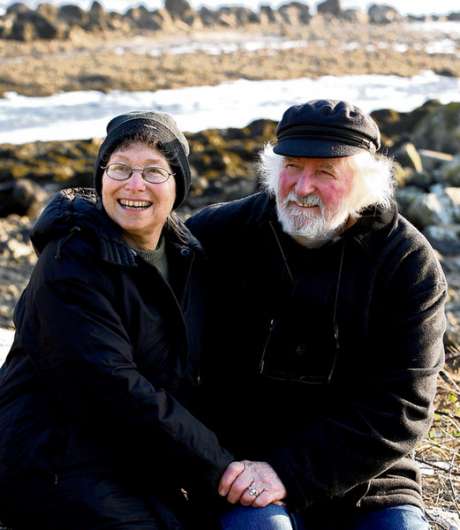 Sunny Jacobs and Peter Pringle (Galway, by Joe O'Shaughnessy) Yet there she was in the newspaper late last year, being bear-hugged by her groom, as Brooke Shields, Marlo Thomas and Amy Irving beamed on. The three, who are among several dozen actresses cast in Jacobs’s role on stage, held hands as the couple exchanged wedding vows and Claddagh rings. When Jacobs was asked if she would “love, honour and cherish” her partner, all three actresses chimed in with, “We do.”
Sitting over a bowl of chowder looking out over Galway Bay, Jacobs and her husband, Peter Pringle, crease up repeatedly with mirth as they remember that New York day, particularly the subsequent interview. It’s not every happy pair that makes it into the New York Times . After all, there are guidelines for one of the most avidly read pages in the Society section of the newspaper.
Selected couples have their life story related to readers and their wedding recorded in every little detail. “So the first thing I was asked was where I got my tuxedo,” Pringle says, laughing.
His black jacket cost €20 in Penneys, his black trousers were €12 in Dunnes Stores, and he got his dicky bow and white shirt in Marks Spencer. His bride calculates that her outfit, which she had previously worn at a fundraiser at London’s Dorchester Hotel, cost €60, with the most recent purchase being boots from Barratts in Galway after the dog ate her golden slippers.
As for the guest list, there were 120 people on it, most of whom the bride and groom had never met. “It was great – there was absolutely no stress!” Jacobs says, and there was no big tab to pick up after it was all over.
A series of fortunate events, after two lifetimes of the opposite, led to the occasion being hosted by New York’s Culture Project. Founded by artistic director Allan Buchman, the theatre group is dedicated to “addressing critical human-rights issues by creating and supporting artistic work that amplifies marginalised voices”, and Meryl Streep, Danny Glover, Robin Williams and Frank McCourt have been among the many artists associated with it.
Culture Project came to national and international prominence through its production of The Exonerated, written by Jessica Blank and Erik Jensen, which was first staged in 2002/03 and subsequently televised. The play focuses on six “exonerates” who were wrongfully imprisoned, some for long periods, and then released without compensation or acknowledgement of the travesty of justice that had occurred.
Sunny (Sonia) Jacobs was one of those six, and her story, which she has told in her book Stolen Time and at international events, has been interpreted by artists such as Susan Sarandon and Mia Farrow. It is a story about being in the wrong place at the wrong time with terrible and lasting consequences.
In 1976 she and her second husband, Jesse Tafero, then on probation for a robbery conviction, and her two children, aged nine years and 10 months, took a 100-mile lift from a casual acquaintance to Florida. They had pulled over briefly for a rest stop when two police officers approached, saw a gun and asked the driver, who was on parole, to step out.
The two officers were shot dead, and the driver forced the couple and their children into the patrol car and sped off.
Stopped at a subsequent armed barricade, a terrified Jacobs, then a “28-year-old vegetarian hippy”, recalled thinking she was going to be rescued. All three adults were arrested, and the driver subsequently testified against Tafero and Jacobs, who were both sentenced to death.
Eric (9) was held in a juvenile detention centre in Florida for two months after Jacobs’s arrest and her parents had to make a court application for his custody. Her daughter Christina was held in foster care for two weeks before Jacobs’s parents got custody of her.
Jacobs was placed in solitary confinement as there was no “death row” for women. Living in a “world of one”, she could measure just six steps between the toilet and the steel door. She could touch the walls by stretching out her arms. She had no window, no mirror, no natural light.
In 1981, her sentence was converted from death to life imprisonment by the Florida Supreme Court. However her darkest days were yet to come: in July 1982 her parents, who had custody of Eric and Christina, were among 153 people killed in the Pan Am flight 759 crash in Kenner, Louisiana.
Now, she was not just incarcerated; she and her children were “all orphans”. Christina was placed in foster care while Eric left school and began working. He had already developed a stutter as a result of his two months’ detention in 1976.
Jacobs maintained a relationship with her husband through correspondence, and it was then she learned that men on “death row” had greater privileges. She filed a law suit which gave her access to two books a week, and four hours a week to leave her cell under supervision.
“I set a goal of becoming the best person I could possibly be, and I turned myself into a sanctuary, with yoga, prayer, push-ups and sit-ups, and with mathematical tasks.” When she was first permitted to leave her cell, she met the librarian who selected her reading material.
“I asked her why she had sent me a book on the sinking of Titanic , as it didn’t seem to be the most cheerful subject for someone in my situation,” Jacobs recalls. “She told me that she had selected it because it was such a big work, with maps and tables and stuff in the back . . . so it was actually an act of kindness.”
Tafero’s letters also sustained her, with one of his final missives reassuring her of his love for her. “You’re my woman, as close as my breath,” he wrote, “you’re the strongest female I’ve ever known. Hand and glove, you know?”
Jacobs was permitted a 10-minute phone conversation with him in May 1990, before his botched execution by electric chair. It took him 13 minutes to die in horrifying circumstances. Just over two years later, Jacobs was released when her conviction was overturned, when the co-defendant who had betrayed her confessed to murdering the police officers.
As two academics, philosophy professor and criminologist Hugo Bedau and Michael Radelet observed in their book, In Spite of Innocence , in 1994, “if Jacobs was innocent, then the execution of Tafero was probably the execution of an innocent man, because the same evidence (later shown to be insufficient) used to convict Jacobs had also been used to convict Tafero”.
Slowly rebuilding her life, Jacobs moved to Los Angeles and began a global campaign against the death penalty. It was this work that brought her to Ireland in 1998, where she was to meet the man she would later marry. At an Amnesty International event in Galway, Jacobs noticed a man crying in the audience. When they spoke, he offered her a lift to her next engagement in Cork, and also invited her for a swim in Galway Bay.
Peter Pringle shared his own story with Jacobs on that journey: he was one of the last men to be sentenced to death by hanging in Ireland, having been convicted, with two others, of the murder of Garda Henry Byrne during a raid on the Bank of Ireland in Ballaghaderreen, Co Roscommon, in 1980. Another garda, Det John Francis Morley, also died in the raid.
In 1981, a few weeks before his execution date, Pringle’s sentence (along with those of his two co-accused) was commuted to 40 years imprisonment without remission. The State subsequently abolished the death penalty in 1990. Like Jacobs, Pringle had also maintained his innocence while serving time in Portlaoise Prison.
After a protracted legal battle, during which he says he became his own “jailhouse lawyer”, he was able to prove that his conviction was unsafe and unsatisfactory. The Court of Criminal Appeal quashed his conviction in May 1995.
Six months after their first meeting, Pringle and Jacobs were reunited and formed a relationship; she moved to Connemara to live with him and their “two dogs, two cats, two hens, two ducks and eight goats” while also teaching yoga and growing vegetables.
More than a decade later they decided to formalise their relationship, although they were unable to do so in Ireland as Jacobs was unable to supply original documents relating to her first marriage (they had been lost following her parents’ death). So the couple travelled to New York last November for their wedding, having made their own private vows during a winter solstice several years ago.
They say marriage has made them feel happier, content, and they have no rows. During his time in prison, Pringle devised a method of mediating with a particular prison officer that involved debating the difficulties in the third person. “We – as in the officer and I – began to see each other’s point of view by not using the second person. We came to an understanding which proved invaluable,” he says.
Pringle, who was taught how to paint in prison by artist Brian Maguire, has written a book and is seeking a publisher. The couple has set up a website – sunnyandpeter.com– with youth and community campaigner Ruairí McKiernan. They work with arts groups and NGOs opposed to the death penalty, such as Amicus, Reprieve, the Community of Sant’Edigio in Italy, and Seeds of Hope in the North.
They are philosophical about their experience, and Jacobs firmly believes that “karmic balance” has brought them together. Pringle still has two cases outstanding relating to his wrongful conviction, however, he holds no bitterness.
“When you get a high-profile case, there’s enormous pressure to find the culprits,” he says. “The unit assigned to investigate is put under huge pressure . . . It only needs one or two who are prepared to cut corners, creating a momentum which can seem almost impossible to stop. The face of injustice has similar features everywhere.”
http://www.facebook.com/sunnyandpeter
http://www.sunnyandpeter.com
Caption: Video Id: yiAKd8JsXQY Type: Youtube Video
Democracy Now interview via YouTube
Caption: Video Id: BzZD7lxsDu8 Type: Youtube Video
Peter Pringle interview via YouTube
|











 printable version


 Digg this
 del.icio.us
 Furl
Furl Reddit
 Technorati
 Facebook
 Gab
Gab Twitter
View Comments Titles Only
save preference
Comments (1 of 1)
Jump To Comment: 1Article written by Lorna Siggins, published in the Irish Times January 21, 2012
http://www.irishtimes.com/newspaper/magazine/2012/0121/....html