Sudanese Hunger Strikers in Sweden - One year on.
 international |
racism & migration related issues |
news report
international |
racism & migration related issues |
news report  Monday June 11, 2007 14:17
 by Eoin Ó Broin
One year on and 6 of the 8 Sudanese men who went on hunger strike in Sweden last summer (http://www.indymedia.ie/article/76869 ), have been granted asylum. One of them got full asylum granted by the migration court. The other five each got one year temporary asylum in order to give them time to prove their identities to the migration board. If they do this they will be granted full asylum next year. The seventh man, who was initially turned down, will have his case heard again due to a procedural flaw in his original application process. The eighth man is still waiting for a decision from the migration board. A ninth Sudanese asylum seeker, who did not hunger strike, has had his application rejected in court. His support group are now applying to the supreme migration court to have the case re-examined.
Dafalla Ohmar, one of the five huger strikers that have been granted temporary asylum, said that everything was fine except that he was a bit worried that the would not get their asylum renewed in December. He said that they were trying to put together the documents the Migrationsverket (Swedish Migration board) had requested and in the mean time were taking Swedish language lessons.
The hunger strike which ended on 9th June, 2006 and the work that followed afterwards, has put the Sudanese question and in particular, the IDP (internally displaced persons) problem, firmly on the agenda of the Swedish Migration board.
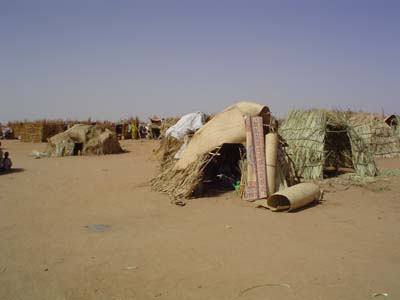
The decision made by the migration board in the case of the Sudanese applicants was to follow the latest UN guidelines and recommendations on Darfur. The UN advices strongly against the deportation of Darfurians back to Sudan as IDP’s where more than 2 1/2 million IDP’s live in camps in the desert and where health and sanitary conditions there are described as being non-existent. In addition to this police at the airports are arresting many Sudanese who arrive having been abroad for more than one year. To boot, the country still uses capital punishment and conditions in jails are said to be grim.
The 8 page UNHCR's position on Sudanese asylum-seekers from Darfur 10 Feb 2006:
http://www.unhcr.org/publ/RSDLEGAL/43f5dea84.pdf
In April of this year there was an appeal court verdict in England where the court gave asylum to 3 Darfurians whose applications were rejected last year by the asylum and immigration tribunal (AIT) of 2006.
There are two interesting things about the verdict: first the court shows respect for the UN convention of 1951 and says that a person has the right to return to conditions equal to the ones he had before leaving. Thus, for example, a farmer should not be sent back as an IDP into the desert but should be granted asylum in England instead. Secondly this appeal court questions the role of guidance that the asylum and immigration tribunal has taken on by itself.
Though the law between Sweden and England differs, both countries have signed the UN convention of 1951. Sweden should therefore be expected to take the reasoning of this verdict into account.This verdict applies to IDP’s from all countries and means that refugee seekers should not be sent back as IDP’s without due consideration of their circumstances.
Appeal Court Judgement 4 April 2007:
http://www.aegistrust.org/index.php?option=com_content&...id=88
Sweden elected a centre right government last autumn. The newly appointed foreign minister, Carl Bildt, came into office with a seat on the board of a Swedish company, Lundin oil, that drills for oil in Sudan. This bordered on a political scandal at the time and caused the foreign minister to vacate his seat on the board and sell his stocks and shares of that company.
An earlier significant factor in developments in Sweden was the introduction of a new, temporary law that lasted from the end of 2005 to April 2006, which allowed all asylum seekers in the country who had previously been rejected and gone into hiding to re apply. This change in law was the result of a nationwide campaign calling for a full amnesty for illegal immigrants, just as was granted in Spain a few years ago. The campaign didn't succeed in getting the amnesty but highlighted a flaw in the application process which allowed people to re apply regardless of previous verdicts. Thanks to this campaign, 17 000 (of 30 000) hidden refugees did get asylum in Sweden.
The campaigning continues...